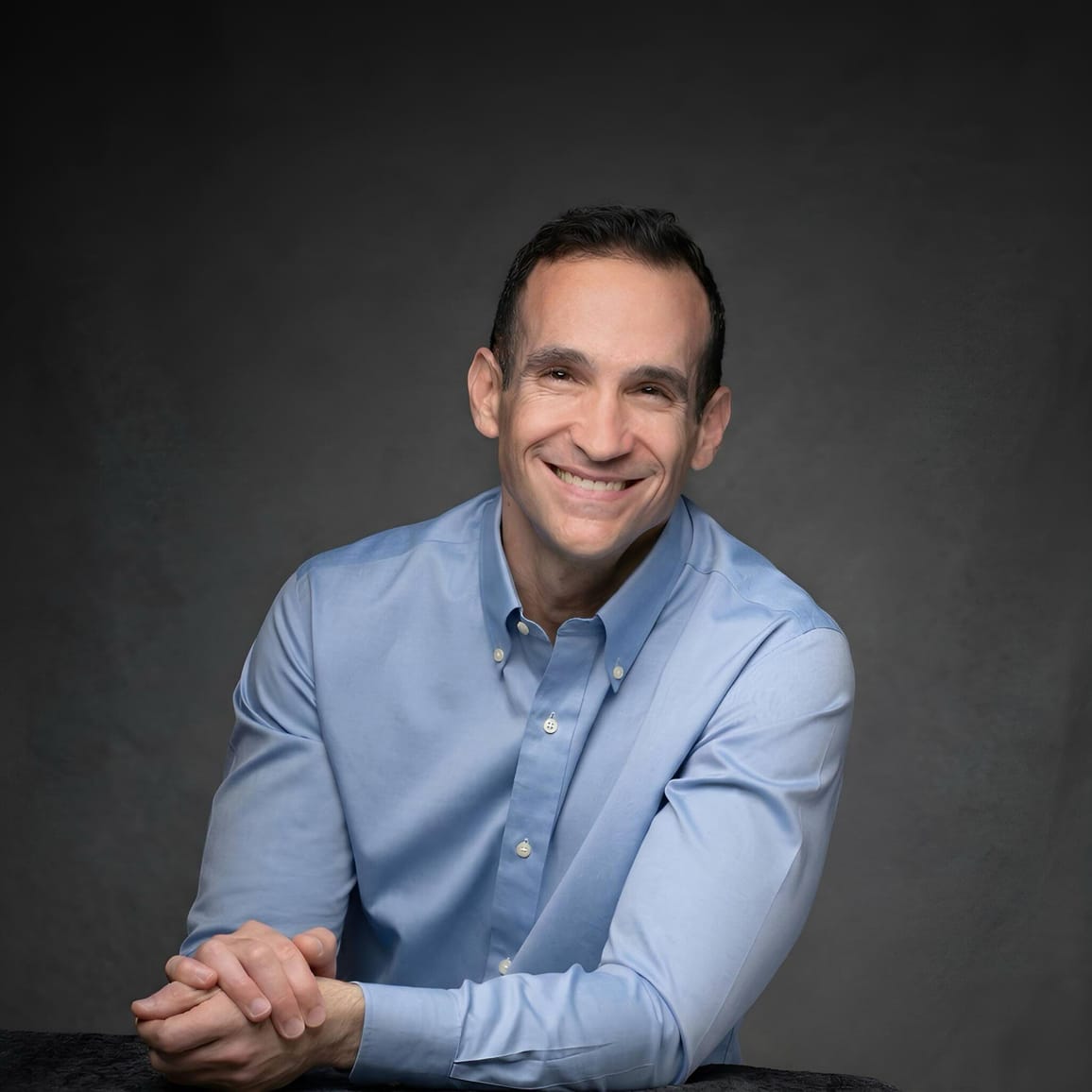

Asian Economies & Why Geography and History Matter More Than Economics Models with Jamus Lim

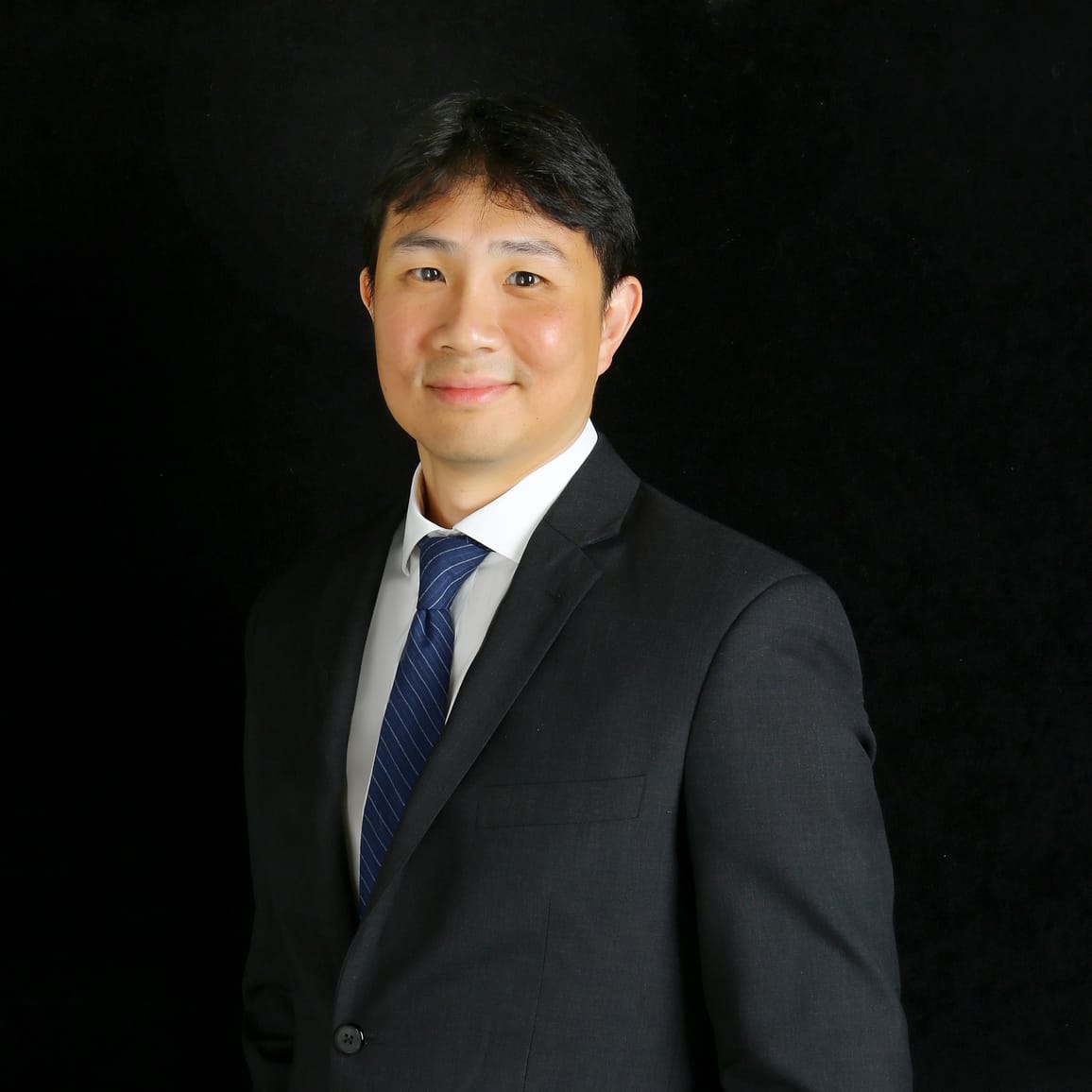
Fresh out of the studio, Associate Professor Jamus Lim from ESSEC Business School and author of "Asian Economies: History, Institutions and Structures" joined us in a comprehensive exploration of the economic foundations shaping Asia's remarkable rise. Jamus shared his story on how the Asian Financial Crisis sparked his passion for macroeconomics and development. He unpacked the critical yet often overlooked role of geography, history, and institutional frameworks in explaining Asia's immense economic diversity, arguing that abstract economic models fail to capture the real-world complexities driving regional development. Through deep dives into China's demographic transition and export-driven challenges, South Korea's state-led chaebol industrialization model, and Japan's historic shift from deflation to inflation, Jamus demonstrated how colonial legacies and historical persistence continue to shape modern economic structures across the continent. Throughout the conversation, he revealed why China's middle-income trap escape depends on building domestic consumption to absorb its massive manufacturing capacity, explained how institutional solutions that once solved problems can become growth constraints, and argued that understanding Asia's past is essential for navigating its economic future in an increasingly complex global landscape.
"The way that institutions emerge and entrench themselves and become a part of the functioning of an economy and society is because they solve some problems. So they're usually a non-market solution toward solving some problem that the economy, that the market system couldn't necessarily solve. Of course the most prominent example of an institution that solves an. Market problem in the non-market way is a firm, as Ronald Coase, of course very early on, taught us that. When a firm realizes that in some cases when transactions costs are high, you want to internalize things within the firm. That the firm is itself an institution. But these other social political institutions, they also exist to resolve some problem. And once they resolve that problem and they're resolving it adequately, then it becomes really hard to bring about change. So the institution solves a problem. So to be clear, it is better than in the absence of the institution, but it also means that without somehow breaking this institution or having some crisis that leads you to substantially reform the institution, you are going to be stuck at a suboptimal equilibrium." - Jamus Lim, author of "Asian Economies: History, Institutions and Structures"
Profile: Jamus Jerome Lim, Associate Professor, ESSEC Business School and Author of "Asian Economies: History, Institutions and Structures" (LinkedIn, ESSEC Profile, Personal Site)
Here is the edited transcript of our conversation:
Bernard Leong: Welcome to Analyse Asia, the premier podcast dedicated to dissecting the pulse of business, technology and media in Asia. I'm Bernard Leong. Today we will dive into the economic foundations that shape the ASEAN region's rise through the lens of history. With me today is, Associate Professor Jamus Jerome Lim from ESSEC Business School and author of Asian Economies.
First of all, congratulations on your recent win in the Singapore elections as an elected member of Parliament in Singapore with the Workers Party for the Sengkang Group Representation Constituency (GRC). For everyone here today, our discussion will not cover Singapore politics, but I want to dive into Jamus's experience in Asia and academic work on Asian economies. I'm running a global business podcast from Singapore. My opinions and views are my own and do not represent any organizations I may represent. So Jamus, welcome to the show.
Jamus Lim: Thank you Bernard. It's both a pleasure and an honour to be able to join you and all listeners today.
Bernard Leong: I'd like to start with the origin story. How did you start your career as an economist? What sparked your interest specifically in development economics and macro finance?
Jamus Lim: Thanks for the question. In some ways, that origin story is preempted by the career my mother pursued. She was in the back office of a large stockbroker firm in Singapore. Even from a very young age - at that time, the workforce had to work on Saturdays as well for half a day.
Bernard Leong: Yes, I remember those days as well.
Jamus Lim: My mother, not having resources for childcare - childcare wasn't that common then - ended up bringing me into the office on Saturday mornings. Some weeks she would deposit me at a nearby bookstore, MPH.
Bernard Leong: Yes, I remember. The bookstore was really one of the best libraries. I would always go there. Although I wouldn't buy any books, but I would read there.
Jamus Lim: I did exactly the same thing. We were not a wealthy family, so I would be reading for most of those few hours where I was dropped off at the bookstore, or she would just bring me into the office. So I got very early exposure to what it's like to be in a financial institution. You would think therefore that would spark my interest in finance and especially the stock market. Certainly when I was relatively young - in my teens, when I was a teenager - I thought that's what I wanted to do as a career. I was inspired, of course, wanting to go to the front office.
Ultimately, I got my hands dirty in economics and I realized that the field of economics is much wider than just stocks and finance. It's much deeper. It's about human behaviour, as the book talks about - about the way institutions are designed and how they influence the evolution of economies over long periods of time.
That got me really interested in the bigger questions. In economics, I am by training a macro economist rather than a micro economist. So I wasn't as interested in things like the psychological or behavioural or rational foundations of human decision making, but I was much more interested in the big picture things.
Why are there financial crises? Why do countries benefit from integrating into the international trading system? When I was a teenager, I experienced a major event in my life - like many of us from that generation, we went through the Asian financial crisis. The Asian financial crisis really made me realize that getting economics right was important, but getting it wrong could be really disastrous as well. That set me down the path of really exploring much deeper phenomena in international finance. That is a passion that I continue to hold today.
Bernard Leong: You were across the World Bank, Sovereign Wealth Fund, and even the private sector before you joined your current academia role. What were the defining lessons from these roles that shaped your economic thinking today?
Jamus Lim: Right after graduate school, like most of us, your primary aspiration - I think we are acculturated into thinking this way - is that you want to be a professor. Your professors were professors. They chose it for a reason. So they make you feel that the ivory tower is the highest calling that you can possibly have.
I was infected by that as well. I very much wanted to be a professor. I did one year in a small liberal arts college in central rural Kentucky. That is a story for another day, interesting in and of itself. But not long after, I got a callback from the World Bank to come in for additional interviews.
It seemed like an opportunity to pursue the idea of both - at the time I was in my early thirties - working in an international city like Washington, DC, but also interacting with people from all over the world. The World Bank, although it deals with development economics as well as international finance, is very much staffed by what you can think of as international bureaucrats who carry their own country's traditions and ways of doing things.
Many of them were trained deeply in their respective fields, not necessarily economics. We have agronomists, environmental specialists, legal experts, as well as economists and finance folks. So you really get immersed in a deeply intellectual environment, even though it's not strictly speaking an academic institution.
That was really exciting. DC is a great place to live, so that's what got me started at the World Bank.
Bernard Leong: After that you taught macroeconomics, and now international economics across Asia. You've also done a postdoc after your PhD. How has teaching in Asia shaped your views on regional economic development as compared to other markets?
Jamus Lim: Certainly I'm Asian, so I carry that perspective with me no matter what. What that means is growing up in Southeast Asia, you see two perspectives. One is the experience of countries like Singapore as well as the other newly industrialized economies, which grew very rapidly, where transformation is constant in practice.
What that means on the ground is construction is happening all the time. You see a kind of buzz or you feel a kind of palpable buzz in the air. People are busy. People are trying to do things. But at the same time, you also have an opportunity if you start wandering around in the other countries of our neighbourhood - you get to see countries that are also trapped in some ways in what economists refer to as a middle income trap, where they reach a certain level of income, usually somewhere in purchasing power terms, something like six or seven thousand dollars. Then they kind of get stuck there for an extended period of time. They grow, but not much faster than their rates of population growth. So per capita incomes remain reasonably stagnant, and it doesn't seem like they will make the important leap from middle or upper middle income status toward that club of elusive high income countries.
You see that around you and then you start to wonder what is it that still seems to be missing in that recipe and that formula. At least for me, I arrived at the conclusion that a lot of it has to do with economic history, industrial structures, and other forms of economic mechanisms together with the role of sociopolitical institutions. That's why in that book [Asian Economies], the subtitle is "structure and institutions and history," in part because I feel that these matter so much when you look at the world through the lens of developing Asia.
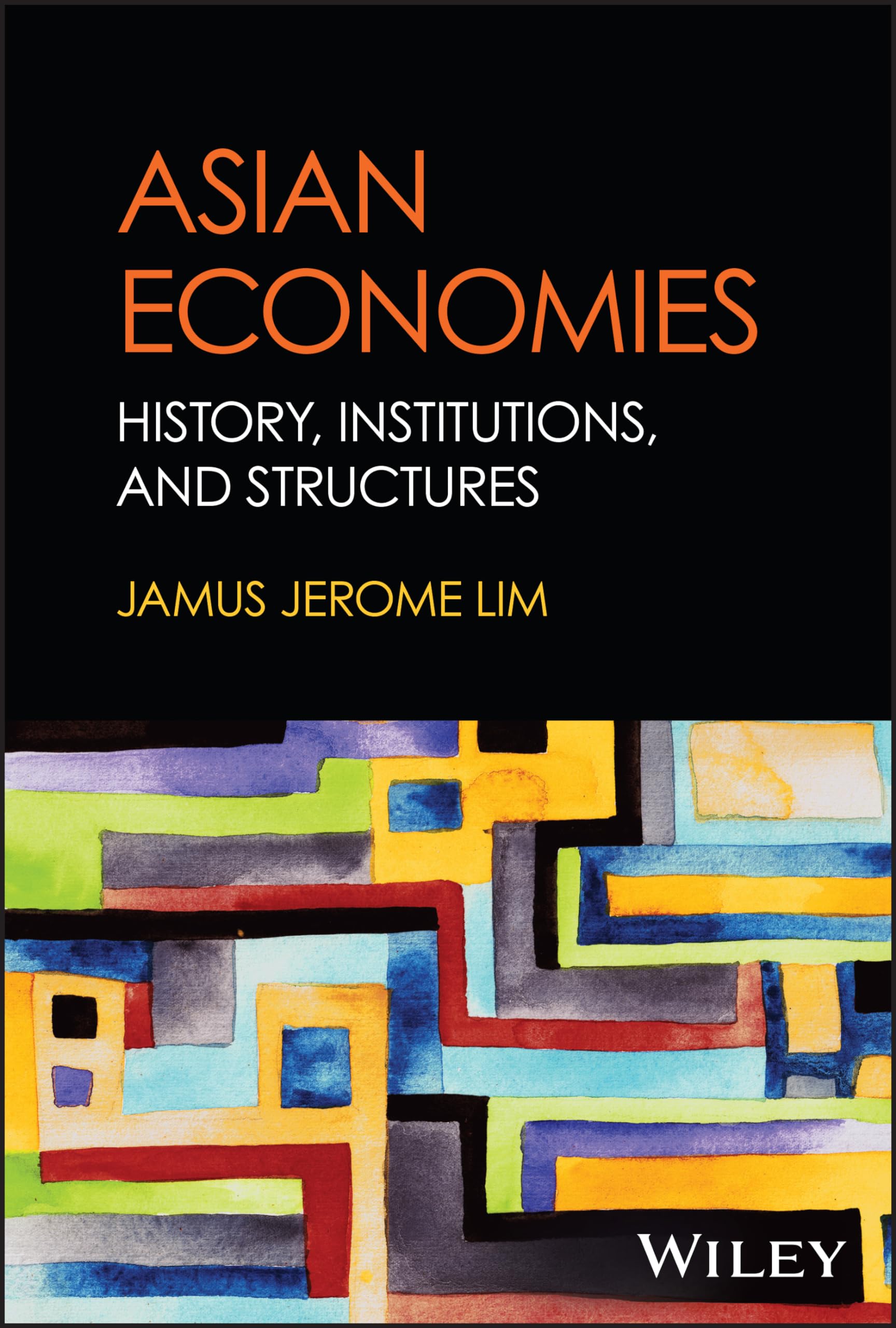
Bernard Leong: We're going to come to the main subject of the day, which is your work, "Asian Economies: History, Institutions and Structures." It is a very interesting read because I'm an economics and history buff, trying to get a better understanding of all the economies around the region, even specifically for myself as an entrepreneur. That helps me to clarify some of my thinking, even in thinking about how to expand my business. Maybe to start, let us baseline the word Asian economies. Given the region is so diverse and spans more than half the population in the world, can you help me define Asia in the context of economies, be it developed, emerging, or frontier at this instant?
Jamus Lim: I teach a course from which this book emerged. The French have a term about instructor sovereignty. As an instructor, you have absolute sovereignty over exactly how you want to define how you teach the course. For me, teaching in the business school, I started to realize that what people cared about in the business school is not so much a lot of abstract theoretical models, but how to better understand a part of the world that they had much less familiarity with. The existing textbooks, if you look at them, a lot of them deal with either East Asia - by East Asia, some people would lump in Southeast Asia, but certainly the major economies of East Asia, like Japan, China, and South Korea.
But if you think carefully, you realize South Asia is also an integral part, a major part of Asia. For much of history, India was one civilization that included what is today parts of Pakistan and Bangladesh. That entity has to be thought about, and the history and the development of that part of Asia has to be thought about.
When you start to wonder westward, you realize that for a long time there was this intersection of different parts of Asia with the West. That occurred through the silk routes, through Central Asia. So then you start realizing Central Asia, which is often flyover territory in Asia that we tend to neglect, is also important in the grand scheme of things. Finally you realize that what we call the Middle East today - the reason why it's called the Middle East is because it's midway to the east of the Occident. This is defined by western authors that have defined that region. But for much of the world's history, that part of the world was in fact West Asia. I felt that at least in the book and even in my course, it was absolutely necessary to weave in West Asia as well in the overall scheme of things.
Bernard Leong: I usually read the foreword of every book that I read. This is probably a quick question to ask you. What inspired you to write "Asian Economies" and how did your past experience inform the book's scope and structure?
Jamus Lim: You are making me play all my cards here. Obviously part of it is that I teach the course as I mentioned, but one reason why I was influenced to also include discussions about West Asia is in no small part because when I was at the World Bank, I worked in what's called the Middle East and North African region. A lot of countries that I worked on, including most heavily in Syria and Lebanon. But I also worked a little bit on Egypt and a little bit on the UAE, where eventually I ended up living for a few years. I became very familiar with that part of the world and with the culture and the way that they think and the development process and the story there.
I felt it was absolutely imperative for me to bring those experiences I had from having worked in that part of the world, having lived in that part of the world into the book as well when I discussed West Asia. We have at my business school also many students from North Africa. They are naturally more drawn to better understanding the Arab world. So it was a natural appeal for an audience as well. At the same time, I had also worked on many development issues in East and Southeast Asia where I'm from. So it was again very natural to bring those into the discussion in a more prominent way. There is in fact a wonderful textbook on Southeast Asian Economies titled "Southeast Asia: The Long Road Ahead" by Professor Lim [Chong Yah], who passed away a few years ago. I would teach initially from that book, and I realized that I could focus and synthesize the areas that I was more interested in from that book, which was mainly the development experience and the continued heterogeneity between economies in Southeast Asia. That's when I made that decision. Southeast Asia would have to be a part of that story too.
Bernard Leong: Your book represents Asia's growth story by weaving the geography, institutional frameworks and history. Why do you think these non-market forces are often overlooked when it comes to economic discourse?
Jamus Lim: At risk of sounding a bit facetious, it's because teaching models is actually easy, right? You abstract from all these details. Learning the models may be difficult, especially if you're not mathematically minded, but teaching them is easy. Once you have learned the models, then you don't have to worry about the continued evolution of recent developments. You don't have to worry about how the models may or may not map with phenomena in the real world. It's an artificial space that you have created. Most economists accept the assumptions.
When we participate in seminars, we may challenge assumptions, but once you are presented with the model, you take those assumptions as given with which the model is set up, and you just question the internal coherence and the logic and the implications of the model after you have accepted those assumptions.
In some ways, it's handy and not too demanding to teach by abstracting away from some of these finer details. But I think once you start thinking about Asia much more seriously, you realize that it's impossible to explain the immense diversity of the economies without also paying attention to the geography, to the history and how those things factored into the development of the existing structures and institutions, which in turn influence the way that these economies operate on a day-to-day basis today.
Bernard Leong: With this kind of backdrop setting, I can start to actually zoom down to a couple of countries I'm pretty interested that you have discussed in your book. Without doubt, China is the first country that we are going to talk about. It has rapidly ascended from poverty to becoming the world's second largest economy.
In your view, what are the current most critical institutional or structural factors that have driven their transformation? I would say it's still a developing economy because there are certain parts that are very significantly advanced, but I think a majority part of the country is still in development.
Jamus Lim: Thank you for asking about China. I start with China in my course as well after the overview lecture. It's the only economy with which I spend two whole lectures because of its size, because of its importance. From an outside perspective, it's very common to think of China - if you look at their progress in electric vehicles, if you look at their high speed trains, if you look at downtown Shanghai or downtown Beijing, you realize these have all the hallmarks of an advanced economy and perhaps a little bit more. Payment systems that are far more advanced in some ways than even those we see in many parts of the west.
Of course China is large and extremely diverse even within itself. Once you start heading west, once you start heading to certain other less traveled parts of China, you realize that there's a reason why it's only upper middle income. Now it's on the brink. Certainly by the end of this decade, most observers expect China to eventually become a high income country or at least breach into high income status.
The question then is, given that China is on the brink of high income status but still has many developing challenges, what are the key impediments for it to not just move from upper middle to high income status, but how can it consolidate that position? I know many countries that have gone into high income status and then they slip back, and then it becomes this kind of dance, which is why I mentioned earlier.
Bernard Leong: It happens to Japan, Korea, Singapore, in the sense that they become developed and then population decline is part of that. Then the transition from probably manufacturing to service-based economy, now to a knowledge type economy and searching for its next evolution as well.
Jamus Lim: China has its fair share of problems. Certainly one of the issues that you've just alluded to, which is quite common in advanced economies, is demographic change. The big factor is many people like to attribute China's decline in population to its one child policy.
It's tempting to do so, but we really need to put that in context of what happened - the way demographics played out in just about every other East Asian country as well. You see, basically as countries become relatively richer, they go through the natural process of what's known as the demographic transition.
The demographic transition is accompanied by a reduction in fertility. In rural China, fertility has not fallen as much as in urban China, but in urban China one could make as credible an argument that even though the one child policy came into place and we saw the concomitant decrease in fertility, it could well have been that way even if China didn't have that one child policy.
China was already becoming richer. As economies become richer, what happens is households start to focus on quality over quantity. Many families who used to be in rural areas where more hands to work on the farm would be useful, would no longer need those extra hands as they transition into more urban living.
Even to put it in a very morbid way, the risk of child mortality is also falling. So parents no longer feel that they need to have as many to hedge that risk. They focus on the few that they have. All that is just to say that demographic transition in China is playing out.
The implications of that demographic transition are playing out now, and I think we'll see the continued headwind that comes from having a slowing population growth. The simple mechanics of it is that just means that your labor force is also shrinking over time.
Bernard Leong: There are also other factors at work as well, right? If you think about China, they have a very large manufacturing economy. They're not willing to concede - I think they learned the lesson from Germany and from the US outsourcing away the manufacturing. So they're going to keep that, and then they're going to move towards a very heavy export driven economy in the last couple of years doing steel, electric vehicles, and now even AI as well, open source.
But what really fascinates me is the low internal consumption and high export - I don't even know whether it is a high savings rate or keeping your money under your mattress, to use the old Chinese grandmother analogy here. How would China now be able to navigate the current headwinds and tailwinds due to the current tensions?
Jamus Lim: First Bernard, to be clear, China, while it's true that they are not conceding the importance of an industrial base, has passed peak manufacturing. China is indeed in the process of deindustrializing. It has been doing so basically since the 2010s.
It's no longer the cheap labor location any longer. This is what economists sometimes call a Lewis turning point, named after Arthur Lewis, a West Indian economist that first developed the model that looked at what happens when there is an exhaustion of workers coming from the countryside into urban areas.
All that is happening. Basically what you're seeing is that China is trying to move up that value added chain. So it's not that they have given up manufacturing, but they accept that you need more and more industrial machines. In fact, if you look globally, while it doesn't have the highest intensity in terms of industrial robots that are installed - countries like South Korea and Singapore have greater intensity, intensity meaning in terms of relative to the workforce - in terms of absolute numbers of industrial robots, China has about half of the world's installed base. So it is also a very capital intensive, mechanized economy, unlike what some might think when you think of China as a labor abundant country.
With that, it has moved up the value added chain in terms of where it manufactures now. A lot of solar technology, electric vehicles as we mentioned, battery technology and some of these advanced transportation modes and the like. At the same time, it has also grown its services sector. This brings us to one of the other pathologies that China is struggling with. When China was growing very rapidly with a large population, it engaged in a lot of construction.
There was a major housing boom. In fact, the housing boom first hit a snag in the 1990s. Then there was what was known as a debt to equity swap. A lot of those companies converted the debt that was accumulated into equities and they were able to work their way out of that difficulty. Many of the ghost cities in western China, they eventually filled up because you still had this population that was coming from the rural parts and filling the urban centers.
That is no longer the case. China is now exceedingly urbanized. While it still has a rural hinterland like many big countries do, the flow from the countryside to the urban centers is no longer as rapid. So you are starting to see some of the overbuilding of the housing stock come back to bite.
Many Chinese believe in investing. You mentioned this as well - it's a high saving country. Saving rates are in the order of 40% or more. A lot of that saving gets directed toward real estate because what's safer than houses? That's a very typical Chinese mindset. Many households already have purchased their second, or sometimes even their third homes, especially those that were growing up during or who entered the workforce during China's rapid growth phase in the nineties and the two thousands.
They are giving these houses to their children. So there is not that much more room for additional demand to soak up a lot of that excess supply of housing.
That's why you're starting to see some of these real estate developers really heavily leveraged and starting to face difficulties in terms of selling the excess stock of housing.
Bernard Leong: Help me understand why is the internal consumption rate so low as compared to other advanced economies for China?
Jamus Lim: There are probably a few dozen explanations. They're very esoteric. They range from one rather compelling, I think, argument that China doesn't have a rich social protection system. What this means is that while it's true that if you have the hukou - this is kind of an internal passport, the right to be in a city to access public services there. You would be able to access education. You'll be able to access healthcare as well as public pensions. All these you have access to if you have that hukou, but for many workers, especially those that migrated to the cities from the countryside but don't have the hukou for those big cities, they don't have any of these social protections. Often, their children get educated back in their countryside towns and villages because that's where education would be accessible for their children.
Bernard Leong: So the access to services is not actually as digitized.
Jamus Lim: It's not even universal because you literally have to go to a private sector provider. If, let's say you fall sick, but you don't have the hukou in a, let's say you are working in.
Bernard Leong: So you have a lot of shadow type economies - the same problem in developing economies as well, where people don't have a bank account which is kind of the equivalent of that.
Jamus Lim: What do people do? They save as a form of self insurance. This is one reason. Because social protection - mind you, even for those that do have the hukou, even those that do have access to public services, the amount of coverage that you get, the ability to, the quality of that coverage that you get in terms of public pension replacement income for retirees and so on, those are still very modest. You can't blame China. China's still a developing country in that regard. So it's inevitable that households would have to make up for some of that shortfall with their own savings.
Bernard Leong: Why wouldn't the central government push the states to try, since it's a very centralized economy in some ways, to push this registration of citizens into the hukou? Or is it because it's very state dependent and that's why you can't do that easily?
Jamus Lim: Well, not necessarily. China is true that it is a central state, and the central government has a tremendous amount of power. But for any large economy, any large complex economy, inevitably you have a lot of devolution of power to the individual provinces as well as the individual county governments and so on.
Firstly, the desirable cities like Tianjin or Shanghai or Beijing, the population is starting to reach 20 million. It's hard to imagine it growing that much more. So what the central government has encouraged cities to do is for the second tier cities, those that are known to us, but perhaps not as familiar cities like Wuhan, for instance.
Bernard Leong: Chongqing, for example, as well.
Jamus Lim: I would argue Chongqing is already a first tier city.
Bernard Leong: First tier city. For example, to me, Hangzhou is the first tier city to some people, but it's still considered second.
Jamus Lim: Now it's one of the largest inland cities if not the largest inland city. But the one that you would think of just close to Chongqing is Chengdu. Chengdu is a second tier city, and these are the cities where arguably there have been more relaxed policies about issuing new hukou to try to attract workers and migrants into those second tier cities.
Absolutely there are reforms to the hukou that are encouraging people to move to some of the second and third tier cities. But it doesn't change the fact that in reality China still - a high part of it is cultural and behavioural explanations. Part of it is also a sense of wanting to save enough to bequest to the next generation.
There's a strong inheritance motivation that many Chinese households would have for wanting to give gifts to their children. Then even some crazy esoteric ones - remember we talked about how there was a one child policy? Alongside that one child policy, there was a bias, unsurprisingly for East Asian culture, toward boys.
In fact, it's not just East Asian. South Asia has what's sometimes known as millions of missing girls because for the same reason there's the bias toward boys. What that means is that at the moment, if you look at China's demographic mix, it is a mix of something in the order of 45 girls to 55 boys.
What that means is that if every girl were to pair off with a boy, every male were to pair off with a female, you would still have 10 men that are left without a pairing. So it becomes hyper competitive among the men to be able to try to secure mates. This has led to some unfortunate pathologies as well where we see, for instance, stories of, especially in the Southern Chinese provinces where there's a lot of bride trafficking, but what it also means in terms of the economics is that men feel the need to signal their relative desirability.
In many cultures in the world, the way you signal it is with a fancy car. In China, you have to up that one step further and signal it with, "Hey, look babe, I have a house." So it becomes competitive signalling.
Bernard Leong: It's a status culture, but I just have one remaining point before we close China and really go to the other two economies that really pick my interest. For its export driven economy now, I mean, it flooded the world with cheap goods, electric vehicles, batteries, steel. How long can they do that? Given the current situation with tariffs and bilateral nations are starting to negotiate very bilateral trade agreements between them.
Jamus Lim: It's fascinating that you should ask this question. One of the research papers I'm currently working on is looking at this phenomenon known as the China shock. The China shock is basically what happened after China entered the WTO in 2001. After its entry, unlike other economies that entered the WTO, China, of course, is huge.
So it made a material difference to the supply of especially low income, low skilled workers into the global economy. What that meant especially for third countries - high income countries like the U.S. where there was an industrial heartland - what it meant was that a lot of things that used to be produced in these areas would start to become potentially uncompetitive because the Chinese were starting to produce it cheaper and over time the quality improved. So they became more and more competitive. "Made in the U.S.A.," "Made in Europe" became a little less of a cachet, and people started to outsource all this to China.
This became known due to a number of MIT economists, notably David Autor, as the China shock. The China shock is just this idea that while it's true that China's entry into the WTO did bring positive effects on many parts of the world in terms of lowering the price of manufactured goods, of durable good. Unfortunately it also led to hollowing out of some previously industrial areas.
Bernard Leong: Probably what's happening to the U.S. and Europe as well.
Jamus Lim: Yes. This was happening in the U.S. and Europe. Arguably it is now at the stage where it's very hard for the world to continue absorbing a lot more of these Chinese exports. Now, to be fair, China, as I mentioned earlier on, has gradually moved up the value added chain. It's no longer the case that China is just manufacturing cheap exports. EVs [Electric Vehicles], for instance. Some of the best Chinese EVs from BYD for instance, are priced at the level that is not that much cheaper than a comparable Tesla, for instance. So they are starting to climb up the value added chain just like Japan did before them, just like South Korea did before them.
It is true that because of China's enormous manufacturing capacity and its size, it's still producing a lot more for the rest of the world than what some of these other countries did. But I think inevitably what will happen is that there will be a need for Chinese themselves to no longer be selling to the rest of the world, but as you alluded to Bernard, to ultimately absorb a lot of that themselves.
Bernard Leong: Yes. Because otherwise everyone else is buying from you but unable to sell to you. Then there are no trade flows. Trade flows are essential to world economy, right? In a global economy. I think people don't realize this.
Jamus Lim: It is essential to the domestic economy too. This fact is not unknown to Chinese policy makers. When I worked at the World Bank this was back, way back in 2015, we were working on a report about rebalancing the Chinese economy. That was 10 years ago.
A decade ago, the Chinese policy makers were already realizing the absolute importance of increasing domestic consumption. Now, the Xi administration has rebranded this as what they call dual, a dual circulation model with this internal circulation, basically whatever is being produced in China to be sold to the growing and rising middle class in China.
I actually think it's possible. Henry Ford famously said that he wants to pay his workers enough so that they themselves will be able to buy the cars that they were manufacturing. This is what China will ultimately have to build - a domestic consumption economy where people are not saving necessarily, but also consuming and alongside the consumption, they will be generating that necessary internal demand to absorb a lot of the excess supply that China is currently flooding world markets with.
Bernard Leong: I want to pivot the conversation to two other economies. I'm pretty curious. One is South Korea and the other one is Japan. I'll go with South Korea first because it's been a pretty compelling example of state led industrialization and the chaebols, most notably Samsung. What lessons can we draw from this evolution into an advanced economy? Can the South Korea model actually be applicable elsewhere? Maybe in one of our Southeast Asian economies now?
Jamus Lim: South Korea is often lumped together with the other dragon economies, Singapore, Hong Kong, Taiwan, but South Korea, as you alluded to correctly, is certainly different in one very specific way, and that is that it adopted a lot of that conglomerate model that resulted from its colonial experience with Japan and alongside that conglomerate model is very active industrial policy.
That industrial policy where the Korean developmental state, which in turn was influenced by the fact that it was colonized by Japan and Japan transplanted the model of that developmental state.
Bernard Leong: To the current chaebol model, right?
Jamus Lim: Before the chaebol, there was this model called the Zaibatsu. The chaebol was essentially what happened in Japan after the Second World War where the Americans told the Japanese, "Look, your zaibatsu model, a conglomerate model was responsible for the war machine that you guys generated and ended up creating a whole mess in Asia. We want you to dismantle that zaibatsu model." The Japanese said "Yes, okay. Hai. Hai." Ultimately they just rebranded it, as we would term it today: Keiretsu. There are some appreciable differences. The zaibatsu model was more shareholder controlled by one family, whereas the Keiretsu model is publicly traded.
Bernard Leong: It is more decentralized in terms of shareholding.
Jamus Lim: A little bit, but many aspects of the conglomerate having a financial institution right at the top level, together with the logistics and trading institution, the manufacturing firm, all that is a key part. The horizontal and vertical integration, all that is part of the keiretsu model, which is still present in Japan and was via the zaibatsu transplanted to the chaebol system in Korea. The chaebol is as you alluded to a model where there is a conglomerate, but at the same time has heavy ties to the state. The state having provided subsidies for directing research, for instance, in some of these institutions. Of course, these companies also through retained earnings invest heavily in applied R&D [research and development] themselves. But there's this kind of dance between the developmental state and these conglomerates that plays out.
Bernard Leong: I think a good example would be Samsung, right? They have what is in their business model, what's called the choke point strategy. When they started in Samsung living refrigerators, what they identified as the choke point was the coolant. So they manufactured the coolants for all the European companies, and then subsequently they built their own refrigerators and took over the world. Then they did the same in TVs where they focused on OLED screens. Of course in the smartphone time they did the NAND Flash drive, which is the hard disk in your mobile phone and also the OLED screen. Then they use it to have this probably frenemy relationship with Apple, where "I need your flash drives and I need your screens, but I can't get rid of you because you're creating a competitor against me."
Jamus Lim: Samsung is very tempting in part because its market cap is basically half the Korean economy. But actually I would argue that a very good example of state intervention that led to an enduring industrial advantage is in Korea's heavy chemical industry.
Bernard Leong: Ah, okay. I get your point on that one.
Jamus Lim: In the 1980s, Park Chung-hee who was the president at the time, he made a decision to target the manufacture of certain chemicals, heavy chemicals.
Bernard Leong: Yes.
Jamus Lim: Korea has no natural advantage in these things at the time and even till today, of course, that industry is heavily dominated by German manufacturers. Nevertheless, Korea made a decision through the government that they wanted to target this industry, and they began plowing resources into it. Similar for Korean steel, by the way. Initially, as you can imagine, when you're still learning a process, they were not very efficient. They were not manufacturing the highest quality nor the most price competitive ones. But eventually they consolidated. The Korean engineers managed to gradually up the quality of all the industrial processes with which they manufactured these things, and they're now one of the major players and exporters of heavy chemicals as well as steel in the world. This is a perfect example of how those who argue that there's never any role for the state to get involved - at least in these few examples, Korea certainly disproves that.
Bernard Leong: Actually very surprised by it. Maybe, This is a western economies construct, that the state is never involved in any form of industry development or economic development. I mean, even for themselves, right? The internet didn't start from commercial, it started from DARPA and then subsequently moved into the commercial world, right?
Jamus Lim: Mariana Mazzucato, who is an economist, I believe at UCL, has made a strong argument about this, about how a lot of how western economists tend to frame the absence of state involvement in industrial policy as a little bit of a chimera. But the most forcible argument for how the developmental state and industrial policy has made an appreciable difference in Korea has been that of Ha-Joon Chang - I think he's no longer at Cambridge, but Ha-Joon Chang is a Korean economist.
Bernard Leong: I read his work. Pretty good work.
Jamus Lim: At Cambridge, he made a very decisive argument. If you haven't read his book: Bad Samaritans, you can go get it about how Korea disposes of one way of thinking that industrial policy never has any role in the developmental process.
Bernard Leong: I think I don't have the title in my mind, but I highly recommend that book by Ha-Joon Chang, which I read and helps me to understand the Korean economy. One question. Now I want to go to Japan. I'm going to go straight to the current situation. They have currently reintroduced inflation into their economy, which is actually interesting. What's going to happen to their economy moving from here?
Jamus Lim: That's really interesting because I was in the earlier iterations of this course, I was literally teaching about Japanese deflation - what happened to cause that and I still teach it - and how Japan basically had one decade, one lost decade, two lost decades, some would argue in part because of this process of low inflation or even outright deflation. In fact the zero interest rate policy way before it was an issue in Europe, just prior to the COVID crisis, it was already on Japanese shores for many years.
What has happened is that together with much more aggressive monetary policy through the form of unconventional policies like quantitative easing - the Japanese call it quantitative and qualitative easing because they have to do it even bigger - together with the supply shock that came with COVID, Japan suddenly now has inflation.
Of course, what this means is that the economy has to adjust. This is inevitable. It's something actually welcome. Japan has been trying to have some steady state level of inflation. Most central banks in the world target 2%. Japan officially, the Bank of Japan targets 2% as well, but it has undershot this for decades.
Bernard Leong: I think that this is like the ideal government KPI [key performance indicator], right? That you are living in this country where the inflation just never hits 2% for them and now they suddenly have inflation. They have to start to get their businesses to try to raise prices, and then there is a culture of not raising prices and that also permeates across the entire economy as well.
Jamus Lim: One very palpable outcome that you see now of course, is that businesses are forced to rejigger the way that they price contracts. They must be more willing to adjust worker salaries. Worker salaries are often in the case of Japan very rigid. That itself has problems, especially if you look at the youth and the early graduate employment rates in Japan, they have been disproportionately high. They're always higher everywhere in the world, but they were disproportionately high in Japan because the old were not willing to give up their jobs because they wanted the security of a stable income. Because they weren't getting more and more expensive, at least in nominal terms, over time, companies just continued to keep them on payroll. All that is changing. Contracts will have to be altered in all dimensions of the economy. In fact whenever you have these kind of transitions it's a little bit wrenching and you have entrenched interests that were benefiting from the status quo - we're starting to get into political economy here - entrenched interests that were benefiting from the status quo, then inevitably you'll have frictions. The most obvious casualty, if you will, of this has been the liberal democratic party in Japan.
Bernard Leong: Yeah, they just have problems now because now they're having the same problems that are happening everywhere starting to show up. I want to ask you this question. What's the one thing you know about the institutional and structural foundations of Asian economies that very few do?
Jamus Lim: Well, I would be lying if I said that I knew some secret sauce. But even if I were to try to pin it down, I would caution against trying to think of one thing, because that's precisely the point.
The way that institutions emerge and entrench themselves and become a part of the functioning of an economy and society is because they solve some problem. They're usually a non-market solution toward solving some problem that the economy, that the market system couldn't necessarily solve. Of course the most prominent example of an institution that solves a market problem in a non-market way is a firm. Ronald Coase, of course very early on taught us that when a firm realizes that in some cases when transactions costs are high, you want to internalize things within the firm. The firm is itself an institution. But these other social political institutions, they also exist to resolve some problem. Once they resolve that problem and they're resolving it adequately, then it becomes really hard to bring about change. The institution solves a problem. To be clear, it is better than in the absence of the institution, but it also means that without somehow breaking this institution or having some crisis that leads you to substantially reform the institution, you are going to be stuck at a suboptimal equilibrium.
For every economy, those institutions are going to be different. But if there is a commonality in that story, it is that if we want to better understand how to bring about development in some of these countries, what we truly need to understand is how the specific institutions that have emerged in these countries are potentially in some ways holding back the continued growth and expansion of the other actors in the economy.
How these institutions may be hampering the entry of new players and in turn these new players would be the source of growth into the economy in the future. That's a common thread, I guess.
Bernard Leong: My curious question: what's the one question that you wish more people would ask you about any subject within your book, "Asian Economies"?
Jamus Lim: I think one important thing that people tend to underplay other than institutions, which would be again, a very natural answer, but one thing that people underplay is the role - and this is one of the subtitles of the book - that history plays. We've already alluded to some of this earlier on, how the chaebol structure was in part because of the colonial history that Japan had over Korea. Singapore had a very different colonial experience. Its colonizer was a different country. It was Great Britain at the time. As far as colonial experiences are concerned, it was also relatively more benign. It's not to say that there weren't atrocities that were committed by the British on Singapore shores to the native population, but compared to other colonies that Great Britain had where it was purely extractive - what they tried to do was basically the best they managed was they constructed railways and then they extracted resources and channeled it back to British factories in the Midlands.
In contrast, Singapore didn't have any of these natural resources to extract. It was seen as a strategic port. The British brought with them their civil servants and their form of government. They brought with them a certain respect for the rule of law and political organization from which the Westminster system we continue to inherit today. They also brought with them educational institutions. Many of these were religious in orientation, but in turn, these managed to expand education to greater numbers in the population that eventually became the basis for the public schooling system.
I think when you start to realize that history isn't easily washed away, and that there is in fact a deep persistence - this is something that over the past decade or so economists such as Melissa Dell at MIT have really talked about - the absolute persistence of elements in history. This, I think really also needs to be taken into account. Sometimes we think what's passed is passed. I wish that they would ask me how that history has continued to influence what we continue to observe today.
Bernard Leong: It's a very interesting point because I think in the last three, four years I've been spending more time reading history books than any other genre because I think that a lot of what's happening now is just a revisit of things that we have seen in the last couple of decades or centuries, but just not realizing that it's slowly creeping back into where we are.
Jamus Lim: The French have the saying, that the more things change, the more things stay the same. Those who ignore history are - and this is another quote - those who ignore history are doomed to repeat it. It's one of those things where I think the greater sensitivity that we have to the contours of what came before us, the more we might be aware of not just our unique position, but also how to make sure that some of the more common human frailties do not once again get committed by a new generation that is unaware of what happened before.
Bernard Leong: My traditional closing question: what will success look like for you as an economist and educator in terms of the success with this book and its broader impact?
Jamus Lim: The traditional academic research answer, economist answer to what success is - a publication in one of the top five economic journals.
Bernard Leong: Publish or perish?
Jamus Lim: There are researchers that would give their firstborn for a publication in American Economic Review. But for me, I think having also transitioned a little bit away from academic - I still really enjoy writing, researching, thinking deeply about issues and publishing. I love that intellectual rigor, bringing the intellectual rigour and pondering deeply about questions on a day-to-day basis. At the same time, I've also become acutely aware of the importance of making sure that what we research, the questions we ask, the results that we find, the implications for policy that we draw are also ultimately taken on board and adopted by policy makers.
Because in the end, as academics, we write for a hundred other people in the world. If the hundred other people are interested, your work gets published, but what impact will you ultimately have? That impact must, I think, be also measured in terms of broad policy impact for the day-to-day lives of people. I think as academics, but also academic economists, we set ourselves too modest a goal if the only goal, professional goal is to publish. We should also look to how we might be able to potentially influence the public discourse and the contours and the evolution of public policy in the countries that we live in as well.
Bernard Leong: Jamus, many thanks for coming on the show. I'll definitely have to get you back because I think we only covered the East Asian economies this time round.
Jamus Lim: It'll be my pleasure and honor.
Bernard Leong: I'm pretty sure there are a lot of other parts that I've been thinking quite a lot about and would be great to have you on again to discuss the other parts of Asia. In closing, two questions. Any recommendations which have inspired you recently?
Jamus Lim: In terms of books or...
Bernard Leong: Books, anything. Some people even give very interesting things like research projects as well.
Jamus Lim: I'll give an example of a book. This is a book that I regret to say I've been working my way through for the better part of a year and a half. That is a book about thought and it's called "A Theory of Justice" I believe. Essentially what this book does is it's an exposition of a certain way of thinking, Rawlsian philosophy. Economists are very used to Benthamite utilitarian thinking, basically maximizing utility as is given to us, and taking, maximizing social welfare in that particular fashion. I think Rawlsian thought - a quick summary of what Rawls argued is that one of his key principles was that we should judge ourselves by how well as a society we are doing by the least advantaged. So basically how well is the last man doing.
Bernard Leong: You are talking about the Rawls, the person who wrote "A Theory of Justice" right from the veil of ignorance? It is a great book.
Jamus Lim: It's a great book. I haven't read the original, but this is a more recent exposition of his thought with contemporary applications. I have been working my way through that book. So that's one recommendation.
Bernard Leong: Can I add a recommendation on top of yours? I would highly recommend Thomas Sowell's "A Conflict of Visions" The reason why the interesting part I like about that book is how he looks at any subject, whether it's economic, sociology, every single subject - the assumptions of two diverse thinking start off with the same premises, but end up very differently and very extreme on both ends.
Jamus Lim: That is actually a good intellectual construct, right? To realize that your underlying assumptions really could absolutely lead to divergent conclusions that you need to be sensitive to.
Bernard Leong: That's right.
Jamus Lim: I guess I'm trying to think of a food recommendation since I'm Singaporean and it's totally necessary.
Bernard Leong: Oh, we haven't had that. We haven't had that in the podcast.
Jamus Lim: I tend to cook a lot at home. One thing that I am actually going to cook this weekend is a kind of French fisherman stew. It's called bouillabaisse. My mother is recuperating at home from mild surgery. Fish soup is kind of the thing that you do to help people recover. So I'm actually going to do this fisherman's stew this weekend. If you've never had bouillabaisse you could look it up. Like all fish stews, it involves some effort in chopping the ingredients up. That ultimately you just dump it into a stock and then you let it go.
Bernard Leong: Okay. So last question. How can my audience find you and follow your work if they want to dive deeper into your book and economic commentary?
Jamus Lim: If you Google me, Jamus Lim, one hit that I hope comes up is my website. It's jamus.name. I know it's a very unusual URL, that top level domain has kind of faded from prominence. But jamus.name is my website, so you can go there. It will link to a lot of my research papers. I don't update it as frequently as I really should, but it's there. A little bit about the way I look at the world, my teaching and research philosophies as well as a bunch of links that I think are interesting that I tend to find.
Bernard Leong: You can definitely find the podcast anywhere. Just subscribe to us and give us your feedback. So Jamus, many thanks for coming on the show, and let's have a second conversation again on the other Asian economies for the next round.
Jamus Lim: Let's do that.
Podcast Information: Bernard Leong (@bernardleong, Linkedin) hosts and produces the show. Proper credits for the intro and end music: "Energetic Sports Drive" and the episode is mixed & edited in both video and audio format by G. Thomas Craig (@gthomascraig, LinkedIn). Here are the links to watch or listen to our podcast.