Beliefs Are Tools, Not Truths: Beyond Belief with Nir Eyal

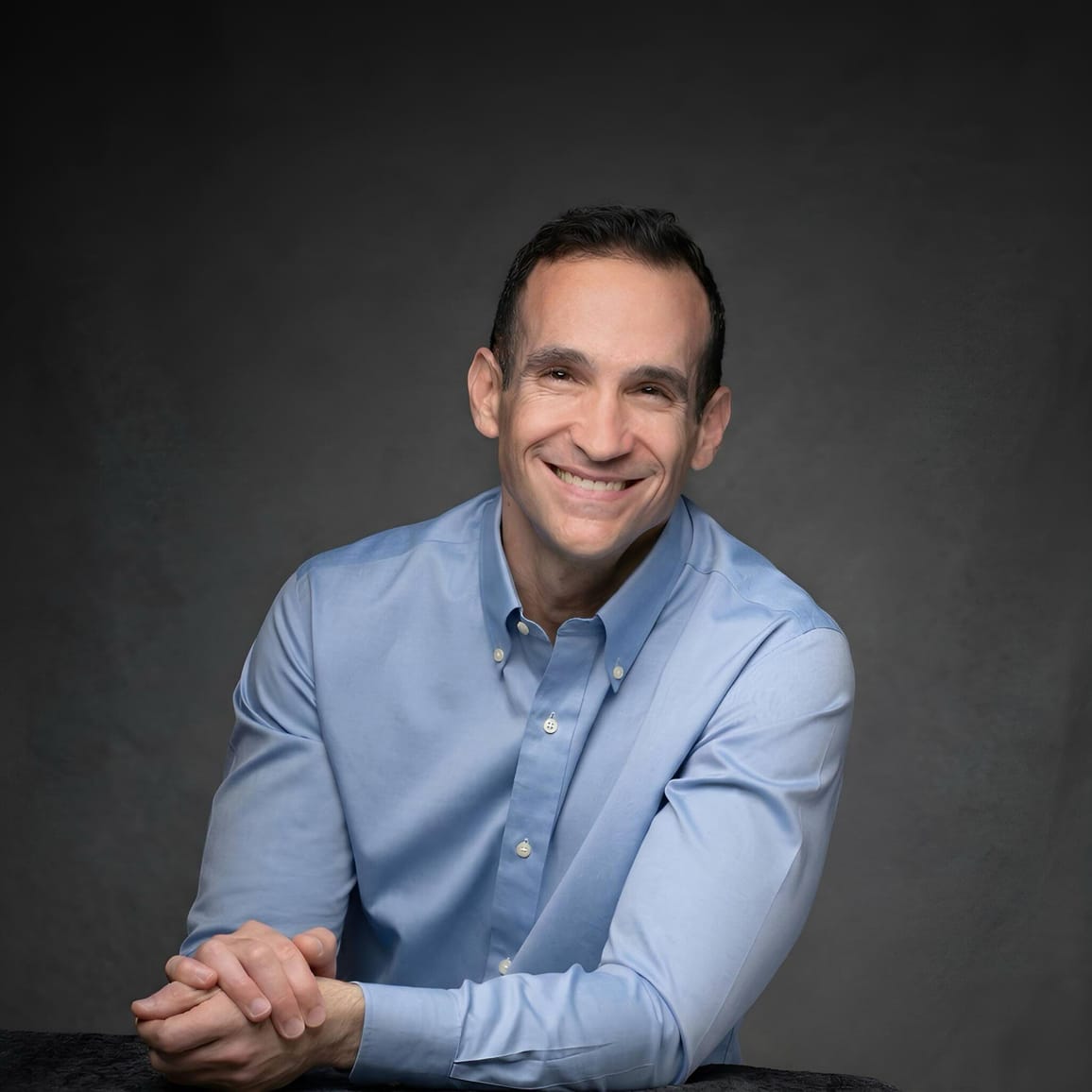
Fresh out of the studio, Nir Eyal, best-selling author of "Hooked," "Indistractable," and the forthcoming "Beyond Belief," joined us in a conversation to explore how deeply held beliefs quietly shape our attention, decisions, and success. Nir shared his personal origin story of childhood obesity that revealed how we escape uncomfortable feelings through habitual behaviors, and progressed through the Hook Model that democratized Silicon Valley's habit-formation secrets for building products like Duolingo and Fitbod. He unpacks the critical insight that the opposite of distraction isn't focus—it's traction—and introduces the Motivation Triangle framework explaining why knowing what to do isn't enough without belief. Throughout the conversation, Nir demonstrates how 90% of our distractions stem from internal triggers rather than technology itself, and challenges the moral panic around AI by drawing parallels to historical fears from the written word to social media. Last but not least, he argues that beliefs are tools, not truths, revealing how our hidden convictions fundamentally alter what we see, feel, and do—and provides a science-backed path for transforming limiting beliefs into liberating ones that unlock previously impossible performance.
"Motivation is a triangle. It requires: Behavior: What am I going to do? Benefit: Why am I going to do it? Belief. If you don’t have those three areas of your life in concert, all the advice in the world is going to go in one ear and out the other. Beliefs are tools, not truths. The majority of our problems today—cultural, geopolitical, personal—come from the fact that we think our faith is fact, and we confuse facts for what are beliefs. Everything worth having in life is on the other side of discomfort. So if you can learn to manage discomfort through the power of belief, what couldn't you accomplish? Everything." - Nir Eyal
Profile: Nir Eyal, author of "Beyond Belief", "Indistractable" and "Hooked" (LinkedIn, Personal Website)
Here is the edited transcript of our conversation:
Bernard Leong: Welcome to the Analyse Podcast, the premium podcast dedicated to dissecting the pulse of business, technology, and media globally. I'm Bernard Leong, and today we are examining how technology shapes human behavior, from how products form habits to how individuals reclaim their attention, and ultimately how beliefs define the limits of what we think is possible.
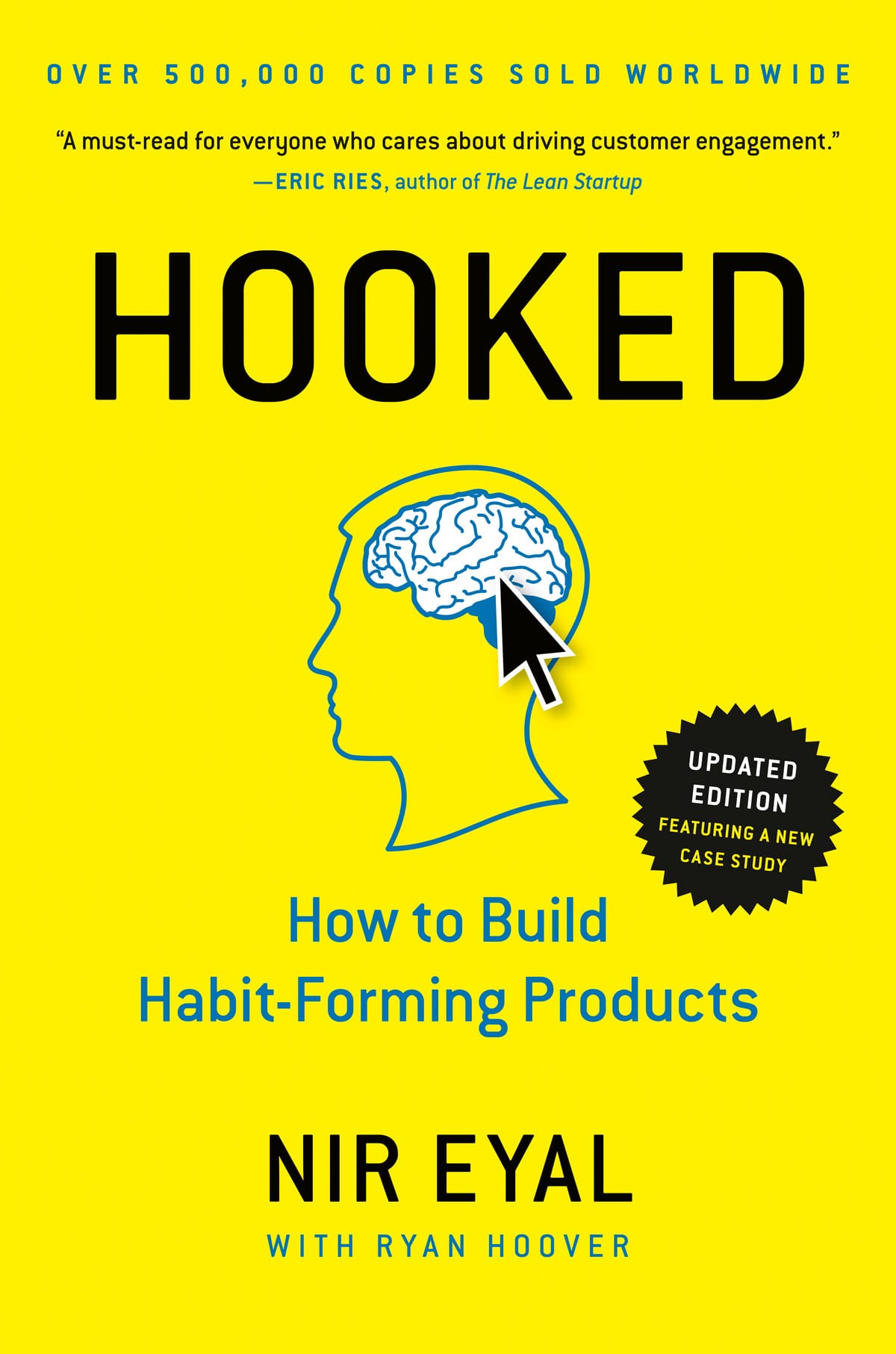
We meet today, Nir Eyal, best-selling author of a few books that two books I've read to dear to my heart. One was Hooked: How to Build Habit-Forming Products, Indistractable: How to Control Your Attention, and I know you're having an upcoming book called Beyond Belief, where he explores how deeply held assumptions quietly constrain performance, decision-making, and success.
So Nir, welcome to the show.
Nir Eyal: Thank you, great to be here.
Bernard Leong: I always start off by asking my guests their origin stories. How did your career journey begin and what drew you to this intersection between psychology, technology, and human behavior put together?
Nir Eyal: How far back do you want to go?
Bernard Leong: Just maybe a good quick version.
Nir Eyal: I will start in my childhood, actually. I grew up clinically obese, not just overweight, but obese. I remember my mom took me to the doctor and he had this chart and he said, okay Nir, here's the green zone, this is a healthy weight for someone your age. Here's overweight, here's you, you're way over here in this red zone of being obese. I remember as a kid feeling like food controlled me. It wasn't until I understood later in life that I wasn't obese because food was delicious. I wasn't overweight because I liked to eat a lot. It was because I was eating my feelings.
It was that I was eating because I was bored. I was eating because I was lonely. I was eating because I was ashamed about how much I had just eaten. If you really dive deep into why we overdo things, why we become distracted by technology or why we overeat or overdrink or do these things that are against our better interest, which is not a new problem, in fact, Plato talked about this problem twenty-five hundred years before the internet, he called it akrasia, the tendency to do things against our better interests.
So we all have that tendency in us. Some of us go way too far and it becomes not just a bad habit, not just a distraction, but even an addiction. The common trait is always that we are trying to escape our feelings. We're not looking for a high, we're looking to go back to baseline. When I realized that, I started getting more control over my life.
That fascination with how products can change behavior, in my case the product was food and how I was overdoing on food to escape an uncomfortable reality, those same lessons carried over into consumer psychology and carried over into distraction and now carried over into my third book, Beyond Belief, which is all about how beliefs change our reality.
Bernard Leong: How does your career experiences now relate to how you write your first book Hooked until today then?
Nir Eyal: Hooked came out of a need that I had. All my books, I don't write what I know, I write what I want to know. When I'm looking for an answer to a question, there's lots and lots of books that answer most of our problems today. If you don't know the answer to your problem, Google it, ask ChatGPT, there's lots of places we can find the answers to our questions. Every once in a while, about once every five years, I have a problem that no one answers to my satisfaction.
With Hooked, I remember this was back in 2012 or so that I started writing Hooked, and I was looking for how to build habit-forming products. I couldn't find a book on the topic. Because I could see that as the interface was shrinking, as we were going from desktop screens to laptop screens to mobile device screens to wearable screens, as the real estate shrunk, habits would become more important. Because there's just less real estate to trigger people with what's called an external trigger.
There's just, you know, fewer pixels to do that in. So I realized that habits would become more important. If you can't be the first thing that people turn to with little or no conscious thought, if you're the third thing on the third page of someone's phone, they're going to forget about you. You're not going to exist. So I was looking for, hey, how do you build consumer habits? I had an in in that my last business was in Silicon Valley, many of my clients were companies like Facebook and Zynga and Amazon. I knew many of these companies and I was looking for, hey, how do they do this? How do the video game companies, how do the social media companies get people hooked?
The goal of Hooked was to democratize their secrets, to steal their secrets so that the rest of us could build businesses that are habit-forming for good. I didn't write Hooked for the social media companies and the gaming companies. They already know these tactics. They've been using them for decades. I wanted to write it for the rest of us. So Duolingo uses the Hook model to get people hooked to learning a new language. Fitbod uses the Hook model to get people hooked to exercise. That's really the goal of Hooked. Hooked was about healthy habits.
Indistractable was the other side. If Hooked was about how do we build good habits, Indistractable is how do we break bad habits. Not to the same products. We want to get hooked on the good behaviors, exercising more, saving more, being with our friends and loved ones, those are healthy habits and technology can facilitate many of those things. Indistractable is how do we break the bad habits around distractions. So that was the linkage between those two.
Bernard Leong: This is interesting because my wife bought Hooked in 2014 and I was taking a glance of the book and I remembered the most important message when you said what startups sell is a painkiller not a vitamin. I thought that that was one of the clearest insights on that. I always felt that when reading Indistractable I feel that there seems to be some kind of like, in what Chinese say, you know the yin and the yang in kind of that feel from your writing style and thinking about the subject itself.
Nir Eyal: That's right. They say that to know something truly and deeply you have to look at it from multiple angles. Part of my life philosophy is that if you can't argue the other perspective you should shut up. You have nothing to say unless you can argue both sides. What I wanted to do is to look at both those perspectives, is to look at the perspective of how do we use technology to build good habits and also how do we make sure that technology serves us rather than hurts us when it comes to these bad habits.
But again, not to the same products. We don't want to build Facebook and stop using Facebook. No, no. We want to build the good habits around saving money, exercising more, etc. and then break the bad habits around the technologies, by the way, that are ancient. People have been drinking too much, eating too much, smoking too much, all kinds of too much for millennia. Distraction is nothing new. Distraction didn't come from technology. Distraction comes from up here. Distraction comes from our uncomfortable feelings that we are looking to escape. If we don't understand that, if we don't start with that principle, that is the source of 90 percent of our distractions, they're called internal triggers, then we keep blaming our devices, but that's not the cause of the problem. That's the proximal cause, it's not the root cause.
Bernard Leong: Just before we get to the main subject of the day, I just want to ask you what are the key lessons you can share with my younger audience about building products and lives with intention rather than having the default behavior you talk about, that bad habit that you're trying to get them to overcome.
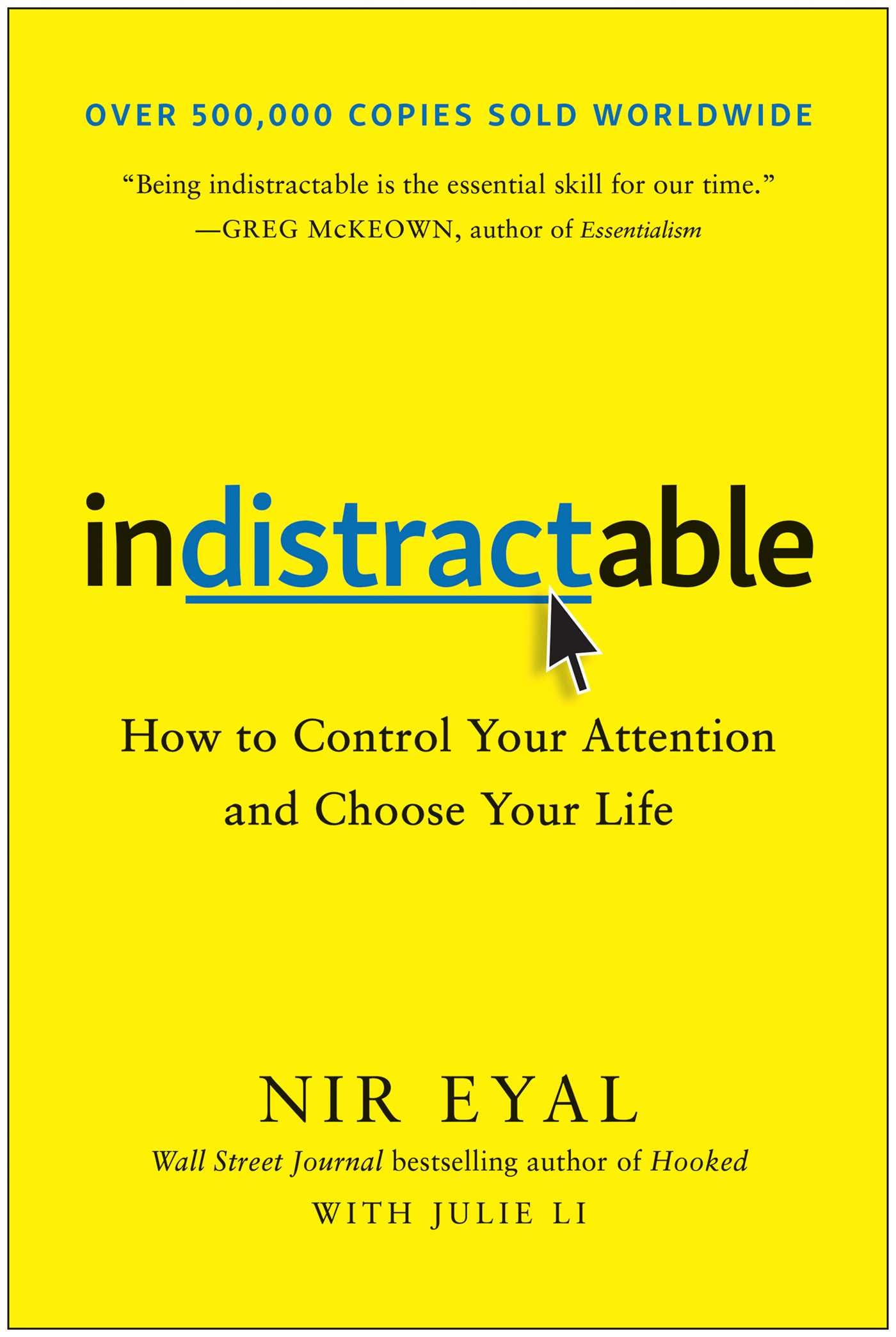
Nir Eyal: Sure. So this is a big part of Indistractable where I start by doing something that I think few authors do, which is to actually define what we're talking about. What are we talking about here? Distraction. What is distraction? So the best way to understand what distraction is is to understand what it is not. What is the opposite of distraction? Most people will tell you the opposite of distraction is focus. I don't want to be distracted, I want to be focused. Incorrect.
The opposite of distraction is not focus. The opposite of distraction is traction. That's right. Of course it is. Think about it. Traction, distraction. Both words come from the same Latin root, trahare, it means to pull, and they both end in the same word, A-C-T-I-O-N, that spells action. So traction by definition is any action that pulls you towards what you said you were going to do. Things that move you closer to your values and help you become the person you want to become. Those are acts of traction.
The opposite of traction, distraction, is any action that pulls you away from what you said you were going to do. Further away from your goals, further away from becoming the kind of person you want to be. So to answer your question, how do we live a life with intent? We do what we say we're going to do.
So if that means exercising when we say we will, eating right if we say we will, being with loved ones when we say we will, playing video games when we say we will. If we say we're going to play video games, play video games. There's nothing wrong with playing video games or watching YouTube or going on social media, do it. Do the fun stuff. But do it on your schedule and according to your values, not the media company's.
That's the critical lesson of Indistractable and I think what makes it so different from every other tech critic out there who says, oh, the social media companies, they're rotting my brain, they're telling me what to do, they're addicting everybody. Bullshit. It is not true. You have way more control than you think you do as long as you believe you are capable. The mistake that a lot of people make is they say I'm powerless, there's nothing I can do, my kids are addicted, I'm addicted, everybody's addicted. No, you're not. You're distracted.
Because an addiction is is a medical diagnosis. We love to medicalize things these days, everything becomes a diagnosis. Vast majority of people are not addicted, they're just distracted and they like it. 'Cause it's fun! It's fun to go on social media, it's fun to watch videos on Netflix, it's fun. The problem is when we give over control and we say well there's nothing we can do about it and we believe these chicken little tech critics that tell us the sky is falling and technology is so bad for us and you tell people there's nothing you can do, guess what they do? Nothing.
Bernard Leong: Do you think that whole thing about the distraction also applies now to AI as well? As in the habit-forming piece that you outsource your brain to the AI rather than you should be thinking critically and use the AI as a co-pilot.
Nir Eyal: So this was the most predictable moral panic ever. In fact, a few years ago I was saying that the moral panic around social media, remember a few years ago, oh social media is the worst ever, we had that movie, now I can't even remember the name, the Social Dilemma movie came out on Netflix, everybody saw that movie, oh my god it's so terrible, and I said back then just wait a few years there'll be another moral panic.
Now hey, the moral panic is here, now it's about AI. By the way, this moral panic has been going on with every new technology. Rock and roll music, and rap music, and the radio, and the television, the bicycle, even all the way to the written word. You know that Socrates said that the written word would enfeeble men's minds.
The written word, the technology of writing things down. Terrible, terrible thing, we should not do that, terrible technology. You know what's interesting? He was right. You know why? Because we can't do what the ancient Greeks could do. You know the ancient Greeks could memorize volumes of information, all in their heads, because they didn't write it down.
So they trained themselves, they used various techniques to memorize things. Songs, memory palaces, they were incredible. Today they would be geniuses if we thought wow, all the things that they could remember in their brains. Because they could do something we don't have to do. We have books where we can write things down in. They didn't have to do that. So we are able to mentally outsource a lot of our thinking and brain processing to things outside our brain.
Now you say well but that's terrible, we can't do the things the ancient Greeks could do. But they can't do a lot of things we can do. So this is the problem. We love black and white thinking. Is technology good or bad? Is social media good or bad? Is AI good or bad? The answer is yes. Sophocles beautifully said that nothing vast enters the life of mortals without a curse. So if something is vast as the internet or the written word or AI enters our lives, it's going to come with good as well as a curse.
That's always the deal. That doesn't mean we should stop using it, it means we should use it smarter. That's exactly what we need to do.
Bernard Leong: I think that most people don't realize technology is neutral, it's actually the human mind that decides how this technology is going to be adopted, right?
Nir Eyal: Well, I'm not sure if it's exactly neutral per se because the design choices, they're called affordances, so if you have a door handle, the affordance of the door handle is to either be pushed or pulled based on how you design it. So I'm not sure if technology is per se neutral, it's that technology doesn't solve problems.
Bernard Leong: Correct. Why do you say correct? Because I made this comment this morning on X, I was saying something like every software solution arrived usually creates another ten more software problems. I borrow that line from George Bernard Shaw on science. Science never solves a problem without creating ten more.
Nir Eyal: Right. So I say it a little different, I say technology doesn't solve problems it gives us better problems. Better problems. You're right, it does both, it gives us ten more problems, but I would much rather have the problems of today's technology than the problems of yesterday's technology.
I mean Singapore is such a wonderful example of this. Sixty years ago, this was a swamp that got flooded with the rains and there were diseases and there was poverty and it's amazing what Singapore's accomplished. But now we have new problems. We have problems of abundance.
If you look at the world, this is the first time in two hundred thousand years of human history where we don't have mass starvation. There are localized pockets, but it's man-made. We have for the first time in two hundred thousand years of human history, we have enough calories to feed every man, woman and child on the face of the earth. That's never happened before, first generation that that's happened. Global poverty is at record lows for the history of mankind.
But the cost of that, the curse that comes with this vast technology of the productivity of how much we can make these days in terms of calories, is that now we have diseases of excess. That's right. The new problem of diabetes and obesity and all these other problems that come with diseases of excess. But I would much rather have diseases of excess than diseases of scarcity.
That's the same thing that's happened with our technology. For all of two hundred thousand years, having this precious resource of knowledge, of information was incredibly scarce. You had libraries that kept scrolls and books and they were incredibly precious commodities. This is the first time where you can get you can know anything virtually in an instant in the palm of your hand. I mean that is amazing. That would have been science fiction a generation ago. Yet we take it for granted today.
So the price of all that progress, the price of never having to be bored, the price of having the world's information at your fingertips, is that we have to learn how to live with the technology. How to live better with it so that it serves us rather than hurts us.
Bernard Leong: I think just for a very quick one because I think we get the main subject of today, I want to I actually I thought through this whole interview with you I try to formulate around three themes: habits, attention and belief systems. Maybe I'll start from the first one which is habits. For listeners who are actually unfamiliar with your work, can you briefly just explain the core thesis behind the Hook model and why is it resonated so strongly with a lot of product builders including myself. My wife actually was the one who introduced your book to me and I was reading through and I did find a lot of inspiration when I design some of the products you see in Singapore today, for example, the PopStation parcel locker.
Nir Eyal: Oh very cool. Very cool. Excellent. Oh I would love to see a breakdown of how you use the Hook model. That sounds fascinating but to give listeners kind of a very brief overview of course there's a whole book on this but basically the Hook model as described in the book Hooked: How to Build Habit-Forming Products, shows that there are four steps to every habit-forming product.
Every habit-forming has a trigger, an action, a reward and an investment. When you have those four steps, unlike a general habit that we have, how to exercise more or learn a musical instrument, a product habit has specific characteristics in order to make that product part of your day-to-day life.
The goal is that you're moving from what's called an external trigger, a ping, a ding, a ring, all these notifications in our outside environment, to creating an association with an internal trigger so that you're using the product habitually. When you do that, it becomes part of people's everyday lives. So the products that succeed these days are the ones that build these crucial consumer habits.
Bernard Leong: I think one interesting thing because I still apply the same set of principles when come to designing AI products. I think in the case of AI, the user experience tend not to be closed-loop. It can be open-loop because you can talk to the chatbot for a very very long time, like say two to three hours. It's almost like an infinite game as such. How do you think now product leaders think about forming habit-forming design in the era of AI and with automation and also increasingly I think it's passive and persuasive technology.
Nir Eyal: So I think what's changed that I predicted several years ago and has come to fruition is that the investment phase, so the Hook model has four steps: trigger, action, reward and investment. That's right. The investment phase is where all the AI genius is headed. This is what's happening.
So the investment phase is where the user puts something into the product that makes it better with use. I see. So it's storing value. Stored value is a really really important characteristic because if you think about everything in the physical world, this couch, your car, your clothing, these things depreciate. The things made out of bits out of atoms rather than bits, they lose value with wear and tear, with usage. Habit-forming products do the opposite. This is a cardinal trait of habit-forming products, that investment phase, if you don't have the investment phase it's not a habit-forming product, it must get better with use. It must store value.
So that investment phase is absolutely critical and so what's happening now is that I call it the TikTok-ification of everything. Because just like TikTok, the moment as soon as you start using the product, it's learning from you. The algorithm is getting better at serving you what you want. That is going to be a trait across products and services across the economy. In fact your customers are going to expect the product to improve and if it doesn't, they're going to go to your competition and you're going to lose your customers, they're going to churn out.
That's really where I see the opportunity for AI is being able to personalize and customize experiences based on user information, based on their data, based on their preferences, based on how they're interacting with the product, the product has to accrue value, it has to store value the more it's used.
Bernard Leong: I think it's personalized because of the way how like for example ChatGPT stores your memory as such.
Nir Eyal: A perfect example of that and I can see myself getting hooked to ChatGPT even though I subscribe to all the AI services, I still go to ChatGPT first even if the model isn't the best model. This is what's so interesting about habit-forming products, they don't necessarily have to be the best in class. As long as they're—but let me let me just say the point here. How does ChatGPT do it? They have that daily digest. That's right. So it's genius. I check it every single day based on what I'm doing with ChatGPT and of course the more information you allow it, if you let it get access to your calendar, if you give it access to your email inbox, it's amazing how much value it gives you.
So let's walk through the Hook model. The internal trigger is I wonder what ChatGPT found for me today, what did it cook up for me overnight, that's the internal trigger. The external trigger is that as soon as you use ChatGPT it has a notification telling you hey here's your daily digest. The action is to click one button and you see these curated articles, they look like articles but they're AI-generated from the LLM. The variable reward is what's in it, right? What new information did I find? And the investment is based on which ones I read and whether I like some versus others, say this is valuable this is not valuable, it gets better every single day.
That's something I have not seen yet, maybe I've missed it, but I have not seen the other companies do and I think we're going to see all of them eventually moving to that model.
Bernard Leong: I'm an AI practitioner. I thought I should talk about this interesting phenomenon. So one thing I tend to do is to actually delete memory. I know you talk about mass customization, the more they know about you, but when I was working in the Human Genome Project as a scientist, I once told a biologist colleague that you know the AI will be able to remember everything, to be able to help you like an assistant. That was like 2005. Then he just made a very I would say a very interesting remark by saying, "Bernard, do you understand what's the evolutionary gain that humans have in forgetting? Because we have the ability to unlearn and relearn."
Nir Eyal: That's very good point. So why do you delete the memory?
Bernard Leong: Because I just want to give the AI, I try not to get the AI to maximize what I want. I like to take things in a very balanced viewpoint. So if it tries to tailor too much to me, sometimes it also tailor my bias or systematic errors. As a theoretical physicist myself I always think about how to put myself to see different perspectives of the problem. So that's how I that's the justification for why I do it.
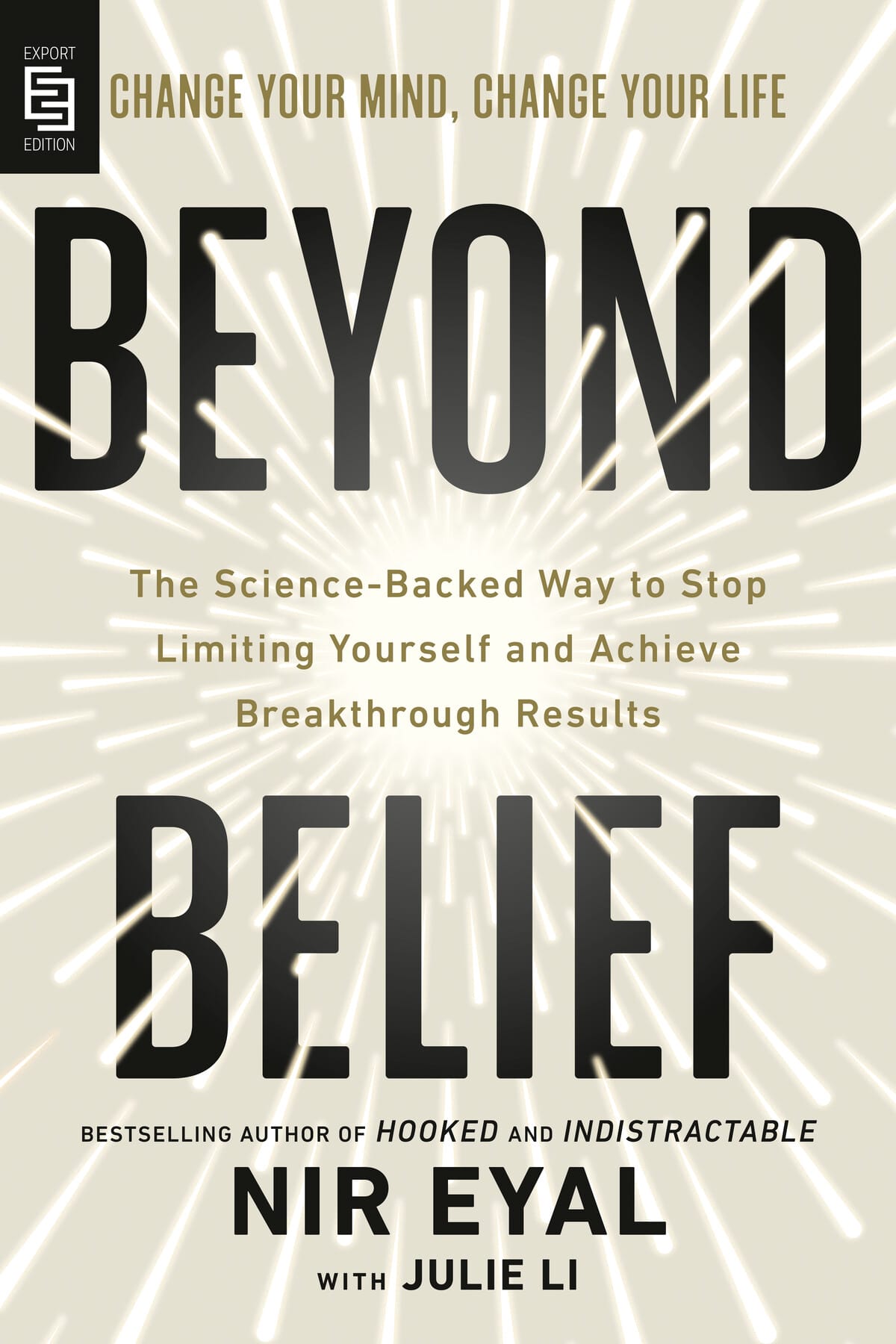
Nir Eyal: Nice. Actually you're going to love Beyond Belief, that's exactly what I train myself and I hope others will adopt as well is is consciously and deliberately looking at things from other perspectives.
Bernard Leong: So where do you draw the line say in the Hook model between creating value through habits or the product crossing into manipulation or exploitation. Many know tech news about products being bad I think is overblown. I think they don't I think a lot of media outlets don't give the product a chance to explain what happened rather than just insisting that they cause the addiction.
Nir Eyal: So I talk about this in a chapter in the book called The Morality of Manipulation and I make the case that there's nothing wrong with manipulation. Why? Because there's two kinds of manipulation. Manipulation is a neutral term. There are two kinds of manipulation, one is good and one is bad. The good kind is called persuasion. Persuasion is when we help people do the things they themselves want to do.
So you want to exercise but you don't find time for it, it's too difficult, you don't know exactly how, you use an app, for example Fitbod, uses the Hook model to get people hooked to exercising. So if that's something you want to do and now here is a persuasive technology that helps you do it, awesome. In fact, it is morally and ethically wrong to not use persuasive technology. If you can help people live longer, happier lives by using technology to help them do the thing they want to do, it's your ethical obligation to build that product. So that's good manipulation.
The opposite of persuasion is coercion. Persuasion is helping people do things they want to do, coercion is getting people to do things they did not want to do. That is unethical. There's only really one party that can coerce you ethically, which is the government. If they have a sign that says don't go over a certain miles per hour, the government can coerce you by giving you a ticket to change your behavior. But in business we can't coerce people. We can't force people to do something. Unless you're a scammer.
So we would never want to use persuasive technology to coerce people into doing something they later regret. Not only is that ethically dubious, it's bad for business. Because in this day and age, if you get people to do something that they later regret, not only will they not do business with you anymore, they're going to tell everybody they know not to do business with you either. So it's not only ethically bad, it's also bad for business to be on that wrong side of this manipulation idea.
Bernard Leong: I want to come to Indistractable because I like the thesis that distraction is not a technology problem but a human one. How should leaders and organizations design work environments that support being indistractable rather than intentionally promote manipulation?
Nir Eyal: So what we see, there's a whole chapter in the book in Indistractable about how to build an indistractable workplace. It turns out that there are three characteristics of an indistractable workplace. Number one is that they let employees talk about this problem.
It turns out that distraction in the workplace is a symptom of dysfunction. I'll say that again, distraction is a symptom of dysfunction. Because if you can't talk about this problem, if you can't raise your hand and say hey boss, you know what, I can't do my best work if I'm constantly interrupted every thirty seconds, if you can't talk about that, that is the problem.
That's got nothing to do with technology, it's got to do with the fact that you can't talk about your problems. If you can't talk about the problem of distraction at work, I guarantee you you have all kinds of other skeletons in the closet, things you can't talk about. So giving people the psychological safety to talk about these problems, that's step number one.
Characteristic number two is that there's a forum to talk about the problem. So in the book I talk about a few companies, Boston Consulting Group, BCG, my first job out of college, which when I worked there back in 2001 was a really tough place to work. They had very high employee turnover, very stressful, I didn't last very long there, I did my two-year program and I got out because it was a really it was a place a lot of people burned out.
Today it's one of America's best places to work as ranked. Part of what they did was they tried this strategy called PTO, predictable time off, where they gave people a forum, a special place to talk about this problem of how do we make sure that people can work without distraction and live life outside of work as well in order to be their best self at work, and it turned out it was a problem like any other. Once they had a place to talk about the problem with the psychological safety to talk about the problem, they could solve it, it was no big deal.
Then the third characteristic and the most important is that leaders need to exemplify what it means to be indistractable. I can't tell you how many clients I have that they call me, they hire me to do a big expensive presentation on how to build an indistractable workplace, and who is it in the back of the room who's on their phone? Is it the young kids? No, it's not. You know who it is? Bosses. It's the boomer boss in his forties or fifties using their phone in the back of the room because they're so important they constantly have to be connected. We can't be hypocrites.
If we want our employees to do their best work and work without distraction, we know that you cannot do your best work if you're constantly interrupted and you're constantly expected to be connected, if we want them to be do their best work, we have to show them what that looks like. So if you want an indistractable workplace you have to be an indistractable boss. By the way, if you want to have indistractable kids, you need to be an indistractable parent. We can't be hypocrites. So those are the three characteristics.
Remember, distraction is a symptom of dysfunction, cultural dysfunction. So you need to give psychological safety, a forum to talk about the problem and exemplify what it means to be an indistractable leader.
Bernard Leong: From your research, what practical behavior changes actually make the biggest difference for individuals trying to become indistractable? Like for example I always like to look at my phone. Like what you said, sometimes all founders work zero-zero-seven, zero-A-M to zero-P-M, seven days a week, and they sometimes really have the anxiety of what is happening. Maybe my question is: how do you so that you can focus your attention better or like time is money, so you have to be very frugal about the amount of time you have.
Nir Eyal: The most important thing is to recognize your internal triggers. This is the icky sticky truth that many founders don't like to think about is that the reason you are checking your phone so much is because you are escaping a feeling. That's the number one reason. We know that we've done studies on this that show that only 10 percent of the time people blame their phones. They say oh my phone is ringing, the notification, my boss, blah blah blah all this stuff outside of us. Turns out that's only 10 percent of the time. 10 percent of the time you look at your phone is because of a ping, ding, a ring, an external trigger.
90 percent of the time that you check your phone, it's because of an internal trigger. A feeling. Boredom, loneliness, fatigue, uncertainty, anxiety. That is the source of 90 percent of our distractions. Because distractions begin from within.
So the most important thing you can do, if you're struggling with distraction, the first step, it's not the only step, there's four steps, but the first step before you look for tips and tricks and life hacks, all that stuff doesn't work if you don't first understand why you're checking your device so much. Or why you're giving into any distraction whether it's drinking too much, too much news, too much booze, too much football, too much Facebook, all of it has the same source. It's about escaping discomfort. Kind of like what I was telling in the very beginning around when I was overweight. It's about a feeling.
But we don't like to think about that. Can't I just install an app to fix this problem? Can't I blame Facebook? Can't I ask the government to fix this problem? No. They're not going to fix it. It's not your fault. It's not your fault. You didn't invent Facebook, you didn't invent ChatGPT, you didn't invent this amazing technology. But it is your responsibility.
Bernard Leong: What I like about the way you put it is humans are ultimately responsible for their own addiction.
Nir Eyal: Well, who else could it be? Who else's responsibility could it possibly be? It doesn't again, I'm not saying it's easy. I hear this a lot. People say well that's not easy, how do I... Well, everything worth having in life is on the other side of hard. You want a good family? You want to have a great relationships with your spouse or your kids? Hard work. I have a seventeen year old and I've been married for twenty-five years. Sometimes it's hard work. You want to build a business? You tell me. Hard work, right? It doesn't come easy. You want to get in shape, have good health? It's not easy.
The easiest thing in the world is to do the lazy stuff, is to eat junk food and to treat people however you want to treat them and not be mindful and you know, that's the easiest thing in the world. But you don't get an outstanding life that way. Sometimes you have to do hard work. The price of all this progress, the price of these amazing tools, is that we have to adapt. We have to learn new ways of being in order to get the best out of these tools.
Bernard Leong: So I'm going to come to now your latest book, Beyond Belief. So your upcoming book Beyond Belief is explores how deeply held beliefs can limit performance. I guess what prompt you to focus on belief systems after habits and attention?
Nir Eyal: So I wrote Indistractable and I started doing these office hours where anybody can book time with me. I wanted to hear feedback about what they thought and I still do this, that anybody can book fifteen minutes, I do this for one hour a week, you book fifteen minutes with me and ask me anything you want. For years I've been doing this and it's very valuable I hear all kinds of great feedback.
But with Indistractable maybe like one out of twenty calls, somebody would call and they would wait for months sometimes to talk to me. Sometimes there was a backlog and they'd have to wait a few months. They'd call me up and the call would sound like this. It would say something like, "Hey Nir, I read Indistractable, it was great book, really enjoyed it, but it didn't work for me."
Oh my gosh tell me, I spent five years writing it, I have thirty pages of peer-reviewed studies, citations, so tell me what didn't work, I'd love to know more. "Well you know I didn't do step one." Oh okay no problem, you didn't do step one. No problem. Tell me about step two. How did step two go? "Ah you know I read step two. I read step two. I just didn't I just didn't do step two."
I thought wait what the heck is going on here? Here's this problem that everybody complains about, distraction and this and that, here I gave you the solution on a silver platter, five years of research, here you go, it's two hundred fifty pages, take you a couple hours to read it and it's going to change your life. Just do what's in the book. People would wait for months to tell me that the technique that they didn't do didn't work.
It blew my mind. How could that be? Then I realized wait a minute, I do this all the time. I have books on the bookshelf full of great advice that I don't use. Or coaches and mentors that I've heard from and I didn't do what they said I should do. I thought well what's going on here? Why is it that despite knowing what to do, we don't do it? What's missing? What am I not understanding here?
I realized that our basic understanding of motivation is missing something. We think if I tell people what to do or if I tell myself what to do, the behavior, what do I do, the behavior, and why I should do it, the benefit, well it's a straight line. Do this, get that. Makes sense. That's how our jobs work. If you do this job, you get this paycheck. Great. But there's something missing. If it was that easy, everybody would have six-pack abs and we'd all be millionaires. It's not how it works.
What's missing is belief. If I don't believe that I will get the benefit, or if I don't believe I can do the behavior, I'm not going to do it. I lose motivation. That's what happens. So before you read another self-help book, before you listen to another guru, before you take any advice you're not going to use, you have to understand the fundamental mechanism of how motivation works.
Motivation is a triangle. It requires the behavior, what am I going to do? It requires the benefit, why am I going to do it? And then it requires the belief. If you don't have those three areas of your life in concert, all the advice in the world is going to go in one ear and out the other.
Bernard Leong: So what are the common limiting beliefs that you see among leaders, founders or even knowledge workers today then?
Nir Eyal: Oh where do we start? I mean I'm too old, people like me can't succeed at this, it's too late, I'm too this, I'm too that. It's you name it. The problem isn't the limiting beliefs we can articulate. We've all heard someone say something that you look and say no that's not just do it, just try it, see what happens. When it's other people. When it's for ourselves, we can't see our limiting beliefs. They're hidden to us.
We all have limiting beliefs. I've spoken to billionaires, I've spoken to high school kids who are just getting starting in life. We all have them in different areas of our life. You know I've talked to billionaires who have so many liberating beliefs about their ability to succeed in business. We see it all the time, we call it the reality distortion field. People said this about Steve Jobs in his book Walter Isaacson coined that term, that he had such liberating beliefs that everything would work out, that he would will things to happen and it was his defining trait.
Trump by the way shows this whatever you believe politically also, he just wills reality into existence and he believes it's the case no matter what. But what's interesting is that you can have those liberating beliefs in one area of your life, but in another area of your life you're full of limiting beliefs about your health, your body, your relationships.
So the idea of the book is how do we discover those limiting beliefs that each of us have in various domains of our life and how can we turn those limiting beliefs into liberating beliefs?
Bernard Leong: This is where I'm going to ask you a really personal question. As an entrepreneur myself, my desire is to actually build this product to disrupt the existing business. I'm always juggling between two perspectives. One, I can fake it till you make it, raise a lot of money and get there, or I could choose the slower approach where I try to get everything correct first and really experiment and but then sometimes because of that I try not to raise and sometimes people think that that's a limiting-limiting yourself belief. I've constantly think founders have this kind of back and forth. How do you see in from the Beyond Belief's point of view how do I overcome this kind of push and pull between the two extremes?
Nir Eyal: So what is the belief? Can you state it in a sentence?
Bernard Leong: My belief is that I would be able to build that product and be successful. I still believed in that. But what was the fake it till you make it part? The fake it till you make it part is like when if maybe to succeed I should be like other founders, raise tons of money, you know, hire the quickest team possible, burn a lot of cash, which doesn't suits me very well. But sometimes—why is that faking it, I don't understand?
Sometimes people just fake metrics to get to where they are in the next round of finance. Which I see it a lot in Southeast Asia, not necessarily in the US but I've seen it a lot around the environment I'm in. It's what I think what I'm hearing is that in order to succeed you have to fake it till you make it.
Bernard Leong: Sometimes you get examples like these. Is that what you believe?
Bernard Leong: No it's not what I believe, but it's an observation I make. I'm consciously telling myself—
Nir Eyal: But what's the belief that you have that you think might be that you're struggling with that might be limiting you?
Bernard Leong: What I'm struggling with is should I think bigger and should I be more aggressive against the current how the ecosystem or I should be contrarian have a point of view and do what is necessary to build a sustainable business rather than thinking about all these what I called vanity things around.
Nir Eyal: What do you want for your business?
Bernard Leong: I would actually want customers to just use the product. I don't have to raise a lot of money. I think this is where I struggle a lot where you get a lot of external peer pressure and maybe just a vocally self-critical...
Nir Eyal: So you want a small business. You want a what we call a lifestyle business versus a venture scale business.
Bernard Leong: No, no. I'm building a venture scale business but I just want to have enough time before I get onto the treadmill of the before you raise money.
Nir Eyal: Before you raise money.
Bernard Leong: Before I raise money. Good news is at the moment I don't seek them out so they don't seek me out. Some people are tracking me but I'm trying not to.
Nir Eyal: I would cross that bridge when you get to it. I would I think some people think that, not saying that you think this, but some people think that raising a lot of money, you know you see headlines of oh so and so raised ten million dollars, raised a hundred million dollars, oh my god billions of dollars they've raised. They think that the raise is the outcome. That's the starting line. That's right. There's nothing glorious about raising money. I mean okay it was a landmark that's great you should okay terrific, you didn't not raise money which would equal failure. But that's not the end destination. Raising money is a tool to reach the end goal.
But what you need to focus on, I don't know exactly what stage you're in, but serving your customers, having a validating a business model, that's the most important thing you can do. Like in an early stage, every business has these three pillars. It's what I call GEM, actually Reed Hoffman created this, I can't take credit for it, but GEM stands for growth engagement monetization.
So a startup needs to have two of the three and a plan for the third. So most of the time they're working on growth and engagement, that's the most important two things to focus on and then monetization comes at some point. So you need some kind of business model that can deliver monetization. But no startup, if you have all three you're a validated business, you're no longer a startup.
So in the early stages I'd worry about growth. How do you acquire customers profitably so that lifetime value is greater than the cost of acquisition. Engagement, how do you keep people coming back so that so that you can have low churn and high value per customer. Then monetization, you know that comes later how do you have a sustainable business.
But that's where venture capital helps is that if you don't have- if you're not profitable up front, okay you can raise your money to to gap that time or to put the fuel on the fire and say hey you know if we could grow super fast if we could put more money towards sales or whatever the case might be. So until you're there I wouldn't worry about venture capital at all, frankly. I would worry about delivering value to customers.
Bernard Leong: I think maybe one thing I probably think about is like the similar companies in what I'm working on have already raised a lot of money and sometimes I'm asking myself that the limiting belief maybe I should have done the same on there from time to time as a form of reflection as well.
Nir Eyal: I think following the competition is always a terrible idea. I think the best thing to do is to stay focused on your customers. Because I can give you an endless list of companies that raised money or followed other people raising money that are in the graveyards of Silicon Valley. So just because someone raises money doesn't mean anything.
I mean there's a sucker born every minute. You can find someone to give you a few million bucks, it's you know it's not that hard with your pedigree, I'm sure you can do it pretty easily. It's much more important to be to have conviction about whether the timing is right. You know we talk about you don't want to be too late. There's a huge risk to being too early. Huge risk.
If you think about Apple, Apple was never first at anything. At anything. They weren't the first, the iPod, there was tons of MP3 players. They didn't make the first laptop, they didn't make the first desktop, they didn't make the first what today is the iPhone. They were second, third or fourth at all those things. So it's not necessarily the best thing, you don't always have to be first at things. Sometimes you want to wait a little bit so that you're not first, but you're last. You're the one who makes the market who actually defines that market.
I'd rather have conviction that something is going to work based on customer feedback versus well it seems like everybody else is raising money so I gotta get after it too.
Bernard Leong: So what's the one thing you know about human behavior whether habits, attention or even beliefs that very few people do but should?
Nir Eyal: Where do we start? I mean I think the most important thing is to realize that facts are different from beliefs and beliefs are different from faith. That we confuse those three terms. A fact is an objective truth. It's true no matter what you think. The earth is more like a sphere than it is flat, it doesn't care what you believe. Then on the other end of the spectrum from a fact is faith. Faith is a conviction that does not require evidence. So in the New Testament in Hebrews it says that faith is that which you cannot see. It does not require evidence. God rewards the righteous. That is something that does not require evidence, it's faith.
Then there's something in the middle which is a belief. A belief is a strongly held conviction open to new evidence. A strongly held conviction open to new evidence. So the point of Beyond Belief is to show folks what I've learned and what's changed my life over the past several years is that beliefs are tools, not truths.
Beliefs are tools, not truths. Because the majority of our problems today, cultural, geopolitical, personal problems come from the fact that we think that our faith is fact and we confuse facts for what our beliefs. The whole idea behind the book is to bring us back to a point of intellectual humility.
We can look around us and notice that the vast majority of things in life will never be facts. They're beliefs. Should I marry this person? Should I start this business? Should I take this path in life? There will never be certainty, they will never be objective facts. Yet we want to put them in these nice clean buckets of true and false. That's not reality.
Rather what we should do is to be militant about nuance and understanding and humility. To constantly ask ourselves, is this belief serving me or am I serving the belief? Because a belief does not have to be true for it to be useful. If we can evaluate our life, our personal life, our relationships, our business, our society through that lens of is this belief serving us?
Turns out we do better in business, we can succeed and see opportunities other people never saw because they don't believe they exist. We can live longer, do you know that people who have a healthy belief about aging live seven and a half years longer, which is a greater effect than stopping smoking or lowering cholesterol, seven and a half years longer if you have positive beliefs about aging.
We can change our relationships. I mean this book and the techniques I describe are the secret to why I have a marriage now for twenty-five years. Because the interpersonal relationship between my daughter and my wife and I has never been better because we don't realize that we don't see people as they are, we see people as our beliefs say they are.
So beliefs touch every area of our life. So it's it's that I think what I'd most like to convey is that these beliefs are tools, not truths.
Bernard Leong: If I were to ask is belief something that's like a intrinsic motivation, less of an extrinsic motivation that is validated by others.
Nir Eyal: So intrinsic, extrinsic, it's a little there's a there's a long science around all that. But I think the important thing is to realize that what matters is that motivation triangle we talked about. Is do I believe that the benefit is going to accrue, and let's say that's some kind of extrinsic benefit of, you know, do I trust my boss or the company to deliver my bonus or whatever, so that could be extrinsic.
The intrinsic part has to do with the behavior. What we see with these limiting beliefs is that we tend to quit way too soon because we don't believe in our own ability to do what we know we should do. We basically know that if you want to get in shape, you gotta go to the gym, you gotta eat right, we know what to do. It's not that hard, you don't need to buy a book from some guru, we all know how to get in shape. It's not that hard. But do we believe in our ability to follow through?
We have all these limiting beliefs of I don't I don't have time, I'm too old, I'm too this, I'm too that. These are our limiting beliefs. To start a business, how many people say oh I can't do a business because of reasons X, Y, Z, right? There's all kinds of reasons. So many times that the extrinsic part is around the benefits and the intrinsic part is around the beliefs in ourselves in that behavior.
Bernard Leong: So what's the one question you wish more people would ask you about your work but they don't?
Nir Eyal: About my work. Well you've asked some good ones, I can't I don't know if I would say there's one question that I should be asked more. I think maybe there's a big component around agency.
Bernard Leong: Tell me more about agency.
Nir Eyal: So that's the so the book is organized according to these three powers of belief. That beliefs fundamentally change what you see, what you feel and what you do. It's attention, anticipation and agency. It blew my mind. Like the research and I'm not a very you know woo-woo type of person, I hate that stuff. Like I need to see the data, I need to see the studies. That's why there's over thirty pages of peer-reviewed studies citations in this book, I'm very very research backed.
That's why it's a scientific a science-backed technique. The research is just mind-blowing. How in the in the second chapter of the book, I talk about hypnosedation and this gentleman Daniel Gissler who is a commodities trader in his fifties and he goes under surgery to remove screws from his ankle with no anesthesia. None. Not general anesthesia, not local anesthesia, none, just using the power of his mind.
I'm not advocating for hypnosedation, I'm not sure I would do it frankly, but I use that example to show people, and by the way he's not alone, tens of thousands of people in Switzerland, in France, in Belgium, this is now a widely used practice. It turns out that people heal much quicker when they don't go under general anesthesia.
The reason I use that example is that wow, you know if we can use the power of the mind, the power of our beliefs to reshape our attention, anticipation and agency so that we can overcome the pain of surgery without anesthesia, what else can we do? Because remember we talked about earlier that everything worth having in life is on the other side of discomfort. So if you can learn to manage discomfort through the power of belief, what couldn't you accomplish? Everything. You know, everything's on the other side of discomfort. So if you can manage discomfort better by re-evaluating your beliefs, wow, you can not only do the things you know you need to do, you can do them without the difficulty that you're currently suffering through.
Bernard Leong: It reminds me of the recent documentary I saw with Chris Hemsworth on Limitless where he actually have to defy belief that he can do play the drums within a performance in front of 70,000 people and he had to do in two months and also the pain management part in the other episode as such. So my traditional closing question then. What does great look like for you for Beyond Belief, how do you measure if the book has been successful among others?
Nir Eyal: My measurement has always been did it help me. I don't write books to become successful. I write books to answer my questions. That's always been the way I've written. I've always followed my curiosity because I'm looking for the answer, not because I found the answer. That journey is is what drives me, that curiosity that I follow. In this book, nothing has changed my life more than writing this book. I do all kinds of things today that I didn't do before, and so to me it's already success because it's improved my life so much. I hope that it helps others as well.
Bernard Leong: I already pre-ordered the Apple book copy so I should be getting it soon when it comes out. Nir, many thanks for coming on the show.
Nir Eyal: My pleasure. Thanks.
Bernard Leong: We have two closing questions. My first one is any recommendations that have inspired you recently?
Nir Eyal: Any recommendations? Well, if you're listening to this podcast and you're not in Singapore, I would highly recommend coming to Singapore. I think I lived here for six years and the book Beyond Belief is in some parts you could say it's a love letter to Singapore. Because the society we have here in Singapore is so special, is so unique on earth.
There's a there's a chapter in the book about why prayer works even without faith. It is a chapter that I could not have written anywhere else on earth. Because only in Singapore could I have gone to a rabbi who introduced me to an imam, who introduced me to a swami, who introduced me to a monk, who introduced me to a priest.
I went to all five of them asking the same question: how do you pray even if you have uncertainties about God? I took away something from each and every one of them and now I pray. Even though I don't subscribe to a particular faith, it's enhanced my life so much because the science is unequivocal. Even if you don't believe in a supernatural power, the science around prayer is very hard to ignore. People who pray are happier, they live longer, they're more connected to their community, they contribute more. Lots of good things happen when you pray.
Only in Singapore could I get this diverse perspective and so my recommendation for anyone who hasn't lived in Singapore, been to Singapore, is to come check it out.
Bernard Leong: Thank you so much on that. My final question. How do my audience find you and where do they find the book?
Nir Eyal: Thanks. So it's sold all over Singapore today and all over the world, on Amazon or your local bookseller will probably have it, if they don't please ask them to stock it. The book comes out March 10th is when it'll be available worldwide. If you go to my website NirAndFar.com, there's actually a thirty-day belief transformation journal, which is absolutely free, if you order the book, you can if you pre-order the book you'll get it there and that's at NirAndFar again, Nir spelled like my first name N-I-R, and far dot com.
Bernard Leong: For all those who wants to follow our show, you can definitely subscribe to us on YouTube, LinkedIn and all the other channels. Nir, many thanks for coming on the show to share with me about Beyond Belief. Something that I've been thinking quite a lot with and I hope your book can also help me to address some of those questions I have in my mind. Thank you so much.
Nir Eyal: Thanks so much.
Podcast Information: Bernard Leong (@bernardleong, Linkedin) hosts and produces the show. Proper credits for the intro and end music: "Energetic Sports Drive" and the episode is mixed & edited in both video and audio format by G. Thomas Craig (@gthomascraig, LinkedIn). Here are the links to watch or listen to our podcast.