Building the World's Largest Podcast Studio Network: Poddster & Podyx with Borko Kovacevic

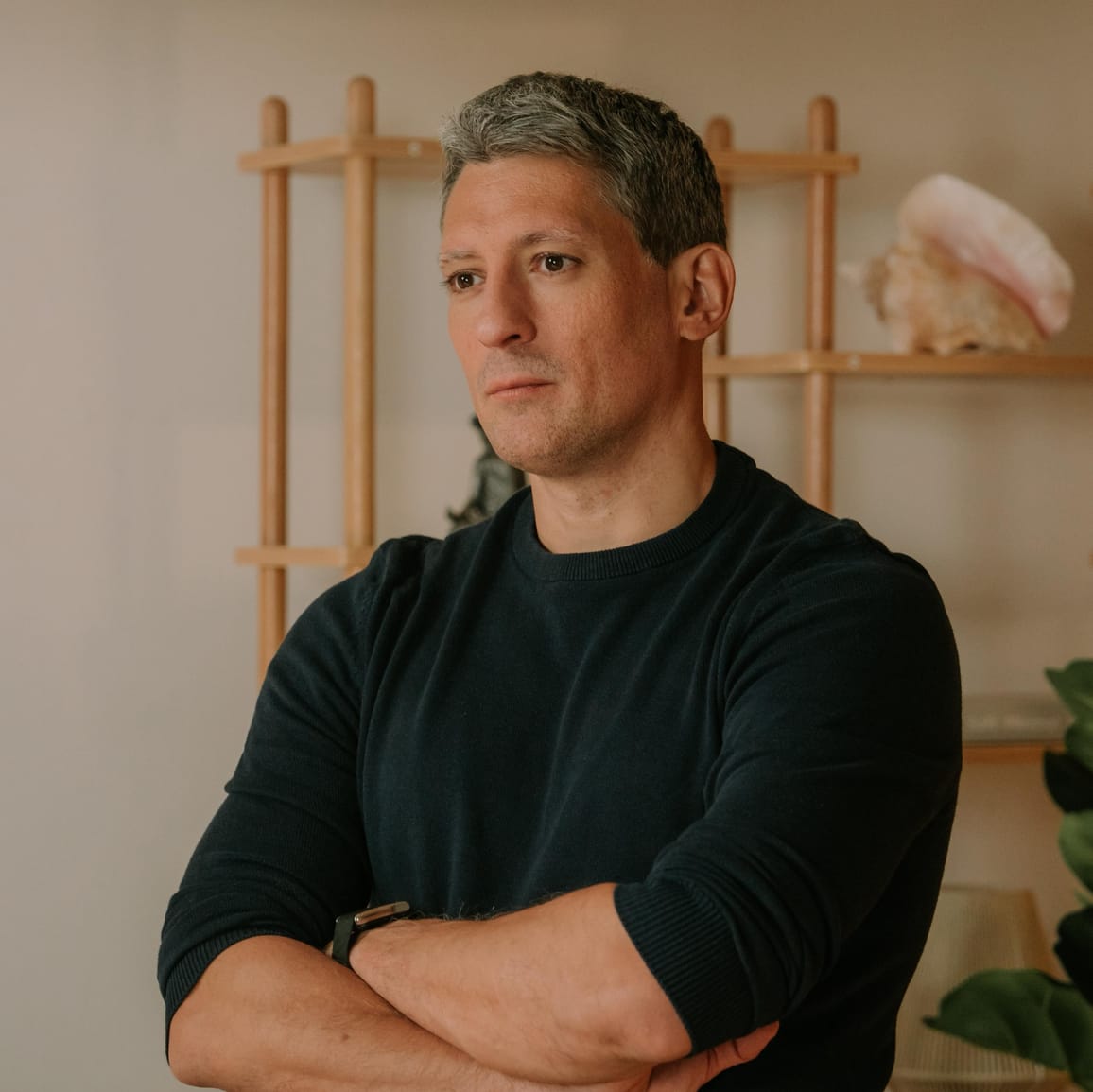
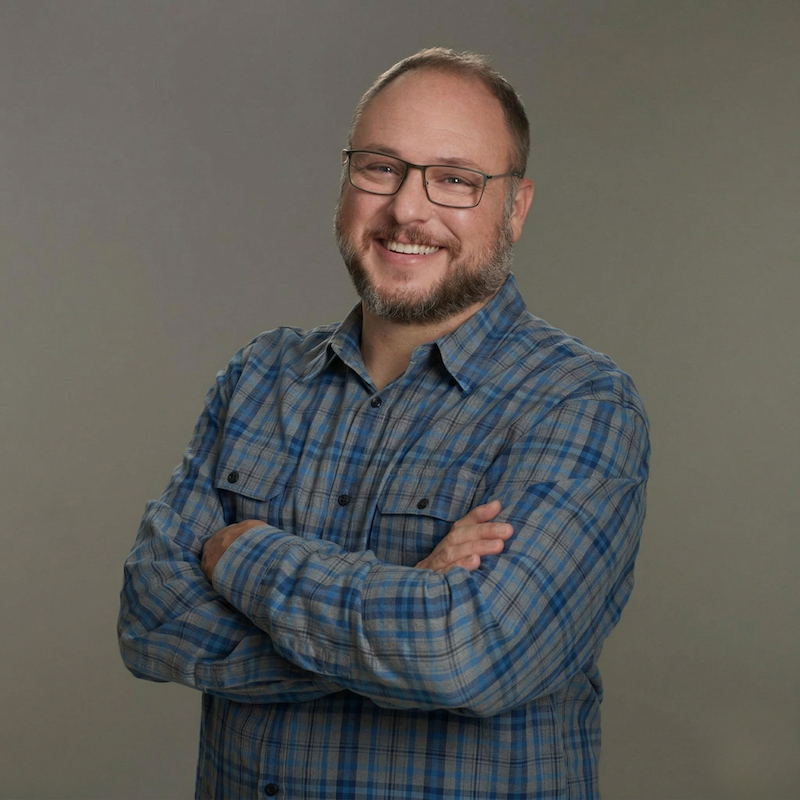
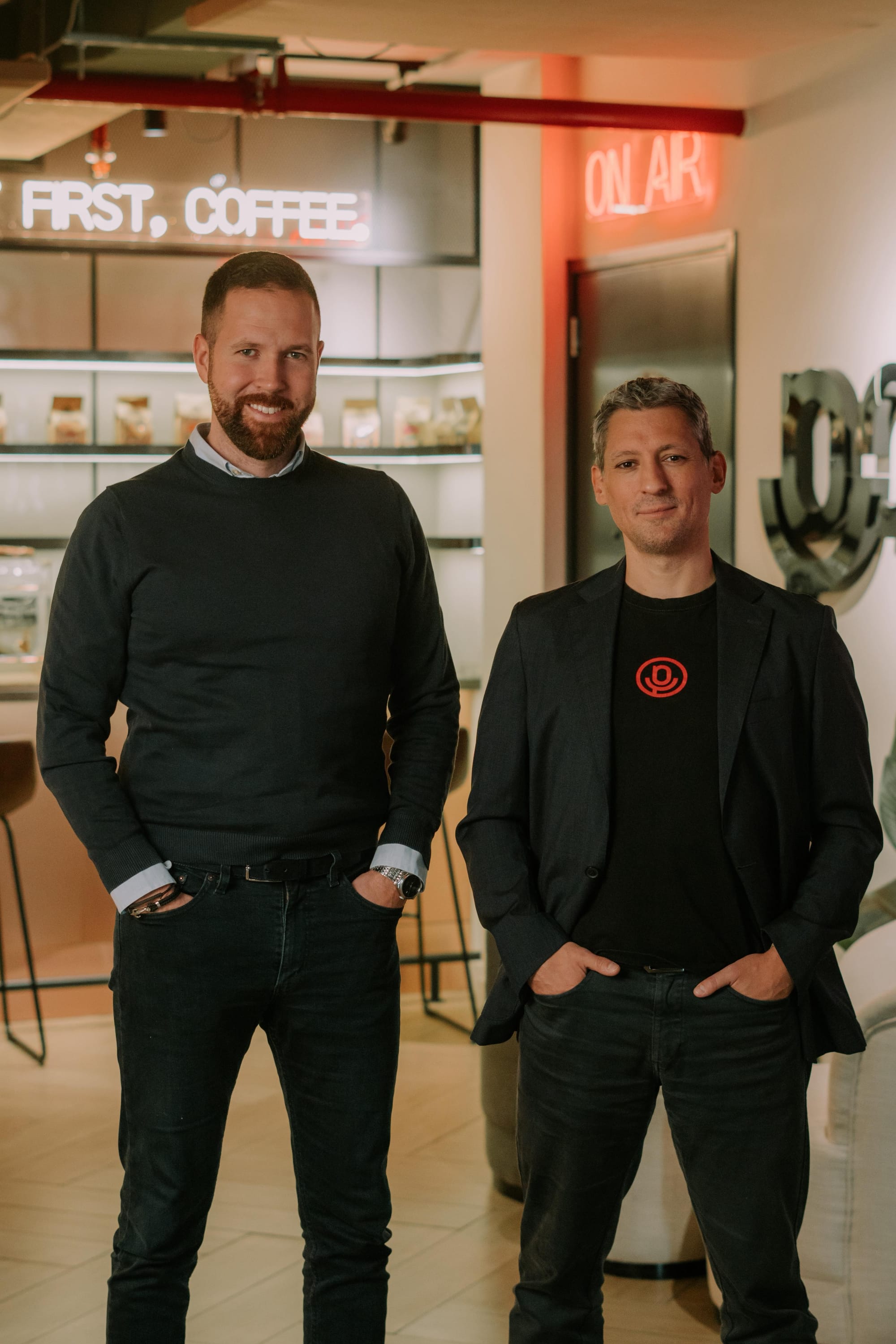
Fresh out of the studio, Borko Kovacevic, Co-founder of Poddster and Podyx, joins us to explore how he is building the world's largest podcast studio network and the operating system behind it. He shares his career journey from nearly 17 years at Microsoft across Central Europe and Asia Pacific, to making the entrepreneurial leap and launching Poddster's first flagship studio in Dubai, followed by Singapore. Borko explains how Poddster scaled by treating operations like software — standardizing over the operational framework to run studios from UAE and Singapore to now globally across the world while building a flywheel connecting corporate brands with authentic content creators. He unpacks how Podyx, the software spinoff, hit 24 markets with zero churn on day one. Closing the conversation, Borko shares why frequency and consistency in content creation — not polish — is the single most underestimated edge in the AI era, and what great looks like for Poddster and Podyx as a global studio network and platform.
"So what people underestimate is frequency and consistency in posting content beats everything else. Because the future internet is about you being available online and you providing enough content, enough material, that the algorithms learn about you. If they learn enough about you, you will be recommended in searches, you will do better on SEO, you will become more discoverable than anybody else. And that's the part which I think people underestimate." - Borko Kovacevic
Profile: Borko Kovacevic, co-founder, Poddster and Podyx (LinkedIn)
Here is the edited transcript of our conversation:
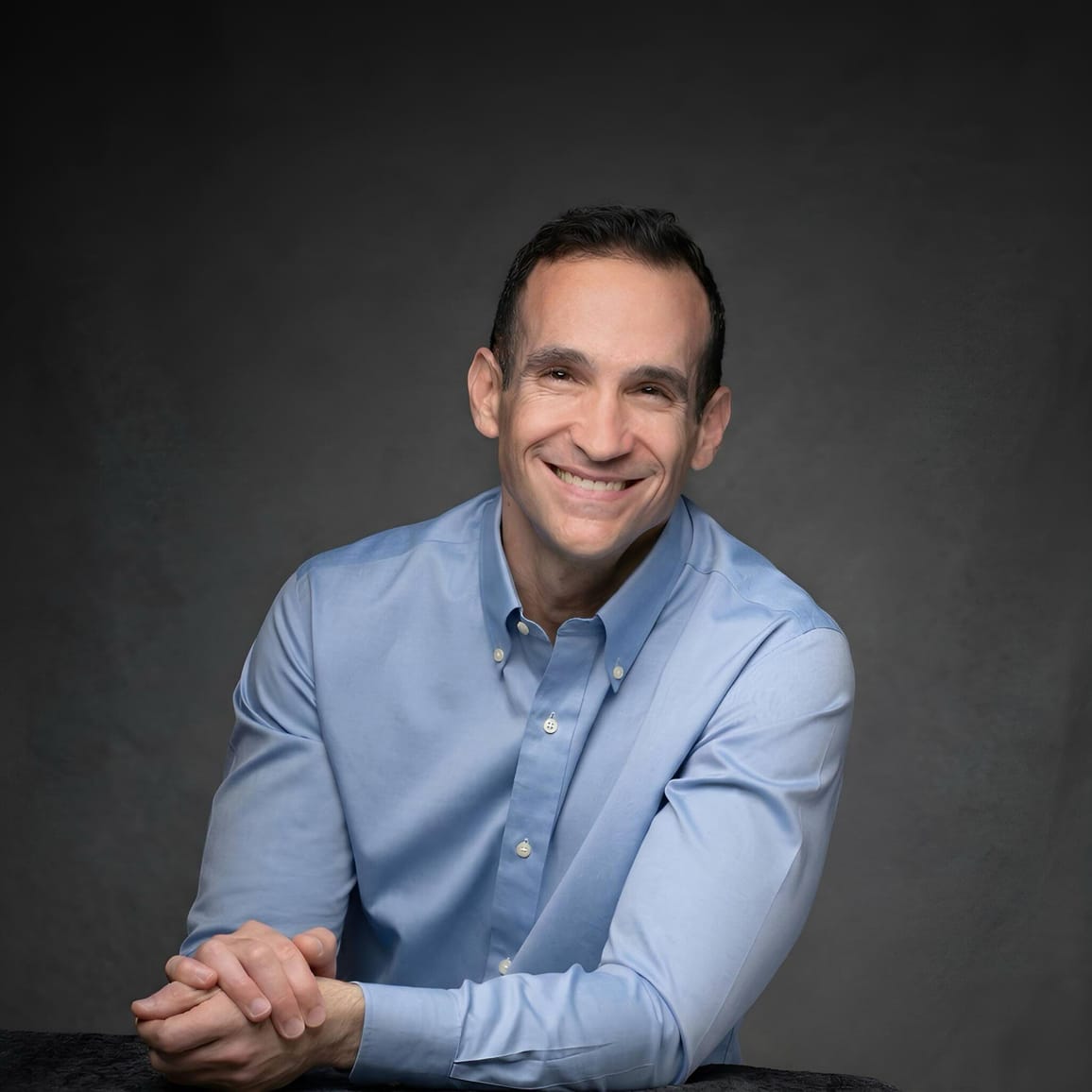
Bernard Leong: Welcome to Analyse Podcast, the premier podcast dedicated to dissecting the pulses of business, technology, and media globally. I am Bernard Leong. Podcasting is no longer just a creator medium. It is becoming a strategic channel for thought leadership, audience building, trust creation, and business development. But what does it take to build not just a podcast, but the infrastructure and ecosystem behind global podcasting? With me today is Borko Kovacevic, Co-founder of Poddster and Podyx. After spending nearly 17 years at Microsoft across Europe and Asia Pacific, Borko made the leap into entrepreneurship to build one of the most ambitious podcast studio and software businesses emerging from Asia and the Middle East. Today we'll explore his career journey, the story behind Poddster and Podyx, and how he sees the global podcasting and content creator landscape evolving for businesses, PR agencies, and creators. Borko, it's been a long time coming. Welcome to the show.
Borko Kovacevic: Thank you. Good to be here.
Bernard Leong: I always start with your career journey. You have a pretty unusual path — you grew up in Serbia, had a very long career at Microsoft focused heavily on gaming, and now you're a business owner and entrepreneur. How did that journey come about?
Borko Kovacevic: It's a long journey. First, thanks for having me. It's a great opportunity to talk about some lessons I've made over the last two decades. I started with Microsoft shortly after I graduated. They used to have this student consultant program where students were basically recruited during university to do projects like Microsoft Imagine Cup, which is a coding competition, and to engage other students in academia. So I started with Microsoft early on. I was a Microsoft Certified Professional, a certified DBA, following the technical track up until a certain point. After I graduated, I joined Microsoft and spent 17 years there. In my opinion, it was definitely something that shaped me because I saw at least three to four versions of Microsoft. I joined when Gates was still CEO — that was his last year. Then Ballmer took over, so a bigger part of my career was under Ballmer. Then Satya. It was multiple versions of Microsoft, not just as a whole but also across shifting regions — from Central Europe to Singapore and APAC — which shaped me in different ways.
Bernard Leong: You spent close to 17 years in roles spanning marketing operations, business development, and country leadership across different regions, and now you're running your own business. What were the most important lessons from that chapter of your career that you can share with my audience?
Borko Kovacevic: I've reflected on that a lot since exiting almost two decades of corporate career. One thing that happens with a lot of people in corporates is complacency. As soon as you hit your KPIs, your boss likes you, you're settled — people stop looking for growth opportunities, especially the tough ones. I achieved success at Microsoft way too early — probably earlier than I should have. Getting picked as one of the top seven people in the world at Microsoft, receiving a golden Rolex from Steve Ballmer on stage in Denver Arena in front of 30,000 people, hand signed by Bill Gates. After that, I was riding the wave, thinking things were going well. Many of my mentors were telling me: get out of your market, move to another region where you don't know anyone. At that point I was like, why would I move? Things are going well. I wasn't looking for more challenges and more opportunities until it happened to me.
What I've learned — now reflecting back on more than two decades — is that people should always be looking for opportunities that push them out of their comfort zone, and doing it on their own versus waiting for things to happen to them. My move to Singapore wasn't planned in advance. Decision makers changed around me. My career was stagnating. I was even pushed out of roles — close to losing my job at some point. I couldn't believe how this could happen to me after all the accolades and annual awards. But it happens because you stop growing and become complacent.
So I literally took a world map, looked at every possible country where I knew people in Microsoft — Asia, the US, Western Europe, the Middle East — and sent 50 emails, requested 50 calls, and talked to everyone I knew so I could get somewhere new. The same thing later happened in Singapore. When I was running Singapore as COO and Country Manager, I kicked myself out of that comfort zone again and moved to Asia Pacific as a region to run a totally different business. I forced myself out of Singapore Enterprise to go into startups and ventures in Asia — just to remove myself from something that was starting to feel like a groundhog day. That's my biggest learning: look for opportunities to change yourself as much as you can, because it will happen to you if you don't push yourself.
Bernard Leong: That's a very important lesson. From that moment you decided to leave and go into global podcasting with Poddster first — was there a specific moment when you knew you wanted to leave behind your corporate career and build something on your own?
Borko Kovacevic: I always wanted to try building something on my own. It wasn't a sudden realization. It was always there — I just couldn't articulate it properly. I heard a good quote once: everybody has inside them some kind of a fire that you either try to put out and numb yourself, or you try to let out. For me, there were always these mini attempts to do something without really committing — things like investing in a few startups and trying to live through an entrepreneur's journey through the eyes of the people running these businesses. But it doesn't work. You can't sit in a corporate role and observe someone else's path where you have maybe a 1% stake and think you're going to live through that journey vicariously. You have to do it yourself.
When I spent those 17 years, the stars aligned. There were some org changes and I realized: I'm going to be shifted again, the org's going to change again. I wasn't young anymore — not in my twenties — but I wasn't 60 plus either. This was the right time to pull the trigger and go after it. Things I had been trying to do over the last almost two decades, I now had the opportunity to build.
Interestingly, it coincided with the idea of Poddster and the whole market booming and opening up — the idea came together and clicked, which is why I pursued it. If I hadn't forced myself into this decision, I would've ended up in another role. Reliving the same cycle. Because here's the thing: a successful corporate career is a trap. People don't understand that success is built over and over — it's something you work on daily. There's no 20-year career where based on your CV you deserve something. You don't deserve anything. Your experience and learnings may carry you forward, but what you did seven years ago is irrelevant today. Look at AI, look at everything that's happening. The only thing you prove is that if you've been reinventing yourself over and over again, you can reinvent yourself again and do the role well. That's the only thing you prove.
Bernard Leong: Let's go straight to the main subject. What's the origin story behind Poddster, and what market gap did you and your co-founders see at the time?
Borko Kovacevic: Poddster is an interesting story because it didn't come from looking at research and identifying a way to disrupt a market. My co-founder and I knew each other even before Microsoft. We were friends, and we realized the same thing from different angles. At that point he was a product guy — he owned a product company doing UX, design, and mobile apps. We would often get on calls — he was in UAE, I was in Singapore — and just complain to each other about our respective lives. He'd complain about being a startup founder, I'd complain about corporate. He'd say, "It's easy for you, you have big marketing budgets." And I'd say, "It's easy for you — you can do anything you want."
During these conversations, we touched on one of his problems: how do you go and attract clients when you have zero marketing budget? And we toyed with this idea. I said, why don't you start a podcast and invite people you want to sell to — but don't sell them anything. Target C-suite, but don't pitch because as soon as you start selling you lose credibility. Just introduce yourself, slip in a business card, talk about innovation, talk about things they care about. He started generating leads because he was meeting interesting people.
At the same time I started doing the same at Microsoft — getting people to record video interviews with leaders. One thing that's important in corporate is you don't get to have all the glory yourself; you need to share it because there's a high degree of politics. So we started video recording. On the back of this podcasting exercise, we both realized the same thing. In his case, a lot of people started asking: "Can I use your setup? It seems to be running well — you have an operator, an editing team — can I just pay and use your setup?" He was like, why are people asking me for this service? There must be something in Dubai you can just rent and use. There wasn't.
In parallel, when I looked at my marketing bill, I asked my team: why are we paying four or five thousand dollars for one shoot? They said, "You need to bring five people in the office — a sound guy, a camera guy — they come in for a one-hour interview." And I thought, there's got to be a better way. So I insourced and built a mini prototype of a studio inside Microsoft. At the same time, the Dubai setup was taking off — my co-founder was already renting it out to pay his own rent. We got together one day and agreed: this seems to be a market no one is serving. We invested in a bigger setup in Al Barsha — the first flagship Poddster location in Dubai with multiple rooms — and it took off like no one's business.
At that point I realized: if one company, Microsoft, could run anywhere between 50 to 100 shoots a month in a single in-house facility — because I went to marketing, HR, sales, and the learning team and consolidated all their mini purchase orders into one studio — and five to seven times the content output versus one-off shoots, then there had to be dozens, hundreds of other companies with the same need. I'd visited DBS's fully equipped studio in MBFC — a proper broadcast-grade facility — and asked them what it costs to run. They gave me a crazy figure and told me only the CEO and minus-one actually use it because it costs 10 to 20 thousand just to fire it up. There was no democratization. That's how Poddster started in Dubai. The model was simple: how do you run this like McDonald's — standardizing 90% of operations so it scales to multiple markets in the same repeatable way? Now, running 14 sets across 12 rooms in different parts of UAE and Singapore, that repeatable and scalable thinking clearly works.
Bernard Leong: You ran an MVP first and then figured out how to build it. But today Poddster is more than a podcast studio — there's a community, there are different aspects of podcasting that people don't talk about. How do you define the business today?
Borko Kovacevic: It evolved over time. It started as one room, then multiple rooms, then standardized setup. But that infrastructure — the democratized way for content creators to come and create content — worked both for content creators and for corporates. It also found its way to people who don't call themselves content creators because they don't do it full time, but who also aren't large corporates: startups, VCs, lawyers, fitness consultants, and so on. It became a platform for everyone to create content.
What started happening is it became a center of gravity — which led us to ask: what if Poddster, on the back of its infrastructure and studio network, became a network where content creators can find corporates, and corporates can find content creators? And that's working, because corporates are not tuned into this market. They don't know what to do. Content creators are, but the way podcasting has evolved in the last 10 to 15 years — very authentic, very different from moderated panel discussions — there needed to be some bridging between these two worlds.
Poddster became a place where corporates hire us because they trust our quality and our delivery. On the back of that, content creators started getting contacts with corporates. We call it the Poddster network — another layer that brings something missing from the market. Every piece of content that comes out of most companies looks and sounds the same. Whoever differentiates themselves does it by understanding how to curate content that people trust. That comes from community — a community of people craving authentic content rather than something scripted and full of red tape. Poddster found its way there because we were a center of gravity for all these recordings happening, which allowed us to evolve into something that's more than just a room with three cameras.
Bernard Leong: It feels like you've got a flywheel happening.
Borko Kovacevic: Yes.
Bernard Leong: Is that perception right? For example, as a solo podcaster I don't interact as much with the community, but once I access a physical location I meet fellow content creators, I meet people like yourself connecting me to other creators. You start to feel a sense of belonging and can collaborate on projects. Poddster also does outside-venue work as well — you set up studios for conferences. Can you talk about that?
Borko Kovacevic: That came on the back of events presenting real opportunities. Studios are highly optimized for sound and visuals, but there are also opportunities to create really good content on location — events like Singapore FinTech Festival where you get the CEO of Binance or the CEO of Nets, people who are really hard to book under normal circumstances. Conferences like SFF, Databricks, and the larger events we've done all have a concentration of high-quality guests and speakers that you can access right there.
That format became very popular. We go onsite, set up nearly the same studio quality — you can't get the same soundproofing as a studio, but you can get close if you advise properly. We do a site recce, advise on where the shoot should be done to get the optimal outcome, versus just showing up with cameras. It complements the need to record both onsite and in-studio. We've done Cisco Live in Melbourne, shoots in Hawaii, Miami, Nice, Amsterdam — wherever clients have their own events. We expand beyond our physical studios because either we have access to content creators anchoring those events, or companies trust us to deliver the work and hire us to run it for them.
Bernard Leong: I should thank you — my last guest, Ken Exner from Elastic, we did the recordings for the Elastic Corner as well.
Borko Kovacevic: Yes, that was great.
Bernard Leong: The same thing happened with Databricks — I could just focus on my craft and the interview rather than worrying about where the cameras should be. Now, you've gone from first studio to global network. How do you go about expanding from UAE and Singapore to across the world?
Borko Kovacevic: We realized that the key to running a great local network of studios is having strong local operators. We've launched, in what you might call a private preview, our franchising concept. We also own a community of podcast studio owners — more than 150 studio owners across the world. Through that network, we've met people who either want to take their studio to the next level, are just starting out, or want to expand and see Poddster as a model.
I can claim that Poddster is probably the biggest studio network I know of that exists. There are some really good ones — Moon in Miami, Gotham Studios in New York, a number in London — but in terms of the volume and the scale of operations, we've probably developed this further than others. The business model differs — some are more agency-oriented with a few anchor clients going very deep — but what I'm looking for is a network of studios democratizing access to high-quality content creation.
We are talking to a number of them around setting up in New York — the first location we're planning to launch, probably by September. After that, Los Angeles and London. The franchising model works as a JV where we bring everything that makes Poddster what it is: more than 200 SOPs on how to run the business, a strong brand carrying recognition from the Middle East and Asia, and central marketing, sales, and operations. Poddster runs as scripted as possible. When you reach out online, you get a response within three to five minutes. You get booked either on your own or with help through our proprietary software called Podyx.
Everything we've built is designed to enable a new location — New York, London, Madrid, wherever we end up — to land with all these key components already in place. We already own more than 20 domains across the world: Hong Kong Podcast Studio, Madrid Podcast Studio, Amsterdam Podcast Studio. We renew them every year and run SEO and ads on them. When we land in a location, we deploy these levers: Pod Club — our community of Poddster podcasters — which has more than a thousand members in UAE, very active, with monthly meetups. Masterclass and Pod Academy run much better in Singapore than in UAE. But these constructs to educate the market, help podcasters start, and help corporates bridge with content creators — they're deployable. When we go to London, New York, LA — we deploy the levers, sense the market, and see which pedal to press. New York is the big push this year. Through expanding the footprint, we strengthen the value proposition that Poddster has as a global network.
Bernard Leong: If I'm going to New York for a conference and want to interview someone, I could call you and use your New York studio.
Borko Kovacevic: Absolutely. We get this question almost every day in Singapore: can you recommend a studio in London? Can you recommend one in New York? We have a network of podcast studios. We also own a global aggregator called Pod Spotters, under the Podyx platform — you can go and see more than 1,400 studios available anywhere. But if you want to talk to us directly and get a studio we know is legit, we can send you to one we work with closely. For corporates, we go one step beyond — they often ask us to run multi-country shoots. We've orchestrated shoots with three or four concurrent speakers in multiple cities simultaneously. For Microsoft, we orchestrated a shoot between North Carolina, Seoul, Singapore, and Sydney.
The corporate comes in and says: my client is in London, another executive is in Singapore — make it happen. We do a studio-to-studio shoot and edit everything in post. Getting to a point where you evolve from your own network to more of a platform and marketplace where these services can be rendered seamlessly to corporates — that's what corporates are finally getting access to. If you need to pay three to five thousand dollars for a shoot in each major city, multi-location shoots become very expensive very quickly. What we do is democratize that access by having a vetted network of studio partners. Before we commit to a partnership with a studio in Hong Kong or Sydney, we vet their environment, look at their sets and quality of shoots, and then promote them as part of the Poddster partnership network. That's how we ran the Honolulu shoot. Microsoft, Cisco, Frost and Sullivan — so many companies have these multi-country scenarios, and having a trusted network of studio owners makes it possible to deliver.
Bernard Leong: Full disclosure — I'm an investor in Podyx because I love the business. Let's talk about the origins of Podyx. Why did Poddster build a software layer, and what problems is Podyx trying to solve for podcast studios and operators?
Borko Kovacevic: Same story I mentioned for Poddster — Podyx wasn't created from day one when I decided to leave corporate. Similarly, Podyx started as a prototype that served Poddster only. It was under Poddster internally. The reason it came about is that as we scaled the number of shoots and our operations, we initially used things like Calendly and Zapier flows. The more the operations became complex — more WhatsApp messages, more emails, messier workflows — we realized there was no single tool that helped this specific industry. There were tools for yoga studios, hair salons, fitness gyms, but podcasting studios were different. You need to configure things like how many microphones and seats are in a room, select add-on services like post-production, deal with file sharing and storage. It required a different workflow than booking a hair salon or a spin class.
So we built a light prototype MVP and used it ourselves. One of my ideas before Poddster even existed was: I want to leave corporate, start a venture studio, and build new ventures and products. That was my original passion. What I realized is that this is now an even better and stronger realization of that vision — because you have an industry where you anchor everything. You build products around a real problem statement versus theoretically building products for the sake of it.
Podyx was spun off at the point when we realized that not only was Poddster using it to run hundreds of bookings — now, two years after Singapore opened, three years after Dubai opened, we run anywhere between 600 and 700 shoots a month. Imagine handling that volume of bookings, add-ons, and changes through WhatsApp and forms. Impossible.
When we saw the scale happening and realized Podyx could work beyond our own operations, that's when studios started coming to us and asking: "What are you using? We saw something on your website that we don't recognize." At that point we said, maybe we should proactively talk to these studios and spin off a real product — shaped by user feedback, triaged, prioritized. And that's how Podyx got shaped: Poddster is still the best living lab and R&D environment you could want for any studio software.
Now, because of the volume Podyx has — we process more than $6 million of transactions across 160 paying studios — we are Stripe's preferred partner and highest-growing vertical SaaS company from Singapore last year. Stripe told us we're probably, based on their data, the fastest-growing global footprint startup in our stage. The reason that's true is that most vertical SaaS companies start in one market, win it, and then expand geographically. We started monetizing Podyx in October last year, and in the first month of paying subscriptions we got over a hundred studios across 24 markets from day one — with zero churn. For Stripe, that was a massive signal: global from day one, fast-moving, processing significant transaction volume, very sticky. It's sticky because it solves critical issues podcast studios face — bundles, subscriptions, bookings, rebooking, cancellations, refunds, BNPL — all through a workflow that integrates with Stripe.
Someone said: your goal when launching a product should be to treat your first hundred clients as if they were a single client. That's exactly what we did. The first 50 at least — and beyond — were personally onboarded by my co-founder and me. We went on calls. We did not have a salesperson. As founders running Poddster simultaneously, the time commitment of taking calls with US studios at 11 PM was significant. But it was important because it was an immediate credibility boost. I wasn't approaching studios as, "Hey, buy my software." It was, "I run studios. We have 10 studios. Our operations run more than 300 to 400 shoots a month." The conversation usually started with them being skeptical — especially from the US: "Singapore? Where's that?" — but we'd bond quickly over shared problems. Tell me what's your biggest issue? "I go crazy when I say two people are shooting and four show up." And we'd say: yeah, we have the same problem. We preempt the questions — things like bundles, taking cash in advance, cancellation fees, promo codes. We live and breathe the problems. That's what built the relationship between studio owners and us.
Bernard Leong: Do you find that your tech background actually helped you figure out the correct solutions to build on top of that infrastructure?
Borko Kovacevic: Yes. Both of us have a tech background, and it shapes the thinking. Poddster could have been built differently by someone from a media background — and there's nothing wrong with media background; it's great for going very deep in one area. But for us, Poddster was never supposed to compete with high-end production companies in UAE or Singapore. We can't compete with them, and that was never the goal. Some people come in and say, "I want a full-frame camera or a crane." And we say: not for $250. Choose which you want.
For us it was always: how do we scale this? How do we make it a repeatable business? Not an agency model where every project is different and bespoke. Repeatable and scalable — which comes from the software industry. Software is repeatable and scalable. So we were always thinking: how do we make Poddster operate like software? It's impossible — it's a services business — but on the back of that thinking we asked: what part of this can be productized? That's how Podyx started. We took the SOPs we'd built for running Poddster and asked: which parts are easiest to manage as software? Customer experience, bookings, payments — all the things that deal with the client so we can handle the studio operations without distraction from booking chaos.
Something we'll probably touch on later is how Podyx is now evolving with things like an AI concierge, AI-assisted scripting and guest research. All these things are coming as a layer on top of Podyx. But the first basic layer was productized out of the learnings from Poddster, which was built because of this scale-first thinking we had as software people. We were never thinking of Poddster as building one big agency. It was always: what happens if I end up opening five, ten more locations? When someone now comes in and proposes a new process, my first question is: how do you do this ten more times? If a process can't be described as an SOP and can't land in ten more locations, we don't adopt it. Because if it only lives in someone's head, if it's too bespoke — it means you can't repeat and scale it. It might be good for an agency. It doesn't fit the repeatable nature of Poddster.
Bernard Leong: Can you share any highlights about Poddster so far — interesting guests or experiences?
Borko Kovacevic: When Poddster opened, I realized something. When I was in big tech, I had relationships with all the big tech people in the region because you naturally meet the same circle. When we opened Poddster, we suddenly had access to people from all spheres of life, all industries — and then global celebrities like Steven Bartlett, the host of Diary of a CEO. For fans of the All-In Podcast, Jason Calacanis was here with Balaji. We had Sir Martin Sorrell, founder of WPP. In UAE, at the Sharjah Innovation Summit, we had Khabib. In our Abu Dhabi studio, we had CZ, the founder of Binance, and Chamath.
There's a story I love about Zlatan Ibrahimović. When he moved from Ajax to Juventus, he walked into the locker room and saw Zidane and Del Piero. He said he was pinching himself — "A month ago I was playing these guys on PlayStation and now I'm in the locker room with them. Am I dreaming?" The next day he came back to the same locker room and the same people were there. "I'm not dreaming." That's how it felt when globally known characters suddenly walked into our studio.
But there's a flip side — you can't be in multiple locations at the same time. And more importantly: this is a business. Running a company like this is not about celebrities. The first six or seven months, we had some really famous people come in — the founder of Banyan Tree, the CEO of DBS. Everybody said, "Wow, can you send me the link?" It helps credibility. But honestly, if I'm talking to the average client and I mention we did a shoot with Steven Bartlett at Changi Jewel, they say "Yeah okay, but can I get a 10% discount?" Running a business requires you to demonstrate that you can service the quality Steven Bartlett expects, while simultaneously running the scale and engine that helps an average corporate achieve their goals. The fact that you've hosted a global celebrity doesn't mean you'll help Cisco achieve what they need on their podcast tomorrow. At the end of the day, it's what you do for the client that counts.
Bernard Leong: What's the one thing you know about podcasting that very few people do?
Borko Kovacevic: I posted about this recently when I reflected on Nir Eyal's success — a New York Times number one bestseller. A lot of people still think content creation and podcasting is for YouTubers and people who want to get famous. What people underestimate is that any piece of content that goes out is how the world — and increasingly the LLMs and agents — looks at you. The world we're headed into is going to learn from content available online. The amount of YouTube videos Gemini processes, the transcriptions and Spotify content and LinkedIn posts that Claude and GPT scrape to learn is immense. As a content creator, if you push content out consistently, the likelihood that you'll be ahead of everyone else is super high.
What people underestimate is that frequency and consistency in posting content beats everything else. The future internet is about being available online and providing enough material that the algorithms and agents learn about you. If they learn enough about you, you will be recommended in searches, you will do better on SEO, you will become more discoverable than anybody else. People think: if I post once a month or make my content super polished with animated graphics, that's enough. Diary of a CEO is great at quality — and he posts very regularly. If you have 10 people dedicated to content and the budget to match, do it. Otherwise, frequency and consistency is how algorithms and agents will discover you in the future. It's a marathon, it's a long game.
Bernard Leong: Look at yourself — almost 11 years, coming to 12.
Borko Kovacevic: Exactly. And people are like, "Bernard, what's your hack?" 11 years. That's the hack.
Bernard Leong: I've constantly pivoted. The biggest pivot was when I moved from audio to video — the hardest thing for me because I always thought I'm not photogenic and had no chance of doing a studio. Then the opportunity to collaborate came about. Now everybody asks which studio I'm using next — I've been trying them all to find where I'm most comfortable.
Borko Kovacevic: That's what I mean when I tell people it's a long game. There's no hack. You can't do one or two days of shoots, publish, and expect miracles.
Bernard Leong: After 50 episodes, if you can still stay on, you're probably already in the top 4% of the entire podcasting world. I want to ask you something you have a very different way of thinking about. How has podcasting evolved over the years — and now that we have podcasts created by passion-driven creators and also businesses with their own shows, are they solving the same problems or fundamentally different ones?
Borko Kovacevic: It's a very good question because a lot of people are lost there. This is happening right now — it's very new, very recent. Corporates suffer from the same issues that generic advertising suffers. Ads don't work as much because they're all the same, all scripted. When people see an ad — even a disclosed paid ad — the trust level is zero. I call ads reminders. If I already trust someone and they pop up, I say, "Oh yeah, I forgot to buy this." It's more of a reminder than a convincing.
What podcasts do well is create trust and build credibility because conversations are longer and there's more context. There's a great book by Gary Vaynerchuk on the attention economy — he talks about how we're constantly trading on attention. But more importantly: context and trust. You can capture someone's attention, but you'll lose it in five seconds if you don't provide context. You won't build deeper trust. Especially in B2B — B2B buyers don't make decisions after watching a five-second reel. There needs to be context and depth. Corporates usually struggle with that because they're not used to long form.
Even executives who come here often arrive ready for a media interview — someone shooting scripted questions, ready answers. That doesn't work in this space. It works for a press conference where you line up ten media outlets and know exactly what they'll ask. But audiences can see through that completely. You can tell, "This is what they told me to say." Nobody's going to do a media conference and say they actually have problems. Everything's going to be: we're the best, the safest, the right choice.
What corporates are discovering now is that in this kind of conversation, people are a lot more human. They share stories from both sides. They give more context and actually earn the trust of the audience because the audience gets to become part of the story. They try to reflect, to get a deeper understanding of why that company does what it does. That's still missing. I hope Poddster can partially solve it — because we can enable a platform with a common language where creators work with brands and brands work with creators.
What I've learned in corporate is that proof of concept is really important. Big companies often come here and say: "We saw this other company doing that. Can we do the same but slightly different?" If Cisco, Nutanix, or HP are already trialing something, that's the signal others need to act.
Bernard Leong: I think that's the interesting thing. When people pitch me from a business standpoint, I always tell them: frame the correct story. A lot of businesses aren't thinking about the right stories. People ask why I accept some guests and not others — it's the story. Is it a worthwhile story to tell? If it is, I can make it work. If you give me a story that doesn't work, the interview won't create authenticity or trust for my audience. I like the point you made recently about podcasting as one of the networking hacks in business. Why is it becoming increasingly relevant for executives, founders, investors, and domain experts as a leadership vehicle? And how should PR agencies work with content creators?
Borko Kovacevic: There's a dated approach to this, mainly because people don't understand how to jump on this train. Podcasting is a networking hack because imagine this: you're an executive at a large company and you want an endorsement from your clients. There are two ways. One: you ask another executive from your client company and tell them to say exactly what you script — that your company is the best, your product is the best. That's how every customer testimonial and case study worked for the last ten years. Someone talking to a camera: "I've been really happy using this product for two years. I'm very happy with this partnership." That's stone age.
What happens now is different. We had AWS and Cisco come here together to run a series of interviews about their partnership — but they didn't do a two-minute scripted stage discussion. They had executive-to-executive dialogue about things that matter to the end client, not to themselves. Through that conversation, the end client picks up: these companies work together, they're partners, they're doing something that benefits me. That's the best way to demonstrate an alliance and have a customer-centric conversation — versus a two-minute pitch on why this product is the best.
Bernard Leong: I had a similar experience with the Databricks conversation. They brought a customer in to talk about how Databricks affected the freight industry using generative AI — it wasn't about what the product does, it was about what the product solved for the customer. They let the customer tell the story.
Bernard Leong: Borko, it's been a great masterclass on podcasting. Quick closing questions. What's the one thing you wish more people would ask you about Poddster and Podyx that they typically don't?
Borko Kovacevic: What I'd like to be asked more is: how can they benefit from this format? A lot of people are still not well-educated on it. I'd love more people to approach and ask: how can we as a company, or we as a VC, benefit from the format? It seems to be in demand globally. I think that's the main way Poddster can be most relevant to others.
Bernard Leong: My traditional closing question: what does great look like for you for Poddster and Podyx moving in the next few years?
Borko Kovacevic: For Poddster — a global footprint with several more locations across the world serving many more clients. For Podyx — used by a thousand studios across the world, becoming the operating system for the global studio landscape, and through that, serving tens of thousands of end clients and delivering on what Podyx promises.
Bernard Leong: Many thanks for doing this interview and giving me this masterclass on podcasting. We'll have a follow-up conversation again soon. Thanks for coming on the show. We will speak soon.
Borko Kovacevic: Thank you so much.
Podcast Information: Bernard Leong (@bernardleong, Linkedin) hosts and produces the show. Proper credits for the intro and end music: "Energetic Sports Drive" and the episode is mixed & edited in both video and audio format by G. Thomas Craig (@gthomascraig, LinkedIn). Here are the links to watch or listen to our podcast.