
Creating Economic Opportunity in the era of AI: LinkedIn's Mission in Asia Pacific with Feon Ang


Fresh out of the studio, Feon Ang, Managing Director of LinkedIn Asia Pacific, joins us to explore how the platform is transforming professional networking and career development across the region's 343 million members. She shares her career journey from publishing to tech leadership, reflecting on the evolution from typewritten CVs to AI-powered job searches today. Feon explains LinkedIn's unique approach combining scale, trust, and member-first philosophy, emphasizing how their AI tools enable professionals to find opportunities through natural language while companies streamline hiring processes. She highlights the platform's remarkable growth metrics—47 hires per minute and 36% video engagement growth—showcasing how organizations are re-engineering recruitment and learning through AI coaching and personalized pathways. Addressing the challenges of AI adoption and skills gaps, she emphasizes the importance of three key actions: fluency, agency, and action, while advocating for accessible AI integration into daily workflows. Closing the conversation, Feon shares her vision for creating even greater economic opportunity across Asia Pacific as professionals and businesses navigate the AI transformation together.
"AI is in the minds of a lot of people right now and naturally with such big technological shift, you find that there is a big skill gap. You know, there is companies demanding skills in this area, and yet naturally in the marketplace, they might have difficulty finding that skills that is required for companies. So, you know, job seekers need to be a lot more conscious in terms of how they are equipping themselves. One of the things is that LinkedIn courses are there [to help]. I always talk about the three affirmative actions that you can do. One is making sure that you are fluent in this area. I think what are the things that you can do to actually get your hands on all these tools so that you become fluent in just playing around with the tool and making sure that you feel comfortable. The second area that I advise people is to make sure that you feel that you have the agency to master your destiny. The third thing will be to take action. If you have learned all these skills, find a way to showcase it and find a way to actually talk about it so that you are, you can actually surface your capabilities in this space." - Feon Ang
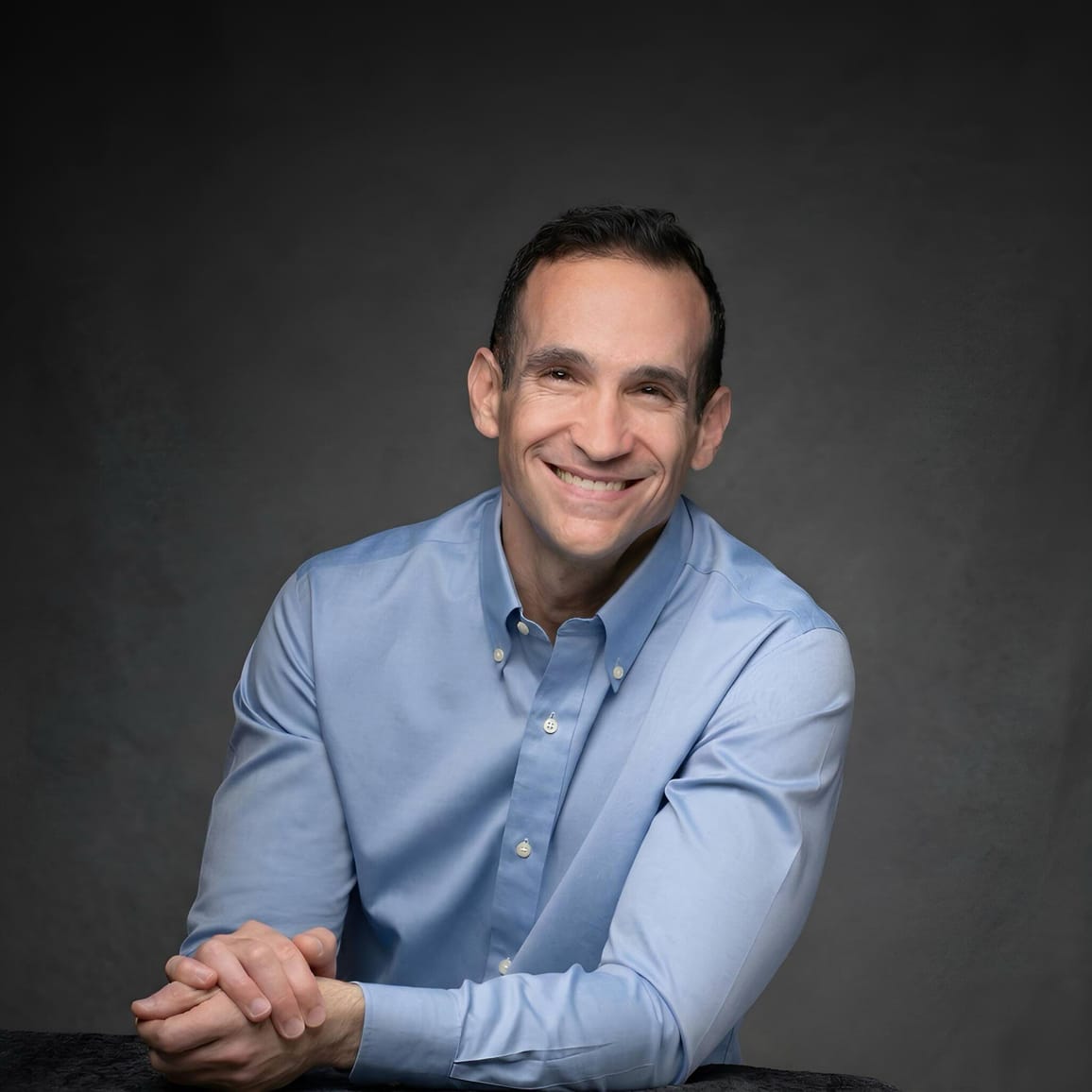
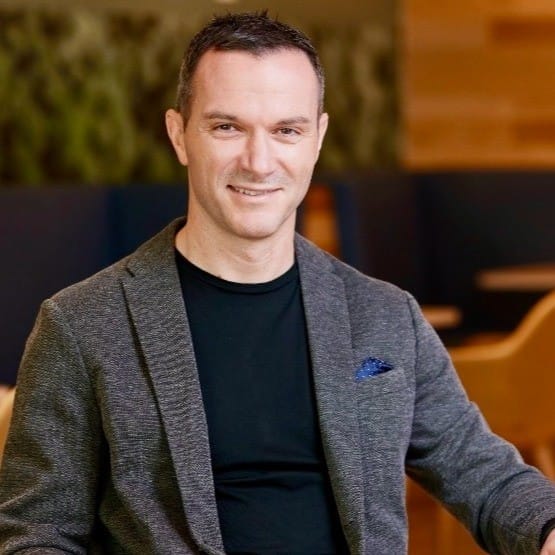
Profile: Feon Ang, Managing Director of LinkedIn Asia Pacific (LinkedIn)
Here is the edited transcript of our conversation:
Bernard Leong: Welcome to Analyse Asia, the premier podcast dedicated to dissecting the pulse of business, technology and media in Asia. I'm Bernard Leong, and LinkedIn has been the professional heartbeat in the Asia Pacific. Every minute on LinkedIn, 47 people are hired and over 10,000 people apply for jobs.
How is this real-time scale of hiring playing out in the Asia Pacific region and what impact does it have on companies and professionals in the era of generative AI? With me today is Feon Ang, Managing Director for Asia Pacific LinkedIn, to discuss the company's business footprint in the region, the changing world of work in AI, and how LinkedIn is helping professionals navigate this new landscape. Feon, welcome to the show.
Feon Ang: Thank you, Bernard, for having me.
Bernard Leong: I have to tell you, I began as the first LinkedIn influencer when LinkedIn Asia Pacific was set up with Arvind Rajan. Today I have you here, and this has been an interview that I really wanted to do. First, I want to hear your origin story—usually for all my guests who come to the podcast, I want to hear how they started their career. How did you start your career?
Feon Ang: Well, when I first graduated, I started my career at a company called Dun & Bradstreet, which is a US company. I was there for a very short stint because I was young and just exploring different things. Then I stayed much longer at the next company, which was Marie Claire, a publication company. When I was there, I had a lot of fun. But during that period, everyone was talking about tech. In my mind, I felt like tech was the new industry I needed to get into. Fortunately, I was able to move from a publishing firm to Ingram Micro, which led me to Gartner, an IT advisory firm. Here I am, from Gartner to LinkedIn. It was really someone who left Gartner who told me how wonderful LinkedIn was and recommended me for this job.
Bernard Leong: So what led you to your current role at LinkedIn?
Feon Ang: When I joined LinkedIn, I was managing Southeast Asia at that time. The time and place in my life was that I had three young kids and I was very happy to be doing that job. As I was able to contribute and see the vision of the company, I was very fortunate that I had the support of Arvind that you mentioned, Hari and Olivier who were my predecessors, who grew me and prepared me for the managing director role.
Bernard Leong: So looking back on your experience now, leading LinkedIn's business across such a diverse region, what lessons can you share about your career journey with my audience out there?
Feon Ang: Well, there are many lessons I would say, but from the perspective of LinkedIn, I've learned to realize how important it is to stay true to your calling, to the true north of the company, which is the vision of this organization and how essential it is to keep to the values of this organization, which is members first. If you don't understand the concept of members first, it's very difficult to make all your decisions toward understanding how important it is to have a members first philosophy. I feel like that is so important to really understand and internalize it so that when you make decisions, they are made around that value statement.
The second learning would be the understanding of scale. When I first joined LinkedIn, I was told and we hear this all the time, every second, two new members join the platform, but today, every one second, seven new members join the platform. It goes to show that scale matters. At that time I thought, wow, LinkedIn is so big, but today if you look at it, every one second, seven new members are joining. So the power of scale is not to be underestimated in terms of how people connect with each other and learn from each other.
The third, I would say, is trust because a platform without that trust is not sustainable. I was just having a conversation the other day with a CEO and he said he loves posting on LinkedIn. He said that what he posts on LinkedIn, he gets a lot of constructive feedback and he says these comments help him to think and allow him to feel that what he wrote on the platform is meaningful because the feedback is constructive. He asked why do you think that's the case? I kind of thought for a minute and I think it's really because the platform has gotten lots of trust among its people, and also the members have that identity. So when people have that identity associated, they tend to be a lot more thoughtful with the comments that they put there.
Bernard Leong: Thank you for those points of thoughts. I want to come to the main subject of today. I want to talk about LinkedIn's current business footprint in Asia Pacific and the impact of generative AI in the Asia Pacific. But first, maybe we should start for our audience out there. Could you describe LinkedIn's overall mission and how is it specifically playing out in the Asia Pacific region?
Feon Ang: Well, our vision statement is to create economic opportunity for every member of the global workforce. I think it's important that when you look at that statement and understand the platform itself, we have 1.2 billion members on our platform, 70 million companies represented. At any one time we can see what are the jobs that companies are posting, what kind of skills companies are looking for and what kind of applications are happening. For every one minute, 47 hires are made and 10,000 applications happen on our platform. It goes to show that when you have that kind of data, you really can take a bird's eye view of what's happening around the world. Understanding how the skills framework is changing, how people are looking, what kind of jobs are people looking for, and what kind of skills are in demand. Understanding that perspective gives you a generous sense of the workforce transformation that's happening right now.
Bernard Leong: So Asia Pacific is LinkedIn's largest regional member base, right? Now, with over, I think 343 million, make sure you correct me if the numbers are wrong.
Feon Ang: Yes, 343 million members.
Bernard Leong: So what do you think explains the scale and engagement now in the Asia Pacific region?
Feon Ang: Yeah. Well, three of the five largest economies are in Asia Pacific. You have China, India, Japan, and we think, and I believe that Asia Pacific will continue to be a very important platform for our members to actually find each other, engage and have a trusted knowledge exchange. If you look at the numbers itself, India is one of our fastest growing members, growing by 22% year on year, with 155 million represented on our platform.
Bernard Leong: That's a large number.
Feon Ang: So in that sense, you find that there's a young and mobile workforce that is happening in this part of the world that is eager to learn, eager to connect, eager to find our next opportunity on the platform. People connect to find their job opportunities, connect to find businesses, connect to find ways to learn and to upgrade themselves, partly because the ASEAN culture is very much driven by wanting to learn more and just keep growing. You find that a large consumption of our AI skills and learning hours are happening in this part of the world as well.
Bernard Leong: Yeah, I think the LinkedIn learning videos are pretty good. Even I myself also watch them sometimes. So how would you now characterize LinkedIn's business footprint in the Asia Pacific today? From the size and growth of the member base and also the kind of breadth of services that you're actually offering. I know there is, I probably might get this wrong, but there's marketing solutions, there's sales navigator and also I think premium memberships on your site as well, which I'm a proud premium member.
Feon Ang: That's great. So if you look at our members, when I first joined, it was 25 million. Today it's 343 million members. Every second, like I mentioned, seven new members are added. So from our professionals' perspective, in terms of our platform, it continues to grow quite rapidly. In terms of our business, we just crossed $17 billion globally. It's quite a sizeable business and like you mentioned, the different business lines from talent and learning business. That's actually one of our core vision statements, which is equipping organizations to find the right talent on our platform and for professionals and job seekers to find jobs. So in terms of our talent and learning, we also help organizations to equip them with the learning courses, like you mentioned, LinkedIn learning courses.
Actually, a lot of organizations subscribe to our talent and learning solutions. In fact, 60% of the Fortune 100 companies are relying on both our solutions. Meaning they don't just buy our hiring solutions, they buy our learning solutions as well. If you look at the consumption, we have 24,000 learning courses on our platform. The most consumed courses right now, you can imagine, are AI [artificial intelligence].
Bernard Leong: I hear you. So in 2024, LinkedIn achieved the highest engagement rate across all social platforms. What is driving this engagement now? I mean, specifically from your domain, just looking at this region alone.
Feon Ang: We see that as we roll out video, it has been one of the biggest consumptions and it's been growing 36% year on year. So video consumption is big. Young professionals like to feel like they can consume video in a way that they feel is short form and easily digestible. From the people that are posting, they also feel like they can represent their voice in an authentic manner. It's easy for them to articulate what's on their mind. In fact, the CFO of Grab actually did his earnings announcement on LinkedIn, and he said that preparing for that selfie podcast or video was much easier compared to composing a post. He was able to drive a lot of engagement with that.
Bernard Leong: It's probably also the right audience. If you do it, say in other video sharing, like say TikTok, for example, LinkedIn, you have a direct audience of the short-form video that's actually directed to a professional audience. I know that the short-form video is now currently your fastest growing format. I think it's about 36% year on year watch time growth. So how is LinkedIn now adapting its product strategy to serve this unique concentration of consumption patterns within the Asia Pacific because most of the people use their mobile phones? The screens are actually where they get exposed to most of the LinkedIn content.
Feon Ang: Yes, because video is where our professionals, where our members like to consume. We are also seeing people enjoying posting with video as well. We will continue to double down on that area. Yes. Just make sure that we provide relevant content for the members. You know, it could be anything that is a bit lighthearted corporate jokes or it could be something that is more serious. But on the whole, video and short content video will continue to be one of the most important parts of our strategy. You find that even in our LinkedIn learning courses, short videos are what we are rolling out with like full content courses, but we cut it into various short forms so that it's easy to digest.
Bernard Leong: So you already mentioned this: every minute on LinkedIn, 47 people are hired, over 10,000 people applied for jobs. How is this now real-time scale in terms of hiring, playing out in the Asia Pacific region? What's the impact now to companies and professionals here?
Feon Ang: Yeah, we believe that people will continue to find jobs on LinkedIn and companies, not just enterprises, mid-market SMBs, across Asia Pacific. We are seeing hiring up to 18% over 5 years growth. So people continue to find the right candidates on LinkedIn and it's just exciting to see how this growth will continue.
Bernard Leong: So what's the one thing you know about LinkedIn that very few do in the Asia Pacific market?
Feon Ang: What is one thing that I know about LinkedIn that you feel like...
Bernard Leong: People, or maybe something about LinkedIn that maybe the members don't know about?
Feon Ang: I think most people know how powerful LinkedIn is. I wish more people would understand how transformative it can be. I still remember when I first started work, there's no such thing as LinkedIn. Yeah, I had to look through the newspaper, type my CV on a typewriter. Yes, I remember those days. Those were the days, you know, but if you look at where we are today, I think LinkedIn is a very powerful platform that allows you to kind of keep in touch with what's happening in the world, get expert knowledge from trusted sources, at the same time be able to find jobs that are relevant. In fact, we roll out Gen AI for job seekers. That allows you to use natural language to find jobs, for example. Maybe I want to be a creator in a hospitality world. You know, like you can use your natural language and say the skills that you want to bring and find a job that you will really find delight in.
Bernard Leong: That's a perfect segway. We already talked about AI and the changing nature of work. I know nowadays if you write a message on LinkedIn, you can actually do a rewrite with AI feature, which is very common. But we are going to talk more about that. Let's talk about the changing of work with AI. How is LinkedIn now helping organizations to think about AI in order for them to stay competitive?
Feon Ang: I think when we think about the word AI, it feels like everyone is talking about it. Exactly, how is it taking off? You know, as in any kind of big shift in technology, there will always be uneven adoption. So there will be some companies that are very eager to jump on the bandwagon. There will be some that are slow in just kind of picking up that big movement. So there will be uneven adoption, there will be skills gaps naturally. So the way we are thinking about it is: how do we equip organizations so that it becomes a part of how they think about their work?
The key is how do you make it simple enough so that it's not scaring people off? We're very happy to roll out our LinkedIn hiring assistance to organizations, LinkedIn hiring assistants for short we call it. It basically allows organizations to actually take the mundane work out of what a sourcing organization, when a TA team, usually they have to source a lot of candidates. That's right. Sometimes they have to look through like 300 to 500 candidates in order to find one ideal candidate. But today, if you're able to describe the type of individuals they are looking for, AI can do the sourcing for you. So it really takes a lot of mundane work. The beauty is now the recruiter can concentrate on that conversation with those candidates that you have found. Those meaningful conversations are what make work a lot more delightful.
Bernard Leong: If I were to think about the impact of generative AI, I think jobs are currently evolving very rapidly. Some studies suggest about 70% of the skills of today's roles will change within the next five years. How is LinkedIn now preparing businesses and professionals in the Asia Pacific to navigate and anticipate the change brought about by generative AI?
Feon Ang: Yeah, like I said, you know with all this technology shift, even when we talk about industrialization, tons of industrialization to the different tech, when it first takes off, there will be uneven adoption. So our job is to really work with organizations as well as job seekers to make it—that's why we make Gen AI incorporating some of this into the tools that every member uses every day. They are becoming very familiar with it. With organizations, there are different platforms where we have AI coaching where we actually help organizations with creating learning pathways for each individual that is tailored for individual needs. Say for example, I am currently a managing director of LinkedIn, I have a desire, say I want to become a CEO and what would be the kind of learning pathways that is necessary for me to be a CEO of a company. So that kind of tailored learning pathways is very unique. On top of that, it also has a learning coach. So if I struggle with some difficult communication, you know, giving feedback, say for example, I can have a practice with an AI coach.
Bernard Leong: So it's highly valuable. So you're thinking about in terms of a coach that is beside you through LinkedIn and helping you to shape and help you to learn more new things? Because it's a trusted social network.
Feon Ang: It's a soft skill that that individual needs to develop. With an AI Coach, you can actually practice that. So that is highly valuable for a lot of people. Companies are adopting LinkedIn learning, not just for its content, but for its relevancy in terms of rolling out AI coaches for each of their employees. Then when it comes to marketing campaigns, marketers used to spend so many hours trying to put a campaign together. Today with our AI, we are able to actually help marketing managers to pull campaigns together.
Bernard Leong: Given the rise of generative AI, how is it changing the expectations of the job seekers and recruiters within the Asia Pacific region?
Feon Ang: Yeah, so we're talking about how AI is in the minds of a lot of people right now. Naturally with such big technological shift, you find that there is a big skill gap. You know, there are companies demanding skills in this area, and yet naturally in the marketplace, they might have difficulty finding those skills that are required for companies. So, you know, job seekers need to be a lot more conscious in terms of how they are equipping themselves. One is of course LinkedIn learning courses are there, and you know, I always talk about the three affirmative actions that you can do. One is making sure that you are fluent in this area. I think what are the things that you can do to actually get your hands on all these tools so that you become fluent in just playing around with the tool and making sure that you feel comfortable.
The second area that I advise people is to make sure that you feel that you have the agency to just kind of master your destiny in that sense that you have the agency to develop a specific professional skill that you're supposed to be going towards.
Bernard Leong: Say, maybe being a lawyer, being an accountant, and having AI enable you.
Feon Ang: Exactly. You know, you should actually kind of double down on that and feel equipped that you need to kind of pick up these skills.
The third thing will be to take actions. You know, if you have learned all these skills, find a way to showcase it and find a way to actually talk about it so that you can actually surface your capabilities in this space.
Bernard Leong: As an adjunct associate professor now in US Business School, I'm teaching graduates for the workforce. Given there's this recent trend of employers hiring fewer graduates and relying more on AI, I suspect it's not the AI but what is currently happening in the geopolitical world where people need to plan for their business. I have a different question for you. What would be your advice to young graduates entering the workforce?
Feon Ang: Yeah. I think it's similar to what I said earlier about fluency, agency and action. So, you know, making sure that you are getting your hands into all these tools and making sure that you become fluent in this space. AI is here to stay, you know, it is no ordinary time as my CEO will say. It is a time right now for us to make sure that we are playing with it, understanding it, and doing something about it.
Bernard Leong: I think you have talked a lot about how LinkedIn with the different tools that were able to help your members specifically things like smart job search, personalized skill recommendations, AI coaching. How are they now being received by the members? In terms of Asia Pacific, do you see them trying to use more of this to upskill themselves? Or are we still at the stage where we need to give, send more awareness to help people to actually know that these tools are actually available to help them?
Feon Ang: I think once these tools are incorporated into the daily workflow, you find that people are using them. So definitely the adoption has been really high. When a job search is in natural language, why not? It's so simple to use when an assisted message is there for you to use. Usually people find that writing the first message is always the hardest, but when you have an AI assisted message to actually help you, and then the human element, you can't run away from the human element. You still need to make your own edit. You still need to get your eyes over it so that it's actually coming from you in the most authentic manner.
Bernard Leong: I always tell my students not to get the generative AI thing to write for you. You should write your own message and then get the generative AI to help you to fine tune the message. Yeah, the message is unique, but not the AI tool itself. I think in your position, you probably have spoken to government and many institutions out there in the region who definitely would want to partner with you. Can you tell me how does LinkedIn or maybe in your own personal capacity tough collaboration to support the workforce development and also the upskilling within the Asia Pacific region? I know that's something that you have been doing across the region.
Feon Ang: I'm very passionate about this because I feel like it is in line with our vision in line with our value statement as well. I think if you look at the various programs that we roll out, one is what we call the LinkedIn coaches. So we work with Daughters of Tomorrow. We work with you know, underprivileged groups in terms of how we can equip them and we give them access to LinkedIn learning tools so that they are not left behind. So those are the LinkedIn culture when we actually get our employees involved to be part of the coaching to actually help them to understand how to maximize the use of these tools.
We also worked with, recently I worked with NVPC [National Volunteer and Philanthropy Centre] to celebrate SG 60 [Singapore's 60th National Day].
Bernard Leong: Well, we are going to be celebrating in two weeks' time.
Feon Ang: Exactly. That can be recorded in good company because we believe that if we kind of tap onto companies, companies can do so much to actually involve their employees to do greater good together. So when we think about companies doing good and doing well is such an important element of why we do what we do. Then the third area would be really understanding some of the challenges that organizations are going through. So we partner with organizations like NTUC Learning Hub, to use them as a third party, collaborate with them and form a partnership to understand how we can reach out to companies that are trying to equip their employees as well.
Bernard Leong: You're referring to the National Trade Union Congress for those out there is NTUC Singapore.
Feon Ang: That helps to reach out to more of the employee base as well.
Bernard Leong: So what is the one question you wish more people would ask you about LinkedIn that very few people don't?
Feon Ang: Maybe the first thing that comes to mind is that you are like another social media platform. They don't understand the difference, but when they understand it, they will use it without guilt. So I had this very interesting conversation that from someone who said, now that I'm using LinkedIn, I feel like when I use LinkedIn I don't feel guilty. Because they feel like they're gaining greater knowledge and they are understanding what's happening in the world.
Bernard Leong: So using LinkedIn is not about self-promotion. [laughs]
Feon Ang: Definitely not.
Bernard Leong: But it's important to get the word out there. For many professionals, LinkedIn is now a professional network that everybody uses to communicate their understanding of their professional life, what they learn in the process, what are the customers they serve and what makes what drives them to work every day with passion.
Feon Ang: When you're on the platform, you are also understanding the world trend. You are hearing what other CEOs are talking about because we have a lot of CEOs posting short form videos on LinkedIn. They are posting their knowledge on LinkedIn, so you get to learn what's happening as well.
Bernard Leong: I saw the famous video by Bill Gates and his daughter. His daughter started a company, and then he says he's doing one day doing the short form video of him doing customer service for his daughter's company on LinkedIn. I was like, wow, we get the access to global messages all out there and we can actually even learn from those global messages out there.
Feon Ang: Exactly, exactly!
Bernard Leong: So my traditional closing question, what does great look like for LinkedIn to you in the Asia Pacific?
Feon Ang: Great looks like, I hope that there will be even more members on LinkedIn so that they get to benefit the goodness of this platform. Finding jobs, finding the economic opportunity, finding businesses that they need to find and helping organizations, helping professionals, helping everyone in the workforce to be successful.
Bernard Leong: Feon, thanks for coming on the show and I really appreciate having you here to talk about how LinkedIn is helping all the professionals and business owners out there in the Asia Pacific. Of course, in closing, I have two very quick questions. First thing, any recommendations you have that inspired you recently?
Feon Ang: Well, two. One is I've been reading the book "SuperAgency" by Reid Hoffman.
Bernard Leong: Reid is the founder of LinkedIn.
Feon Ang: Yes. The second is actually interesting is the 30 day AI guide. Morten Rand-Hendriksen is an AI principal instructor in LinkedIn and I've just been following his 30 day guide. All you need to do is do one thing one day at a time and you put that into practice. So that has been super helpful for me.
Bernard Leong: So how can my audience find you, and you have anything that you want to share with on about LinkedIn to them?
Feon Ang: Find me on LinkedIn.
Bernard Leong: Great, we'll do that. For all the audience out there, you can of course send us feedback on Analyse Asia. Of course, subscribe to us on Spotify, YouTube, and of course LinkedIn is a very important channel when we send out short videos. So, many thanks for coming on the show and I look forward to speak to you soon.
Feon Ang: Thank you.
Podcast Information: Bernard Leong (@bernardleong, Linkedin) hosts and produces the show. Proper credits for the intro and end music: "Energetic Sports Drive" and the episode is mixed & edited in both video and audio format by G. Thomas Craig (@gthomascraig, LinkedIn). Here are the links to watch or listen to our podcast.