
How Microsoft Research Balances Exploration and Impact Globally with Doug Burger

Fresh out of the studio, Doug Burger, Technical Fellow and Corporate Vice President at Microsoft Research, joins us to explore Microsoft's bold expansion into Southeast Asia with the recent launch of the Microsoft Research Asia lab in Singapore. From there, Doug shares his accidental journey from academia to leading global research operations, reflecting on how Microsoft Research's open collaboration model empowers over thousands of researchers worldwide to tackle humanity's biggest challenges. Following on, he highlights the recent breakthroughs from Microsoft Research for example, the quantum computing breakthrough with topological qubits, the evolution from lines of code to natural language programming, and how AI is accelerating innovation across multiple scaling dimensions beyond traditional data limits. Addressing the intersection of three computing paradigms—logic, probability, and quantum—he emphasizes that geographic diversity in research labs enables Microsoft to build AI that works for everyone, not just one region. Closing the conversation, Doug shares his vision of what great looks like for Microsoft Research with researchers driven by purpose and passion to create breakthroughs that advance both science & society.
"If you're going to be running a very elite research institution, you have to have the best people. To have the best people, you have to trust them and empower them. You can't hire a world expert in some area and then tell them what to do. They know more than you do. They're smarter than you are in their area. So you've got to trust your people. One of our really foundational commitments to our people is: we trust you. We're going to work to empower you. Go do the thing that you need to do. If somebody in the labs wants to spend 5, 10, 15 years working on something they think is really important, they're empowered to do that." - Doug Burger
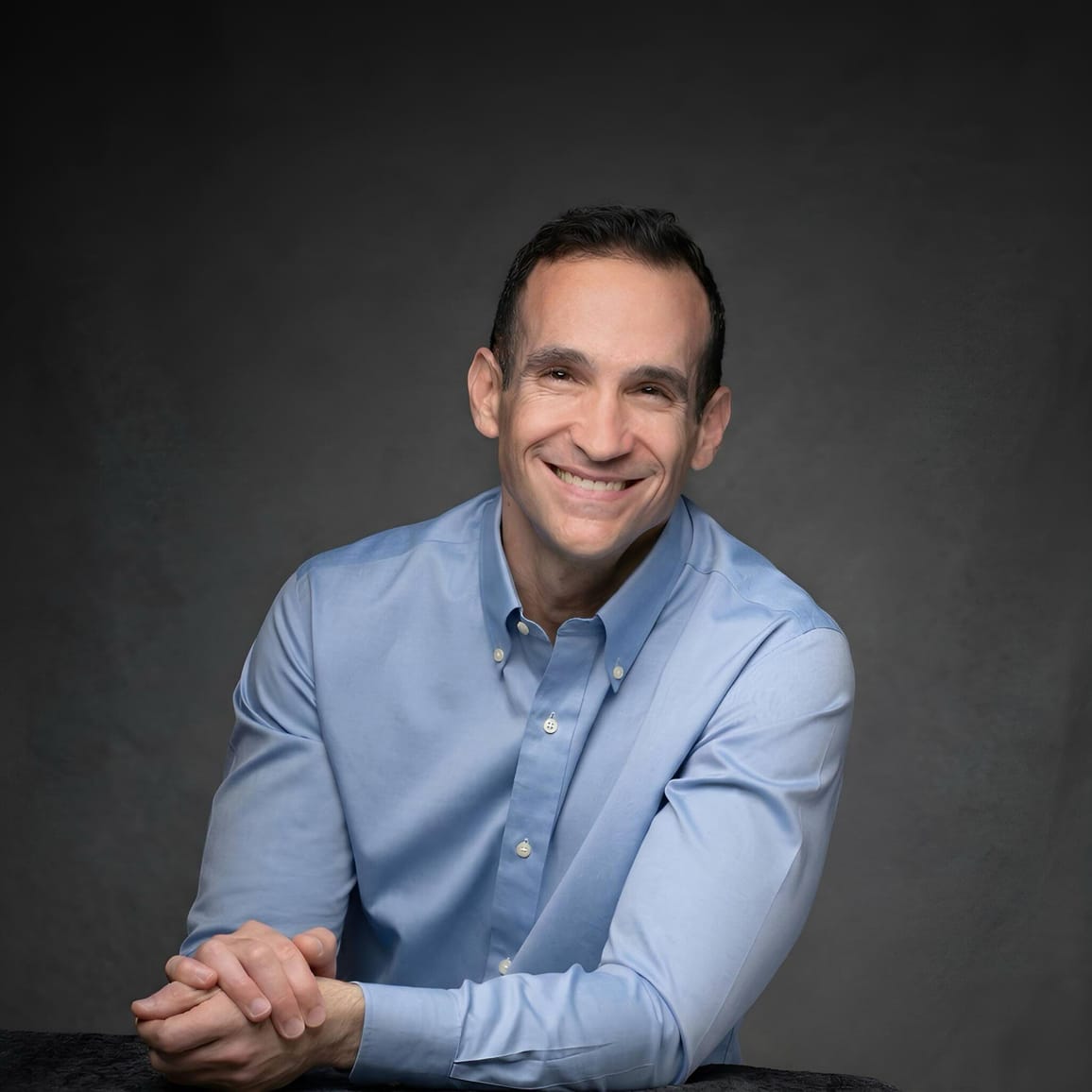
Profile: Doug Burger, Technical Fellow and Corporate Vice President, Microsoft Research (Microsoft Research, LinkedIn)
Here is the edited transcript of our conversation:
Bernard Leong: Welcome to Analyse Asia, the premier podcast dedicated to dissecting the pulse of business, technology and media in Asia. I'm Bernard Leong. As AI reshapes our digital future, infrastructure becomes the critical differentiator. With me today is Doug Burger, Technical Fellow and Corporate Vice President at Microsoft Research, to dive into how innovations in AI infrastructure from custom hardware to regionally grounded research are redefining what's possible. Doug, welcome to the show, and first congratulations on the launch of Microsoft Research Asia in Singapore. Welcome to Singapore.
Doug Burger: Thank you very much. I'm really happy to be here. Opening the lab here in Singapore is exciting to me because it's my first trip to the region, and now I'll have an excuse to come back many times.
Bernard Leong: Great. Before we start, I've done some research on your background, which is actually between academia and bringing them to real-life applications. Maybe we can start with your personal journey. How did you get started in computer architecture and then subsequently AI research?
Doug Burger: Like many people, I think which field I chose was an accident. I went to graduate school for my PhD in computer science and took a course from Gurindar Sohi, who was a professor there teaching computer architecture, and I just loved it. That was it. It was one of these happenstance things. I went and got my PhD in that area, then moved to a former research group at the University of Texas at Austin.
Bernard Leong: How did you end up with Microsoft?
Doug Burger: I spent with my colleague Steve Keckler about seven years building a very crazy new processing chip for academia. It was funded by the U.S. government. It was a ton of work, a really fun project. But after that, you're coming off the sugar rush of the big project and wondering what's next. Microsoft came calling about the time I was wondering what I was going to do next. So it was just good timing, and they recruited me up to the corporate headquarters in Redmond.
Bernard Leong: One interesting question I have: you went from being an academic professor to now a corporate vice president at Microsoft. What are the key decisions that shaped your trajectory moving from academia to real-world applications research?
Doug Burger: I think the biggest thing for me was always wanting to feel challenged. Whenever a job feels a little bit too easy, I get restless. This is career advice I give to junior people: if you're not growing, if you're starting to feel like you're turning the crank, move and do something hard. I think that's probably the biggest factor.
Bernard Leong: That's great life advice. I want to dive into Microsoft Research now in Singapore. It's also going to be a regional R&D research and development frontier. So it is the first lab in Southeast Asia. What motivated this expansion now and why Singapore?
Doug Burger: If you look at MSR, it has been around for over three decades. By industrial standards, we're a very old lab. But we've actually grown quite a bit in the number of regional labs we have over the last five years. Part of the reason is that with this AI transition, it's really important that we tap into local pools of talent, local culture, different ways of operating because we really want AI to work for everyone. Some of the unique characteristics of Singapore, certainly the great local universities and the talent, make it a very good place to put a lab to really innovate in AI in a way that is appropriate to Singapore. We will learn from all of this. We have labs in Africa, we have labs in Europe, we have labs in North America, of course, and other places in Asia. But that geographical diversity is allowing us to build better AI that works for everyone, not just the companies that trained it in one location.
Bernard Leong: What would be the lab's strategic direction, and how would you tie it into Microsoft's broader research objectives?
Doug Burger: Initially, the lab is going to be looking at foundational AI, embodied or physical AI, and health and AI. There'll be a few initial focus areas in part because of the local interests and the local collaborations, and in part just because of the talent that we hire and the expertise that we have right now. As we grow, of course we'll move into different areas. One of the things that I'm really excited about is when we start a new lab, and then those researchers who we hire more talent, they get plugged into the global Microsoft Research Network and they start learning from all of these incredible people we have across many areas around the globe.
Bernard Leong: I'm actually a beneficiary of the Microsoft Research Center in Cambridge when I was working first in cosmology and then went into the Human Genome Project. Chris Bishop from Microsoft Research Cambridge was one of the academics that I learned a lot from. I looked at a lot of his work on Bayesian networks that helped me with unsupervised learning. I know that there is actually an ecosystem that's been built from the lab to the external environment around them.
Doug Burger: Right. When we have interns come here or PhD fellows and collaborations with the local universities, plus full-time employees, they're part of that global network and they can tap into people like Chris. Chris, by the way, is just such an amazing person. I count myself very lucky to be working with him in MSR.
Bernard Leong: I'm probably going to catch him when I visit Cambridge this coming winter. One of the interesting things that really excites me is the lab's healthcare initiatives that stood out to me, using AI to detect seizures or epilepsy in children, and also applying computer vision to assess motor function in Parkinson's patients. How is Microsoft Research advancing these technologies and what does this signal about the potential for AI to support early diagnosis or personalized treatment in healthcare?
Doug Burger: I think, as you know as well as I do, that AI is really good at finding patterns in large amounts of data that we don't see. The MSRA teams have already found some of those patterns that will help people. You mentioned some of them: Parkinson's, Alzheimer's, cleft palate. We have other initiatives in Africa looking for premature retinopathy in babies and preventing blindness. I think there's just so much opportunity as our AI advance technologies advance to find more and more of these patterns and help people with preventative diagnostics. The partnerships here in Singapore in particular with SingHealth and the government and the pools of data will provide a way to do that and really help people. When we do that here, another really important factor is when we come up with something here, we can span it across the globe. So discoveries that help the people in Singapore through these collaborations eventually go global.
Bernard Leong: Specific to the cleft palate case, because my eldest daughter is actually a cleft patient. IShe was blessed because Singapore has one of the best cleft centers. There was a well-known Berkeley genomics specialist who I knew was actually getting genomics data here through them. There is Operation Smile where they need to go to all these surrounding countries. One in 700 Asians has a chance of getting cleft palate. Being able to help with that kind of detection, what you're doing at Microsoft Research will be pretty good not just for here, but also for the rest of the world.
Doug Burger: When these stories become personal, they become very moving. I'm really happy to hear that this is important to you.
Bernard Leong: There is also now a strong emphasis on thinking about regionally relevant issues because Southeast Asia has a diverse set of languages, diverse set of cultures. Because we are talking about foundational AI from what your teams are going to be working on and also responsible AI, how are you embedding Southeast Asia's societal norms and values into the research center?
Doug Burger: If you look globally at MSR, we actually are doing this in many places now. We have initiatives in Africa, we have initiatives in India that are looking at building models that work well with uncommon languages to make them accessible to everybody. We have work looking at adhering to cultural norms and when images are generated, making sure that they're representative of the local cultures and not just the data sets that they were trained on. As I was saying before, those technologies that we're developing will be able to be applied here, but now we can also use them with the local culture, the local languages. I think this is part of our goal to really make AI accessible to everybody in a way that's equitable and not coming in from the outside with something that doesn't work for the culture.
Bernard Leong: It also aligns with Microsoft's responsible AI. I know Brad [Smith] wrote a book on this subject talking about how to embed responsible AI into the realm of all the technologies that you are building out.
Doug Burger: That's right. When I read through the summary of Singapore's National AI Strategy 2.0, there was a big focus on responsible AI and privacy and safety and accountability. Those for us are also very important elements. In MSR across the globe, we actually have many teams working on all of those problems to really make this safe for everybody.
Bernard Leong: One key thing before we get into much more interesting subjects: Microsoft is actually partnering with institutions like SingHealth, the National University of Singapore, Nanyang Technological University and Singapore Management University. Can you elaborate on some of these collaborations and their early impact?
Doug Burger: Maybe I'll start at the very high level. Many of your listeners may not know that much about MSR before this. But we are fundamentally an open research organization. About 80% of the papers that we publish are actually done jointly with academics around the world. We are very open and we are very collaborative. We publish most of the work that we do. We open source much of the work that we produce, and our researchers are also given huge amounts of autonomy to go and do the fundamental research that they think is most important. So one of the great and hard things about my job is I can't tell anyone what to do. For Peter, my boss, it's the same thing. I can have an opinion and I can share it, but I can't tell a researcher, you have to go do this. That's part of our contract. Everyone is really asked to do the most important things that they can do, whether it's some fundamental research or some curiosity driven thing, or taking a technology that we've developed or a breakthrough and then applying it to Microsoft's products or to advance society. Now a lot of our collaborations with the local universities will be of that flavor: joint investigations and really fundamental research. Our collaborations with SingHealth will be looking at taking some of, in some cases, the things we've developed and using it to help them and help their patients. In other cases, partnering with them on the really important problems that they're facing.
Bernard Leong: A lot of people don't appreciate that with the innovations of deep learning that came out in 2010, a lot of the work before that was mainly done in Microsoft Research. Things like Bayesian optimization when we think about hyperparameters tuning and how to work with neural networks. That came about because the speech processing algorithms that were pioneered out of the [Microsoft Research] lab.
Doug Burger: Well, I'm very proud of the early work that MSR did in AI. But I also have to acknowledge decades of work in academia and the giants in the field, and of course Jeff Hinton, who persevered through multiple AI winters to get us to where we are.
Bernard Leong: Now the pace of generative AI is moving so fast. Practically every week something comes up. How do you see this affecting academic researchers and maybe even infrastructure providers, be it any of the tech companies like Microsoft?
Doug Burger: It's such a great question because one of the things that's happening now is that the tools that we're building accelerate the tools that we're building. Now you can build a solution or investigate some new optimization that will help AI, but you can use AI to build those tools faster. What we're seeing is an acceleration of the turning of the technological and innovation crank. The other thing that I think is really striking is how general these models are. I mean, they pull structure out of unstructured data, and so it doesn't matter what field you're in, if there's structure in there, the models, and you have the data, the models can go and find it and then you can use it. It's not just impacting or affecting the field of AI research, it's affecting most fields.
One example that I love that's near and dear to my heart is computer architecture: if you look at the historical stack, and you know this as well as I do, you have the CPUs and they have an instruction set, and then there's a compiler and an assembler and a linker and a loader, and then a programming language. There are all these layers that we've built to be human interpretable. Then we use tools to translate from one layer down to the other. But all those are kind of ad hoc things that we've built by hand over many decades. I think AI is going to be able to define just completely new interfaces and just bust through them and completely change that whole hierarchy that I got trained on and I spent 30 years trying to master.
Bernard Leong: The first time I started using Cursor and then trying to use prompt engineering to code, but it actually upends all the things I've done in the past. I went through normal COBOL programming to object-oriented programming, and then after that we have containers and all the different workflows and practices, and then we have GitHub actions and everything. I knew how to program properly, and then now we got upended again.
Doug Burger: I have a great example of that. This past weekend, my wife was on a trip with a few of my kids. One of my sons and I sat down and decided to build a software project together for a project we were doing. It was pretty complex. We spent about four hours building it. He doesn't code, but he's 13, but we were just having good family bonding. But the crazy thing was I was using GitHub Copilot, I was using Sonnet 4, I was using the agent mode and it was the first time I've ever built a complex software solution where I did not look at a single line of code. It hit me then, and of course, vibe coding is now getting big, but lines of code are the new assembly language instructions. After the seventies, no one looked at assembly unless you were a specialist. We had compilers for that. Now lines of code are becoming like assembly. It's just a whole different world.
Bernard Leong: We are going to be coding in English. That's going to be another layer of complexity.
Doug Burger: Natural language intent. That's right.
Bernard Leong: There's the other part of it: within the foundation models there are the open source models alongside the commercial closed ones. How do you view the open versus closed debate now in the generative AI landscape?
Doug Burger: It's a big debate in the community, but one of the nice things about being at Microsoft is we're very open source friendly. I mean, MSR publishes tons of open source stuff. From a product perspective, we just want to be the platform that empowers all of our customers and users the most. We're going to deploy the best open source models, we'll deploy the best closed source models that we have access to. From a product perspective, we just want our customers to be happy. We partner with other companies on closed source models. We ingest open source models and make them available. I think the one advantage in the closed source models is that it's easier to guarantee safety because these models are getting very powerful and you can monitor or at least restrict how they're being used. But Microsoft in general, like we bought GitHub. We really believe in open source. So we're just like everyone else. We're just trying to navigate that. But I don't think we're one or the other. We're not. It has to work for our customers.
Bernard Leong: Given this open versus closed, what about when we think about multimodal models and now reasoning and reasoning agents, for example? What are the trends that you're closely watching? This year, everybody says is the year of the AI agent. We're starting to see different variations of how agents can go into systems.
Doug Burger: I think reasoning has got a lot of momentum. It seems really important. I think it's actually more important than even the momentum would suggest. I think these reasoning models are going to be incredibly foundational, and the reason, no pun intended, is that they can take steps and look at what they've done and backtrack and go forward now. Maybe this is me with my researcher hat on. I think where that gets incredibly powerful is when you start to have formal structures that you can reason over and make correctness guarantees. Obviously now the models are doing that with code. They catch themselves making a mistake and fix it. But there are so many other areas where we should be able to project those other areas into formal spaces and then reason over those formal spaces and provide a strong guarantee of correctness. Then execute it. I think that the combination of formal logic structures and formal verification and reasoning models will allow us to do many more domains safely in a way that we really can't today with sort of the one shot probabilistic models.
Bernard Leong: Do you think that there's always talk about scaling laws and the more data you put in, are we actually hitting the wall or actually there are so many dimensions, like for example, test time compute, for example? All the different new metrics that are being drawn out in multimodal that really we are barely scratching the surface rather than hitting a wall?
Doug Burger: As you know, I used to work in quantization and we thought very hard about scaling laws and what is the scaling law for quantization and how does it affect the economic scaling laws. What I'm seeing in research now is that it's not just one scaling law. It's like there are 10 dimensions of scaling and we're scratching the surface in all of them. I think I don't know that there are hard limits until you run out of some resource, like whether you run out of data, then you're not going to be able to scale. But these models seem so general that as long as you have more of that resource, you'll be able to keep scaling.
Bernard Leong: In fact, they're now hiring PhD students to help them look at complex academic problems. So the reinforcement learning is actually becoming more and more intense.
Doug Burger: That's right. We're now getting better able to steer these models in interesting directions, which, by the way, I'm also excited about because in the labs we're starting to ask the question, how should we steer these models in a way that's good for human health and society as opposed to just making the model more capable? I think that's going to be a really promising direction.
Bernard Leong: I want to ask this question. You led Project Catapult and Brainwave. What are the key design choices that drove their success?
Doug Burger: Maybe I'll answer at a high level and then a more specific level. For me as a researcher, it's always been about getting out into a new space and struggling and then waiting until you have clarity. Once you have clarity, then you just go and you're kind of relentless.
Bernard Leong: I totally agree with you. That's how I felt when I was doing my PhD.
Doug Burger: That's right. It's hard to be out because very often when you're doing something that is going to be important and new, by definition, it shouldn't make sense to everyone else. So everyone kind of looks at you and scratches their head and says, why are you doing what you're doing? When we started on the Catapult journey, what I was really setting out to do, we were looking at CPU trends and saw that per core per CPU performance was levelling off. We convinced ourselves that specialized hardware for different applications was going to be the future. We started building customized hardware, trying to make a general platform for Microsoft's cloud that you could program different applications onto.
When we decided to take a bet on FPGAs because you could program them. It was a first step towards a whole fleet of specialized ASICs. Once the applications were big enough, but we kept getting the design wrong. Like we started off with a board that had six on it. Then if your application only needed one, then five were stranded. If it needed seven, then you were screwed. So we networked them into a configurable fabric that hung off the back of a rack. 48 of them. That was great. But then the company wanted us to converge the infrastructure for Bing and Azure and it was designed just for Bing. I see. Then the third generation, we came up with this idea of putting the chip as a bump in the wire on the network path. Then it could go out and talk to other chips.
So what we kind of built was a configurable plane of hardware acceleration. That's how Bing was using it. Azure ended up using that just to accelerate their networking stack, which they're still doing today.
Bernard Leong: That explains how your Azure computing platform is so ubiquitous among the large companies because you have the kind of acceleration of the networks talking to each other at a very low latency situation.
Doug Burger: I would love to think that's the reason. But the real reason is that the Azure team worked really hard, the sales teams worked really hard and everyone was just working really hard.
Bernard Leong: I want to get to quantum computing. Recently you introduced the Majorana 1 quantum chip, actually using topological qubits. Something that I've been monitoring for a very long time because I'm a theoretical physicist by training. From your vantage point now leading global research, how is this shaping towards the future of quantum computing and what are the milestones that we need to cross in order for us to reach maybe practical fault tolerant quantum systems? Are we a few years away, or maybe are we a decade or maybe three decades away?
Doug Burger: Well, I certainly don't think we're three decades away. The team has made great progress. One thing I want to really call out with that team, and they were in MSR and then they graduated out into the business groups and into the Azure team and they've been pushing on that since then, is the courage they had to go after this crazy topological thing. I mean, they've been at it for 17 years. People are taking lots of slings and arrows because after 10 years, your peers will just say, are you still doing that thing? Why haven't you given up yet? But the reason that they stuck with it so long and now they've finally showing that it works and there's lots of work left to do, but I'm just so proud of them, is because the topological qubits are just inherently much more stable because of the separation of the Cooper pairs. Decoherence, that's right. If you're trying to do a more traditional qubit and do lots of error correction as it decoheres, you need exponential numbers of error correction bits. It doesn't scale or you're making them very big and they have to be very cold and that doesn't scale. Really what they've done is pushed down a path for so many years towards what I think could ultimately be the quantum transistor. I mean the field effect transistor, because there was point junction transistors and vacuum tubes before that.
Bernard Leong: You're going to have a quantum chip as well for that.
Doug Burger: That's right. The chip they have that they've built, in theory, it can hold millions of logical qubits. Now they have to scale it. There's still a lot of work to be done, but in theory, that paradigm is so stable that if they get it to work at scale, it'll solve all these other problems that all the other quantum approaches also have to solve. They're going to have to solve it a different way.
Bernard Leong: I'm pretty impressed because it solves the decoherence problem that I usually ask a lot of people working in quantum computing. How are you going to solve that? But I think that 17 year journey is the much more interesting part of the story that I wanted to ask. How does Microsoft Research balance this kind of blue sky foundational research against more application driven initiatives, like how did this team actually have the morale to persist to get to this stage?
Doug Burger: Well, there are three answers with a caveat. The first answer is that if you're going to be running a very elite research institution, you have to have the best people. To have the best people, you have to trust the people and empower them. You can't hire a world expert in some area and then tell them what to do. They know more than you do. They're smarter than you are in their area. So you've got to trust your people. One of our really foundational commitments, as I said before to our people, is we trust you. We're going to work to empower you. Go do the thing that you need to do. If somebody in the labs wants to spend 5, 10, 15 years working on something they think is really important, they're empowered to do that.
Now, of course, Peter who runs MSR globally, and I, and my peers, we review things, we give feedback. You don't want to, but if they think, no, you're wrong, I'm going to keep going. That's what they're supposed to be doing. Now on the quantum thing, of course, if you're spending a lot of money doing that personal vision of yours, the company's going to ask you, all right, what are we getting for the money? But one great thing about Microsoft that I really love about the company is how deeply intellectual it is. This really comes from Bill and the founding. Bill is still involved. We do reviews with him in MSR regularly. He gives great feedback. Satya is very curious. You go to those leaders and you ask them about our topological qubit program and they understand the strategy. They understand why we're doing what we're doing. Bill will dive deep. But that team would show the progress and say, this is why we're doing what we're doing. We're going to address the decoherence problem. If we can get there, it's going to be really stable. It's a lot of money, but this would be a real boon for humanity. So the company gave them the support to keep going.
Bernard Leong: Because this year at Davos, a lot of people are talking about quantum computing. I'm getting calls from venture capital firms that I advise about, can you give me a one hour rundown on quantum computing? This is getting big. But I think given that's the case, we are approaching the limits of Moore's Law and what would a post-Moore's Law computing world look like? We live in the logic gates. All these binary things have already been invented in the 1920s, 1930s at Bell Labs. Now we are in the next phase of that.
Doug Burger: Maybe this higher level framing might be helpful. I think we're sitting on three fundamental modes or paradigms or pillars of computing. We have logic. You do an operation on a zero or one, like an AND gate. You have probability, and that's what the AI really is now. I'm going to predict from some distribution: am I going to get a zero or a one? Then you have quantum where you have superimposed probabilities. Superimposed, it's still probabilities, but they're superimposed and they have very important differences. There are really these three modes and they're very complementary and synergistic. I think the really interesting thing is going to be some of the intersections between those fields, those three modes. Like if we get the big enough quantum computer working, or I should say, when we'll be able to generate all sorts of very accurate molecular data to train probabilistic models to produce new materials even better than they can today. Then you can synthesize those new materials in factories being driven by the logic stack.
Bernard Leong: I think they also have a lot of profound implications to cryptography. Specifically quantum resistant codes we are talking about. Companies now are talking about these quantum resistant codes that need to be introduced into our password encryption. A lot of things are going to be another major change wave is coming.
Doug Burger: That's right. To come back to your question, I think on the probabilistic pillar, which is AI, LLMs, all of that, I think it's just accelerating so fast. I mean, model costs are dropping 10x per year. We're just seeing continued algorithmic silicon co-innovation. We've got decades of acceleration there. Then logic is slowing down. There's the popular version of Moore's Law, which is technological progress. There's the formal version, which was Gordon Moore's 1964 paper, which talked about the rate at which transistors on a chip double.
Bernard Leong: I think Moore's Law also would undergo a reformulation.
Doug Burger: Yes, it has, but remember, I'm a computer architect and I read his paper in grad school. When people ask me about Moore's law, it's like driving dragon catnip in front of a cat. I have to answer the precise definition.
Bernard Leong: Because you have to appreciate what comes before, and then you have to build on top of that. Then you have to take it to the next stage. I want to just switch gears and talk about the concept of global research leadership from where you are as the global head of Microsoft Research. How do you balance long term exploration with practical near term impact?
Doug Burger: Okay, well, I have to offer one correction: Peter Lee is the global head, so I don't want to be claiming that's me. But MSR has been around since the early nineties. We've had lots of crazy adventures. But one thing we figured out is that you have to be in exploration mode with people you trust doing risky things that may not look like they make sense to discover new stuff. It's always surprising and unpredictable. Then once you have that breakthrough, you then think about how to apply it, how to exploit it, how to use it. We've actually gotten very good over the past three decades in taking those discoveries and getting them to scale. We have lots of motions. We will take a research team and graduate them into the product groups. We will work with NGOs to solve some problem. We will have the product groups fund a center. We'll create an open consortium for some standard. We will create V teams where people work together. We'll create a mission lab to go chase after some important problem. We've just learned all these different patterns and playbooks. Over the years, we're now pretty good at saying, okay, we've had this breakthrough, what do we do with it?
Bernard Leong: Given that it's distributed and also you also give autonomy to people to work on problems that matter most to them, and these are all very smart people, how do you get the innovation to synthesize across such a large and distributed network of labs that have all different expertise? There must be something that maybe some high level principles within the lab say, hey, maybe if we take this piece and this piece, we put it together, maybe this is something valuable.
Doug Burger: That's right. The framing that I think we like to use with our teams is we want everyone to do the most important work that they can. Sometimes that's powering into some new space or something you're really curious about and desperately want to understand. But sometimes it's taking something that you've invented or one of your colleagues has invented and taking it to solve a real problem or help people. Like we want to advance science and that's the exploration. We want to help our customers and we want to help society. For any researcher at different times, the most important thing will be in those different buckets. Another thing that Peter and I and the rest of the MSR leadership do: we spend a lot of time going around to the labs, making connections, creating a culture where people can share things and work together and find those pieces. Sometimes we see something and stitch them together. Sometimes we just help create the environment and then people do that naturally. A lot of the management and leadership's job is making connections and helping people see some of the ways they might go and take stuff to scale. Because really at the end of the day, researchers care about deep science and deep understanding, and then also about having a lot of those things become real. I've always found that our people are highly incentivized to make stuff real and matter to people and help people like the cleft palate work, the Parkinson's work. If you can help millions of people with something that you're doing, you'll probably do that for a while rather than just going on to the next discovery.
Bernard Leong: Tell me, what's the one thing you know about building advanced AI infrastructure or maybe leading global research that very few people do?
Doug Burger: What a great question. I think for leading research, it's the more curious you are and the more you know about different fields, the more connections you can make. Peter's very good at this, and so just that curiosity helps you to see this and this, where there are two people working in different domains and say, oh, there's a connection here. This is something, by the way, that Bill Gates is just phenomenal at just because of the amount he's seen over the course of his career. I don't think it's anything unique. I think it's something that research leaders learn. It's that, oh, this and this makes something surprising.
Bernard Leong: That reminds me of the Santa Fe Institute: multidisciplinary research, consilience is the word. To draw different fields together and put it together.
Doug Burger: I like to say the tallest oaks grow from cracks in between the fields.
Bernard Leong: That's a better one. What is the one question that you wish more people would ask you about AI research? But they don't.
Doug Burger: I don't know how to answer that. I think for me, the one thing I really want to know, maybe it's a slightly different take on it: I just have this feeling in my gut that there is some mathematical theory underlying the compression of data that you need to make a prediction that's analogous to what Shannon did for digital codes and communication channels.
Bernard Leong: You're talking about the unstructured data, the ability for the foundation AI. I think a lot of people haven't really done a lot of deeper architectural work into the transformer model. What we are seeing is representations of that model in the forms of BERT, GPT and BART.
Doug Burger: There's a deeper underlying mathematical theory there. I think, and again, this is just my gut as a researcher, and I'm probably totally wrong, that biology and evolution have figured out how to extract it and encode it in something that can run in 10 watts like our neocortex. When we finally understand this, we'll find out that all the hyperparameters in our brains have been set to be near that optimal theory.
Bernard Leong: Our, like the way how our neurons are connected because it's the connectivity of the neurons that actually allow us to process thinking.
Doug Burger: But they make connections and then the connections get pruned. The number of connections getting pruned every day is massive. So you're constantly sampling the information coming in. Then locking connections when there's something consistent that you need to make a successful prediction.
Bernard Leong: Interesting. That's a very good one because I haven't thought about that. We don't really understand the Transformers architecture. I teach it as a course, but sometimes I'm also wondering some parts of it. In my mind there are some non-linear properties that maybe give rise to this kind of thing. What you're alluding to is a deeper mathematical language based within them, but you're not sure how to extract it out into a set of general rules, basically.
Doug Burger: The transformers, I mean, we understand why back propagation works. We understand that they're compressors. We understand the pieces. But I don't think we understand how we put it all together. There's a deeper theory of the underlying representation that they're learning that's not tied to thousand dimensional continuous spaces that the transformers are learning.
Bernard Leong: Because the math is quite reminiscent of what I used to do in theoretical physics, like string theory. There's a lot of embedded structures that's really hidden in theoretical physics with those models.
Doug Burger: Except the transformers have more dimensions than string theory.
Bernard Leong: Yes, but that's linear algebra, linear, yes. I haven't had a chance to tell someone so deep into the transformer architecture, but I have a traditional closing question. What does great look like for Microsoft Research, especially in Asia over the next five years?
Doug Burger: Great to me from a management perspective: it says that great to me looks like we have amazing people who feel empowered and energized to do work that affects their societies and makes a real difference for people. I mean, of course, Microsoft's business, but the larger society, like I really want this AI revolution to be a big jump and a boon for humanity. Great for me is that our labs are filled with people that have a sense of purpose and passion and pride and that are helping to do that. I have another secret fantasy, which is, I think maybe more of an ego thing, but I would love my secret dream, which is now not so secret, is 50 or a hundred years from now, people look back at MSR today, like the early days of Bell Labs, but for AI.
Bernard Leong: I actually thought that you have done one step beyond the Bell Labs by taking research global. Because Bell Labs used to be only in one part of the region of the U.S.
Doug Burger: Right. But I think we have to, because this is so important for all of humanity. We can't let one region decide. Given the power of this AI stuff, what it means for everybody else, we have to do this together.
Bernard Leong: Many thanks, Doug, for coming on the show and I think this is probably one of the most geeky conversations I have. In closing up, two quick questions.
Doug Burger: It was a lot of fun. Thank you.
Bernard Leong: Anything that's inspired you recently, you can share? Book, movie, anything else?
Doug Burger: I'm thinking of lots of research projects, so that's where my head is. Not too long ago, and this is maybe topical, I read The Idea Factory [by Jon Gertner], which is about Bell Labs.
Bernard Leong: I read that book too. Pretty good.
Doug Burger: I found that book incredibly inspiring. But that was a little while ago. Let me talk about one piece of work that I found inspiring. We have a team in MSR that's looking at using reinforcement learning to steer models, having a multi-term conversation so that the conversation can be more successful. What happened in that review is we started talking about all the ways we could steer models to have conversations that helped people's mental health or were engaging without tipping over into addiction, or could challenge them so they would do more critical thinking. I came away from that meeting with my head spinning, saying, we have to steer these things for good in ways that are good for people. It's not a book or a movie, but that was something that inspired me.
Bernard Leong: That's where the responsible AI piece comes from. It's very important instead of trying to get you into addiction, into challenging you to rethink your life and do something more positive.
Doug Burger: That's right. Steering for good, maybe.
Bernard Leong: How would my audience be able to follow the work of Microsoft Research's latest developments?
Doug Burger: Well, we have a website, research.microsoft.com. You can go there. Of course, all our people are there and we have podcasts. Peter just did a podcast series. We have blogs. We publish papers. It's a pretty active feed. We have well over a thousand really smart people working really hard, so it's a lot. But just go to the website and you can find everything there.
Bernard Leong: I'll definitely point all the resources there in the transcript. You can definitely find the podcast anywhere, everywhere. So subscribe to us and of course we will be happy to take any feedback. Many thanks for having this quality time with me, and I look forward to speaking with you again soon.
Doug Burger: It was a real pleasure. Thank you.
Podcast Information: Bernard Leong (@bernardleong, Linkedin) hosts and produces the show. Proper credits for the intro and end music: "Energetic Sports Drive" and the episode is mixed & edited in both video and audio format by G. Thomas Craig (@gthomascraig, LinkedIn). Here are the links to watch or listen to our podcast.