How to Scale Global Teams Without an Office through Esevel with Deng Yuying

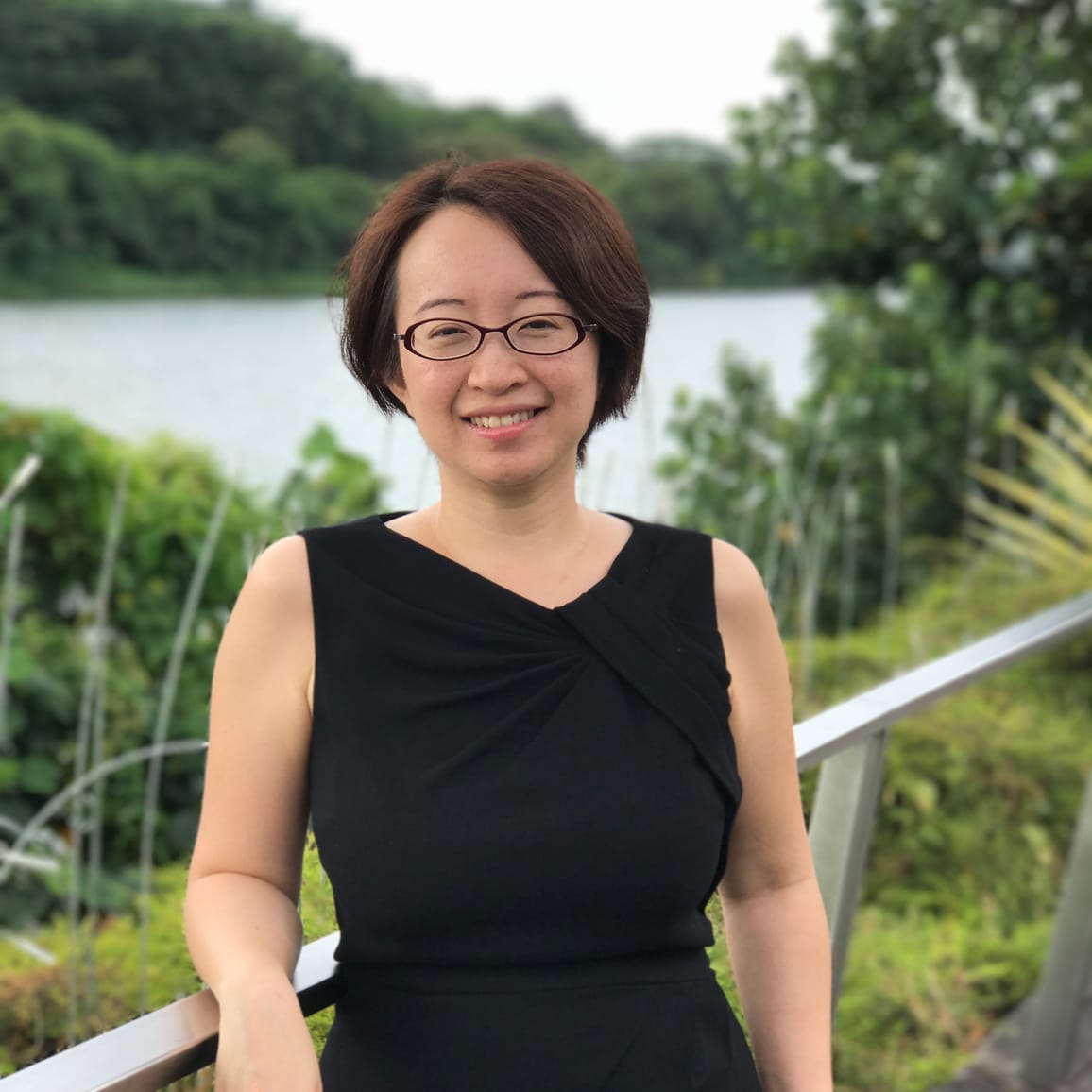
Fresh out of the studio, Yuying Deng, Co-founder and CEO of Esevel, shares her transformative journey from corporate lawyer to healthcare operator to tech entrepreneur with our guest host: Yana Fry from Yana TV. Yuying discusses how the pandemic's sudden shift to remote work in April 2020 revealed critical gaps in IT infrastructure for distributed teams, inspiring her to launch Esevel—a platform now serving companies across 88 countries. Yuying challenges the traditional HQ-centric worldview, advocating that "HQ should be a mindset, not a location," and shares how Esevel deliberately builds leadership opportunities for talented professionals regardless of whether they're based in Manila, Singapore, or São Paulo. Balancing motherhood with three children and entrepreneurship, she offers honest insights on dealing with mother's guilt while teaching independence, and reveals how her husband's support and mutual commitment to each other's success has been essential. Last but not least, Yuying shares what great would look like for Esevel's future: becoming the indispensable tool companies think of first when scaling global teams, while proving that talent and performance matter more than location.
"Many companies that say they do distributed and remote work actually still have a very HQ-centric worldview. That means leadership is in HQ, strategy is formed in HQ, and high-impact jobs are in the HQ as well. So when they hire remote and distributed teams. For example, in the Philippines, Brazil, and India they use these more as back-office functions. So you have very talented people who join them there, thinking that they could rise in a global company. But very soon they find that they hit a glass ceiling and are no longer able to advance, and so they move on to another firm. I think that’s a massive waste of talent, especially if you’re talking about here in Asia. This is the world’s fastest-growing region. People are ambitious, people are bright, and they are able to take on leadership positions if they’re given the opportunity to. This is one thing that we have really tried to reverse at Esevel. You do not have to be at HQ in order to rise into a leadership position. As long as you perform your job and perform it well, we look at performance more than location. So I think that is one thing that has to shift: HQ shouldn’t be a location. HQ should actually be a mindset. And I think that’s something that a lot of remote companies or distributed work companies have correct when it comes to that." - Deng Yuying
Profile:
- Deng Yuying, CEO and Founder of Esevel (LinkedIn) and spouse to our founder, Bernard Leong
- Guest Host: Yana Fry from Yana TV (LinkedIn, YouTube) which we highly recommend and subscribe to.
Here is the edited transcript of our conversation:
Yana Fry: Welcome to Analyse Asia, the premier podcast dedicating to dissecting the pulse of business, technology and media in Asia. I'm Yana Fry, the founder of Yana TV, and today I'm guest hosting for Bernard Leong. Our topic for today is remote workplace management in the Asia Pacific—a very challenging topic that became mission critical as companies embrace hybrid and distributed teams.
My guest today is Yuying Deng, who is the co-founder and CEO of Esevel, a fast rising sales startup, helping companies scale their remote operations across the region. She also happens to be Bernard's spouse. That's why I'm interviewing her today. Yuying, welcome to the show. You have had such a fascinating journey from law to healthcare to giving birth to three children to starting and now moving overhead with two startups.
Yuying Deng: Thank you so much. I've been busy, very busy.
Yana Fry: Let's just go straight to it. What were the key turning points that you feel shaped you as the founder here today?
Yuying Deng: So I've had a very circuitous path, as you mentioned, going from a lawyer to an operator to being now a founder. The key turning points for me was when I was in law, I actually felt a disconnect between what I was doing, even though I was learning a lot and the actual impact of my work.
Yana Fry: So why is that?
Yuying Deng: I felt that I was doing a lot of IPOs, a lot of M&As throughout different countries. So I was based in Hong Kong. I was a registered lawyer there, and then China and London. But I felt that there was a disconnect because I felt I was watching from the sidelines when I actually wanted to be in the field itself playing? I was advising businesses, but I was always constantly thinking, what would it be like if I were to do things the other way around and build a business from the ground up? So I think that was one of the key turning points during the financial crisis that happened. Seeing how the law firms reacted to it made me wonder what would it be like to actually build a business from the ground up with this kind of realities happening around me.
Yana Fry: That's why you started your two businesses?
Yuying Deng: Yeah. So it actually took a longer path than that. That was when I decided to do my MBA at INSEAD, and that really gave me a very good grounding in entrepreneurship and also in operations as well. Post MBA I then joined my family's business, so we were running the largest chain of private nursing homes here in Singapore. I helped them to build up a community care division and then get it sold to a private equity firm. Then I founded my first startup, so that was how it happened.
Yana Fry: So we're talking about the Orange Valley nursing homes? Yes, correct. Your family business. I know that you played the pivotal role when you actually helped it to exit into the private equity. So what were your biggest experiences there and learnings about strategy, negotiation, and just managing stakeholder expectations and also just working in a family office?
Yuying Deng: Oh, yes. I mean, working in a family business. I think as any second gen entrepreneur would tell you it's difficult. You have to manage family dynamics and that can spill over from work into family life after dinner as well. I think we managed that quite well. In terms of what I actually learned from the exit into PE, I think it was really a lot of negotiations, a lot of attention to detail and also a lot of things about strategy as well, because it wasn't an easy or straightforward kind of exit. There was some complexities behind it.
Yana Fry: They're always there.
Yuying Deng: Yes. So it was a process that actually took us one and a half years to complete. That also taught me a lot about managing expectations from people, whether these are other shareholders, minority shareholders, majority shareholders, and so on. Also learning about the interests that different people have as well, some of which may be explicitly stated, but a lot of which you have to understand from the dynamics that's happening. So very lesson and kind of mini MBA, if you would in real-life.
Yana Fry: Which brings us to Esevel. For those who are unfamiliar with the company, can you just tell us what Esevel is, what are the hidden pains and problems you are solving for companies across Asia?
Yuying Deng: Sure. So for Esevel, I would describe it as a scalable IT operations platform. So you can think of us as IT as a service for distributed teams. So what we have done is that we have built up an infrastructure on which companies can tap on to manage IT for their distributed teams throughout 88 countries in the world. So our services is put into a platform and it comprises of a few parts, includes things such as IT asset management throughout all these countries, procurement, provisioning, deprovisioning, security, SLA guaranteed kind of help desk as well. We have basically invested heavily in building an infrastructure that spans things such as partners, local sourcing and repair, facilitation, anything that you can think of, right? SLA security for IT that companies can tap into. So it is IT as a service, but you could tap into it as a startup and basically almost have the global might of a Fortune 500 global IT support behind you, but without the overheads of paying for one.
Yana Fry: An interesting fact about Esevel that people might not know—the company was founded in 2020 in the midst of the pandemic in Singapore, where many companies were actually shutting down. Tell me why.
Yuying Deng: In April itself.
Yana Fry: In April itself? Yes. So tell me why.
Yuying Deng: So I mean, I think Esevel is really one of those things that came about when we became aware of the problems that were happening. I'm sure, as you know as well Yana because you also lived through the pandemic, right? You've seen what things were—offices were shutting down. People required to work from home, and immediately IT departments were white. They were panicking. How do I get laptops to my people when they have to work from home? Everything's on the desktop is tethered to the office desk. How do I make sure my people are productive? So that was when we first became aware of the problems that would originate with distributed teams and remote teams. So when we saw that, we saw the opportunities that was there to solve the problem that was happening, we decided to incorporate the company straight away.
Yana Fry: How do you feel that the fact that it was incorporated during the time in the pandemic actually shaped the company DNA?
Yuying Deng: I think that had a lot of impact on the company. I mean, one of the impact is more internal. So we are fully remote company ourselves, right? We employ people throughout eight different countries here in the Asia Pacific. Very soon we'll be hiring people in other regions in the world. So it shaped us internally, made us realize that there will be a very large global talent pool worldwide as we hired these people, and we saw how capable all of them were, and we also understood that then the culture of a company such as a remote company has to be built very deliberately and intentionally from the ground up.
But I think the other thing that it taught us as well, coming from the pandemic, was how important it was to be close to the problem, right? Because we were talking to IT people every day, we were understanding their pain points. So that is one of the things that has really differed from how I built Esevel compared to my previous startup. We always want to be very close to the problem so that we understand exactly what it is that our clients need. What is the next step up that they want? What are the pain points that they actually want us to fulfill?
Yana Fry: You say it's very important to build the culture of the company. So how do you do that? It is not easy, especially given that your company's so diverse.
Yuying Deng: Yes, it is. I mean, we have people from, I would say six different countries, right?
Yana Fry: Spending slightly different, but you operate in 88 countries. Would it be correct? We are operating in eight countries. So you employ from about six countries, but you're operating in 88 countries. It means you're dealing with customers in 88 countries.
Yuying Deng: Yes, we are dealing with end users in 88 different countries, but our customers thankfully, are from countries usually such as the U.S., UK, Europe, Australia, Singapore. So they tend to be more commonalities between them than differences. Our end users are in 88 different countries. But then again, they're usually English speaking professionals in those countries. So again, a lot of commonalities.
But where the cultural differences really comes in, is in terms of the partnerships that we form and the infrastructure that we are building up to enable us to service all these countries worldwide. So it is there that we have to learn the language differences, the operational nuances, the different speed at which people move in different countries.
Yana Fry: Please give me an example.
Yuying Deng: I would say it's definitely very different in Europe, right? As compared to somewhere in China as compared to someone in Brazil. So people move at very different speeds and they have different expectations and understandings.
Yana Fry: But it's fascinating.
Yuying Deng: Clearly, yes.
Yana Fry: It looks you are doing a great job with this.
Yuying Deng: I hope so.
Yana Fry: I know that Esevel supports companies such as Xendit and GetGo. Could you share a story that illustrates to us how your platform helps these companies distribute the work that truly matters?
Yuying Deng: So I mean, those are not the only companies that we have. We do have a lot of companies that we are not able to mention by name due to NDAs. So how we usually help them is twofold. One is basically to enable device lifecycle management for their team members who are overseas. So you can imagine Yana, one day if you were to set up a company that has about 2000 different employees, you have a HQ in one place, but distributed teams, back office support in maybe five to six other countries worldwide. Very common kind of structure nowadays. You would struggle, your IT team would be struggling to get them devices to make sure that they can properly onboard and offboard people in an expedient kind of manner according to what HR says, right? If you have someone onboarding on Monday, that person needs to receive a laptop on Monday, otherwise they would be not productive.
Yana Fry: Absolutely. Yeah.
Yuying Deng: So those are the things that we help to ensure. We also help to ensure the security of data while the laptop is being there used by a person in a different country as well. So that's one aspect of what we do.
The other aspect of what we do is that we enable them to also then not just do device lifecycle management, but the security management of those devices while they're overseas. So to make sure that the laptops are properly updated with the latest OS, the patches that you can remote lock and wipe if you have a bad leaver or if someone loses the laptops. Right. So all these are important things for compliance, for ISO standards and so on.
Yana Fry: Looking at your years of entrepreneurship and all the ups and downs, highs and lows, what do you feel are the hardest earned lessons that you wish you knew before you started? I know, it's one of those tough questions. Yes, I know.
Yuying Deng: I'm thinking hard when you say that. I think I used to be very affected by failure, right? I think after having gone through one failure with my first startup and now having more success with the second one, what I've come to realize is that in entrepreneurship, failure is not a bug. It's actually a feature of the process. Right. So that was one of the hard earned lessons that I had, to not be so affected by something going wrong in the earlier stages, right? But to know that this kind of obstacle, this kind of challenge actually gives you resilience and clarity that helps you improve, unlike any second iteration of what you're doing.
Yana Fry: We were mentioning that you were working with your family business, right? The Orange Valley nursing homes. So how do you feel that your experience working in the healthcare and elderly care shaped your resilience and just your values as an entrepreneur and as a founder? What is important to you?
Yuying Deng: I mean, that's one thing I respect a lot about my parents when they started up the company. That is that they always had the customer at the forefront. Right. So everything that they did, in terms of the buildings that they design, right, the operations that they set up, the people that they hired in, everything was done from the viewpoint of the customer. Is this the best for the customer? Is this what is going to give the customer the best results in terms of healthcare? I think that's something that I really took away from that. So having a client first, customer first attitude is always something that we've had at Esevel.
The second thing is just about operational complexity. I think as you can imagine, running a nursing home with a thousand beds, few thousand healthcare workers and all the different kind of medication, the procedures, the dressings that you have to do for different people dealing with client feedback and all that. Very operationally complex and very high stakes. So although what we are doing at Esevel is not high stake in the way of healthcare, but it's high stakes in the way of if you have an employee onboarding, that person needs to get a device by Monday, right? So I've learned not to be afraid of operational complexity, not to be afraid of doing boring work, right? But I think really the best work comes when you are willing to do boring, invisible work, day in, day out, and producing a result for your customer at the end of the day, that is seamless.
Yana Fry: What is the biggest mistake you have made in business as a businesswoman, and what have you learned from that?
Yuying Deng: I would say that would hark back to my first startup where we were building an idea that we had in our minds that we thought would be fantastic. When we went out to talk to people about it, they gave us feedback. For example, price point is too high. This thing is over-engineered. I need something simpler. We didn't take that feedback too hard. Right. So I think it was a lot of resistance and a lot of defensiveness and I've learned not to repeat that with my second company. We go where clients want us to go. We go where the market indicates that we should go. Yeah. So that was one of the hardest learned lessons, which I actually find—
Yana Fry: Requires a lot of humbleness and leadership because sometimes, or very often when leaders go out, entrepreneurs, they have a brilliant idea and they're "I'm gonna change the world. It's what I wanna do." But then to receive feedback and say, it's not what we want. Actually, you need to be very humble and accepted. So kudos to you for being able to do that because it becomes very personal. Exactly. Because it's not, they just, it's not, they just reject me and my company. They reject also my values and my ideas. Exactly. Right. Exactly. Wow. Wow. It took me years to learn that. I think I'm still learning.
Yuying Deng: I'm still learning as well. Don't get me wrong.
Yana Fry: So looking ahead, three to five years, what is the biggest shift you expect in how ASEAN companies approach hybrid and remote work?
Yuying Deng: So I think that hybrid and remote work is here to stay, right? So when companies were doing it post pandemic or during the pandemic itself, it was more "how do we get this done? How do we get this done quickly?" Right. So a lot of things was done in patchwork, but then what has happened is that I've seen a lot more of a deliberate shift towards companies actually thinking about it. Okay. I'm getting a lot of benefits from remote work, right? Say for example, if I'm hiring in the Philippines and Indonesia, I'm getting employees who are a lot more willing to work for me and to stay because I'm saving them three hours a day in terms of transport costs. So it's become a hiring and retention tool.
The second thing that we've seen is companies from developed countries—so the U.S., the UK, Singapore—hiring into developing countries because it's a lot more of an efficient cost base, and they get talents over there that would otherwise be very hard for them to hire within their own countries. So there's also that as well. So I think it's definitely here to stay and I think companies are becoming a lot more intentional about how they are structuring their own internal operations and their company culture for remote and hybrid work. So part of it is also the infrastructure that has come up. So employer of record companies, which enables you to hire worldwide. IT infrastructure companies such as ours that enables you to support and equip your people worldwide as well. So that also has a part to play in it. So definitely I think here in Asia, remote, hybrid work is here to stay, but also for the rest of the world.
Yana Fry: From your experience, when you look at the industry, do you feel that organizations are doubling down on remote models or they're swinging back to the office? What's actually really happening on the ground right now?
Yuying Deng: So there I feel that there are two aspects of it. One is that some of the companies, I would say the more traditional ones, so the ones such as banks, some of the larger tech companies and so on, they still find it because of structures that have already been built up over time. They find it more expedient to call everyone back into the office and not reform any of the structures that they've had in terms of management incentives and so on. Right. Of course there's a short term gain to that. But I would say the Googles of tomorrow, the Netflixes of tomorrow, the Amazons of tomorrow, a lot of that—
Yana Fry: But now we wanna know the names, if you know, tell us we're gonna invest in the stocks.
Yuying Deng: I do. They may not even be listed yet. So all these companies, they have already come up with infrastructures, cultural norms that allows them to recruit and to motivate and to promote people with global talents. So I think that that is the way that most companies are going to go in the future. If you think about it economically, these companies are going to have access to a much more global, diverse talent pools, a lot more cost efficiencies than the older players of the past. So I do think that the world is moving towards this direction.
Yana Fry: What's one thing you know about managing distributed workplaces and workforces in Asia that few people do, but they should know about it?
Yuying Deng: Tell us the secret.
Yana Fry: Tell us the secret.
Yuying Deng: I do think I've observed one thing. That is many companies that say that they do distributed and remote work, they actually still have a very HQ centric worldview. So that means that leadership is in HQ, strategy is formed in HQ. High impact jobs are in the HQ as well. So when they hire remote and distributed teams, say for example in the Philippines, in Brazil and India, they use this more as back office functions. So you have very talented people who join them there thinking that they could rise in a global company, but very soon they find that they hit a glass ceiling and they're no longer able to advance, and so they move on to another firm. I think that that's a massive waste of talent, right? Especially if you're talking about here in Asia where this is the world's fastest growing region. People are ambitious, people are bright, right? They are able to take on a leadership position if they're given the opportunity to.
So this is one thing that we have really tried to reverse at Esevel. You do not have to be at HQ in order to rise into a leadership position. Right. As long as you perform your job and you perform it well, we look at performance more than location. So I think that that is one thing that has to shift. The fact that HQ shouldn't be a location. HQ should actually be a mindset. Right. I think that's something that a lot of remote companies or distributed work companies have it correct when it comes to that.
Yana Fry: When you look at those talents that are living across all of those countries around the world, how do you actually realize who is the one that needs to be promoted and put in a leadership position? How do you choose those people? What are their qualities?
Yuying Deng: So I think for someone to thrive in a kind of remote and distributed environment, it is a different set of characteristics from someone who thrives in an in-office kind of environment. I think that is also something that many companies do not realize until they have had some experiences in hiring as well. So someone who would do well in a remote work environment tends to be an independent thinker or a good communicator. They tend to want to express themselves rather than withhold their own opinions. So whenever we identify people such as that, people who meet those characteristics and at the same time are hungry for more, eager to learn. These are the people that we want to promote.
Yana Fry: So to me this sounds an entrepreneurial mindset. Yes. So how do you actually keep them working within the company then if they have such an entrepreneurial mindset. So what motivates them to stay at Esevel?
Yuying Deng: So I think it's the opportunity in a company that's growing fast, right? For them to be doing something very differently in one or two years time as compared to what they were doing from before. So there is that whole growth that is happening within the company that motivates them. But I think the second thing is also the expectations that we set that, hey, it doesn't matter if you're based in Manila or you're in Singapore, or you're in San Francisco, or you are in Sao Paulo in Brazil. Doesn't really matter. As long as you're performing, you're hitting your OKRs, you're meeting your KPIs, right, and you're communicating well with your team members. You are someone that we wanna promote into a leadership position.
Yana Fry: So speaking about team members and managing people, you described sounds very much a very high end, single performance, the type A personalities probably who would go there, communicate, make it happen. So how do you make sure they work harmoniously in teams with each other when they're all superstars?
Yuying Deng: So I would say that as a start, we don't hire lone wolves, so we do not hire individual performers. So one of the things that we do very rigorously at Esevel is the whole hiring process. The kind of questions that we ask, the reference calls that we do, and the kind of focus questions that we ask them as well. So we look for people who can communicate well because they need to work well within a team. Also one of the things is that we look for people who are part of a team and they should have overlapping time zones, right? So I think that's one of the things that's very often overlooked because if you have someone working in a completely different time zone from you, it's very difficult—
Yana Fry: To get any work done, even if you're a great communicator.
Yuying Deng: Yes. So there we go, Yana.
Yana Fry: I just have to ask right now. So what is your secret question or strategy at hiring since you're so good at it? So now tell us, we're open and all.
Yuying Deng: I wouldn't say I'm a fantastic hirer. I mean we've definitely had people who didn't quite fit and work out as well, but I think that it is really important to follow a set of structure, in terms of your interview questions in terms of what you're looking for in the people and in terms of the reference calls that you do. So I do have a book that I follow quite religiously. It's called Who: [The A Method for Hiring by Geoff Smart and Randy Street]. I can't remember the author's name. We can drop it into the footnotes later. But I find it has basically helped me to find good people even though I was not able to meet those people, to interview them face to face.
Yana Fry: Very powerful. Little bit, just shifting the gears here. Sure. Focusing on the family. Okay. So I know that you have been often saying that founding a company is raising a child and you have three of those. So could you elaborate a little bit, what do you mean by that?
Yuying Deng: I think in a couple of ways, first it does take a village to raise a child. When raising my kids, I'm very fortunate that my husband helps out a lot and I, we have a helper, fortunately here in Singapore. Also my mother helps out a lot as well. So I think it's the same thing with founding a company.
Yana Fry: You need a mother, a husband, and a helper. I got it. This is the secret.
Yuying Deng: Well, I was gonna say you need people beside you to really help you through it. So whether this is fellow founder friends who can guide you through experiences that they've been through before. Whether it is friends who are financiers or lawyers, people that you can call when you're in a fix and ask them, "how would you sort out something such as that?" I was part of the Iterative accelerator. That was also something that helped me a lot, just the fact of knowing that there's this community of people that you can go to with questions at any time of the night. There'll always be someone there to reply you because being a founder is a very lonely kind of journey. Right. You need the support network beside you to make it work.
Yana Fry: For all other women out there who are just trying to balance family career, children perhaps if they wanna have them. So what is your advice? How do you feel the best way to do that?
Yuying Deng: Well, I have received many questions from fellow female founders before who have always been concerned, right? When is it the best time to get married? When do I have kids? Would having kids interfere with raising money? What would VCs think? Right? Would it interfere with me getting business and traveling for business and so on? I think for me at least personally, it has always just been, just do it because there is, especially for having children, right? There is no perfect time to get these kind of things done. So if you just do it, you would eventually find a way around it. It is about what is important to you. Right, and if this is an important milestone that you wanna hit in life, then just go ahead and do it now, or at least take a step towards getting it done.
Yana Fry: Can I ask a personal question? Have you ever dealt with mother's guilt? If yes, how did you deal with that?
Yuying Deng: Alright. Yeah. Mother's guilt. Plenty of it. So I think we all have it. Yes. I do work from home, so I've had my daughter tell me one day she said, "Mommy," this was when she was eight years old. She said, "Mommy, do you know what I want to be one when I grow up?" I said, "No." She said, "I wanna be a housewife." I was a bit surprised because I was working, I thought I was showing my kids this is an example of a mother who's working. She said, "I wanna be a housewife." I said, "Why?" Right? She said, "Well, so that when I have a kid and when my kid comes home from school, I could actually pay attention to my kid." Oh, so that was a big ouch kind of moment because I do lock my door, right?
Yana Fry: You have to focus on work. How do you focus on work?
Yuying Deng: Yeah, so there we go, Yana, mother's guilt. But how I comfort myself a bit—
Yana Fry: Yes, that's I'm more interested.
Yuying Deng: More than those modern snarky teenagers. So how I comfort myself with it is that I do believe that teaching kids to be independent and to have an independent mindset is a very important part of bringing children up. So whenever my children are there squabbling amongst themselves or being unhappy that I can't pay attention to them or saying "I'm bored, can you do something with me?" I comfort myself by saying that, well, this is all part of growing up. They have to learn how to deal with it. Right? So that is also part of being a parent as well, teaching them all these life lessons.
Yana Fry: Absolutely. Since we're on the topic of children and parents, I'm just curious. Yes. What is the biggest lesson that you learned from your mom and from your dad? You wanna make sure they listen to the podcast. If you had this moment when you reached out, when you were saying something such as that, now they're "ah, okay. She got it when she grew up."
Yuying Deng: I would say looking at the kind of people that they are, and looking at how they build up their lives in their businesses. I would say the biggest lesson or the biggest takeaway from them is always to do things that you can sleep with at night. So what that means is you have to do things in a way that's ethical, in a way that you feel is right, and it does right by the people that you're dealing with. So I think that that is what they have always done. I've never seen them do something that's inappropriate or said something that was inappropriate about other people, even behind their backs. So that is something that I've taken away, and it's a principle that I hold with me when I build my business as well.
Yana Fry: When you think about the next few years, what does great look for yourself personally, for Esevel, and just as a founder and as a mother? Take us on this journey.
Yuying Deng: Let's do the easier part, the company first. So I would say great for Esevel would be where we become a very indispensable tool for companies that are growing globally. So whenever a company is thinking of hiring someone in the UAE or they're thinking of off-boarding someone in Mexico or onboarding someone in China, immediately who they think of is us. So that's who we want to be.
In terms of family, what I would say is independence for my children. I think especially in this age of AI, where I know that a lot of parents are concerned about: How is AI going to affect jobs for my kids? How is it gonna affect how my kids do their schoolwork and so on? For my kids, what success will look for me as a mother is independent thinking, right? Not just blindly accepting what society tells you things should be—independence and independent thinking for them.
For me as a founder, I think it would be making Esevel into the reality of what we want the world to be, which is basically, if you're a talented person who joins Esevel from any part of the world, you have a chance to rise up to a leadership position in a fast growing company. It doesn't matter if you're based in Manila, in Shanghai, in Sao Paulo, right? You have a chance at being a leader in a company that appreciates you for who you are and not where you're based.
Yana Fry: I have to ask about your husband.
Yuying Deng: I hope this is a question I can answer.
Yana Fry: Well, it's an appropriate one. Not an inappropriate. They say traditionally they used to say that behind every great man there is a woman that has been supporting him. I find it now with where the world is going, we can reverse this sentence and we can reverse engineer that. We can. Yes. To say that next to each great woman there is a man who is supporting her. Yes. So what do you feel then, the role your husband has been playing in general? Your kind of reflections towards other women. What do we want from our men to help us to succeed?
Yuying Deng: So the most important thing that my husband has brought to me is that I know that he also wants me to succeed as well, and I think that's very important for any sort of partnership, right? I've seen some relationships where one party may not want the other one to succeed so much because of insecurities that they may have. But it's very different for me and Bernard. We both want each other to succeed. That may mean sacrifices, right? That we have to make in the short term. "Oh, I have to go out for this business meeting. What will you do with the kids?" The kids are dealing with him when he has to test them spelling. He's always willing to do those kind of things, and I'm also willing to do it for him as well. So it is not something that's easy. I would say that we have had to really get to this understanding after the first few years of the relationship. But I think we are at this place now where we know that we are trying to do right by each other.
Yana Fry: Beautiful. Thank you for sharing that. Before we wrap up, is there a book, a podcast, or a tool that has been recently inspiring you and really helping you to go to the next level, either in business or life?
Yuying Deng: So I have actually been listening to a podcast called Empire. It's by two historians. It has been fascinating for me. I mean, first of all, I'm a history buff. I used to do history in high school. But more than that as well, it has shown me about how the world is different and yet always the same. It is always about human nature and how human nature keeps repeating itself, whether this is the Achaemenid Empire, or whether it's the Mughal empire, whether is the Chinese empire. So when you look at all these different personalities, the mistakes and the successes that keeps repeating itself, it shows you that at the end of the day, everything revolves around human nature. So that is something that I really enjoy listening to, would encourage anyone who even has a bit of interest in history to listen to it as well.
Yana Fry: I just have to ask, so what is your favorite event from the history point of view? In terms of what we can learn from that and how do you feel it can actually help us to build a society we truly wanna have.
Yuying Deng: So when I look at history, I look at it more from personalities rather than events because that, that is just a captivating subject. So one of the things that I've been listening to recently is the founding fathers of the U.S. How a lot of them actually had to rise through adversities. I think everyone is familiar with the story now of Hamilton, right? Because of the musical.
Yana Fry: We watched the musical.
Yuying Deng: Exactly, yes. We all watched the musical. Now we read the book. But it wasn't just Hamilton, it was also George Washington, Thomas Jefferson, that actually rose from very adverse kind of situations and brought themselves up to a higher level. So I would say that the lesson I learned from that is that things are not irreversible. Even though you may have been born or subjected to very bad circumstances in life, but with sheer will, you should actually be able to rise up to a high level, with sufficient amount of luck and sufficient amount of determination.
Yana Fry: The final question before we wrap up for today, please, let's go all the way forward up to you being 300 years old.
Yuying Deng: 300 years old. You must know about some technology that I haven't heard of yet.
Yana Fry: Oh, I am sure we'll get to there within our lifetime. So you're looking at your life and what would you to be most proud of and most happy about at the end of your life?
Yuying Deng: I think that that is something that we ask ourselves a lot about, right? From time to time. For me, a lot of that honestly would be my kids? How they have turned out, because a lot of things you do, it's always asking about why is this thing important to you? Why is this thing important to you? So for me, fundamentally it would be my kids and just by knowing that they have turned out to be independent, happy kind of people would be sufficient for me. They do not have to achieve a certain level of success—
Yana Fry: Or you're not being Asian now. Come on.
Yuying Deng: I think even for Asian parents, that is what they want. It's just that they express it in a different form. I do know, I think for my parents at least, that that is what they're happy with. That okay, on my death bed, I can go knowing that my kids, my descendants are well, and they're taken care of and they're happy. That's it.
Yana Fry: Well with that, I have nothing else to ask. I mean, this is really, it's the final dot. So my only question left—when the audience who wants to connect with you and learn more about Esevel, how they can do that.
Yuying Deng: Yeah. So if they want to learn more about Esevel, they can come onto our website. It's really easy. So it's Esevel E-S-E-V-E-L.com. If they wanna connect with me, really easy as well. My email address, yuying Y-U-Y-I-N-G at esevel.com.
Yana Fry: Thank you so much, Yuying. Thank you. It's such a powerful conversation on leadership, resilience, AI, motherhood, and dealing with diversity and remote workplaces. Really, really amazing. To our listener, thank you so much for tuning in today. That was Yana Fry from Yana TV and next week you're gonna see Bernard again in this chair on the show. So make sure you're tuning in to Analyse Asia.
Podcast Information: Bernard Leong (@bernardleong, Linkedin) hosts and produces the show. Proper credits for the intro and end music: "Energetic Sports Drive" and the episode is mixed & edited in both video and audio format by G. Thomas Craig (@gthomascraig, LinkedIn). Here are the links to watch or listen to our podcast.