
Solving Asia's Private Market Information Crisis with Raghav Kapoor

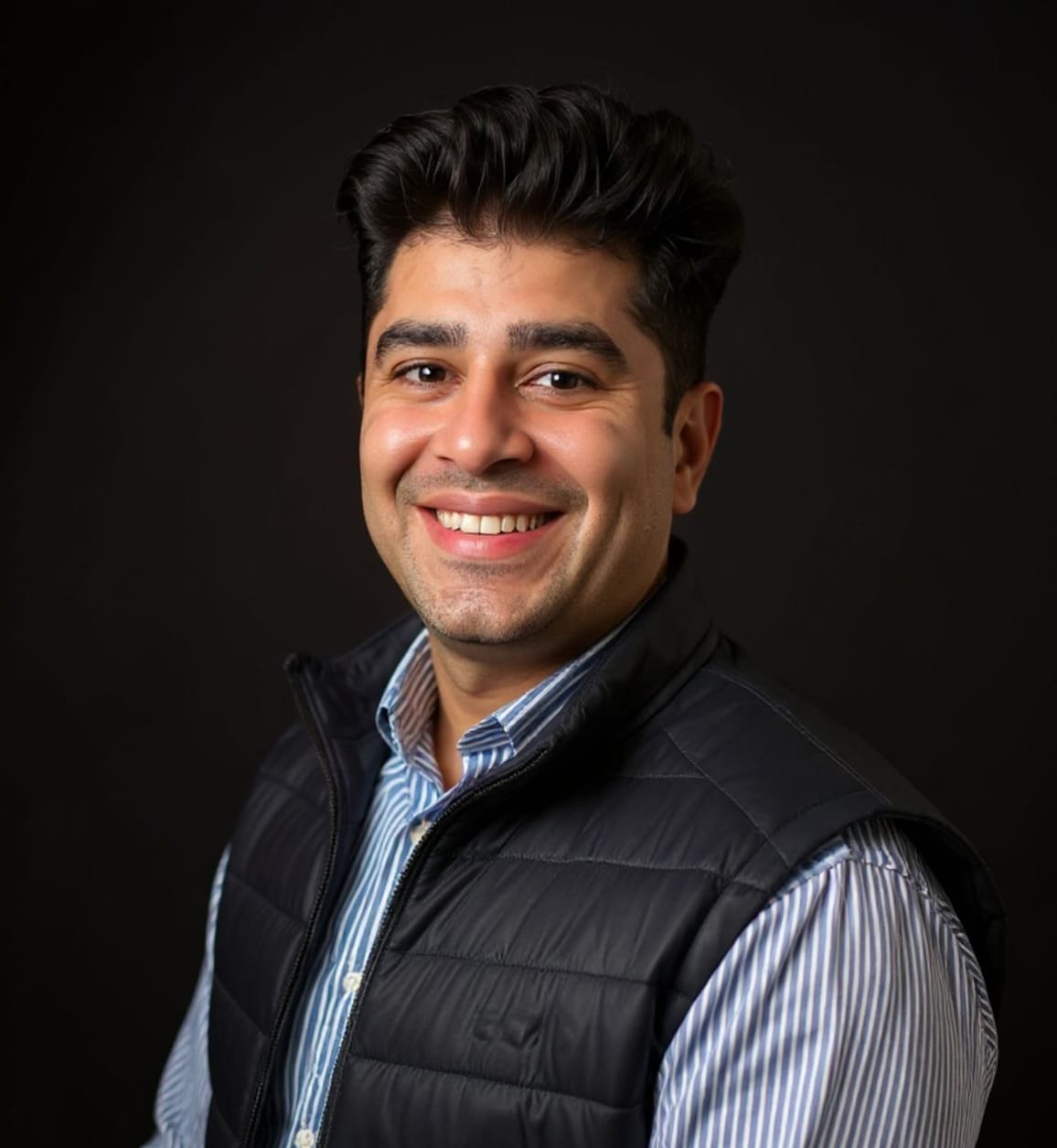
Raghav Kapoor, CEO & co-founder of Smartkarma, joined us for a conversation on the launch of PvtIQ and the structural transformation of Asia's private markets. Drawing from his experience building Smartkarma's independent research platform, Raghav explained how client demand for pre-IPO coverage led to creating PvtIQ, an intelligence platform designed to bridge the critical information gap in Southeast Asia's private markets. We discussed the striking imbalance where $74 billion has been invested into the region's tech ecosystem but only $23 billion has been returned through exits, highlighting the urgent need for better data infrastructure and price discovery. Raghav shared unique insights on how families dominate the region's investment landscape, why private and public markets are converging into one, and his vision for PvtIQ to become the intelligence backbone supporting companies, investors, and regulators in bringing more transparency and efficiency to Asia's rapidly evolving private market ecosystem.
"Public markets are behaving more like private markets. Private markets want to behave more like public markets. So actually, they're just one market.What's not the same is the level of research, information, data disclosure. Correct. That's the only difference. It's this information gap that, to us, is the single biggest opportunity now.We think over the course of the next five to 10 years, there'll be more trading venues, more liquidity providers, more market makers, more investor types—all of that. And I think what Smartkarma has always done is be the information flow for part of capital markets.In fact, that sort of 74 billion number, I think, is quite conservative. I've seen other estimates that are close to 120 billion. So it depends on what you see as sort of growth and what you see beyond. But regardless, I think it’s very large numbers, and the ratio of exit to invested capital is extremely low. A 50 billion hole is a pretty big hole." - Raghav Kapoor, CEO of Smartkarma
Profile: Raghav Kapoor, CEO and co-founder of Smartkarma (LinkedIn)
Here is the edited transcript of our conversation:
Bernard Leong: Welcome to Analyse podcast, the premier podcast dedicated to dissecting the pulse of business, technology and media globally. I'm Bernard Leong. Today we are diving into a structural shift that has been building in Asia for years. Private markets going mainstream. Investors are now chasing growth outside public exchanges, but the region still lacks a lot of transparency. So data and research infrastructure needed for smarter market capital allocation. Smartkarma, who I have known for many years, long known for bringing clarity to the public markets, have just launched PvtIQ (Private IQ), an independent intelligence platform designed to illuminate Asia's private markets and strengthen Singapore's position as a premier capital raising hub.
So with me today, Raghav Kapoor, or I call him Raj, CEO and co-founder of Smartkarma, to unpack the big picture, the information gap, and what the future really looks like for private markets, and is there a time when the private and public markets are finally converged. So Raj, welcome to the show.
Raghav Kapoor: Hey, thank you Bernard. Love to be here.
Bernard Leong: Since you have been on the show many years ago, somewhere between episode 60 to 70. So let's go straight into the conversation. Smartkarma, at that point, was still raising Series A. Now Smartkarma is an established company. So Smartkarma has just launched PvtIQ. What was the catalyst behind creating this dedicated intelligence platform for ASEAN private markets?
Raghav Kapoor: It was a natural evolution of the way Smartkarma was going. I think Smartkarma started out as a platform to bring together the best, most independent analysts that were covering capital markets, starting with APAC and then more globally. So along the way, one of the areas that we focused a lot of time and attention on was equity capital markets, which is essentially independent coverage of IPOs and placements. We felt that the only information that used to come to market came from book runners. Of course, that's one side of the story. Today investors want to hear other perspectives. So that particular vertical grew to a very credible size. We had great critical mass, and we started to get a lot of requests from our clients asking for the same companies to be covered much earlier in their journeys, maybe three years before IPO.
We realized that it's actually quite difficult. It wasn't until maybe a year or a year and a half ago when we started to feel that the VC and private equity investors who owned large chunks of these companies were now desperately seeking better ways to find exits. So at least we felt that the market has come to a place where there is willingness for corporates and their private investors to now start sharing more data. At the same time, we also felt that regulators in the region, especially in Singapore, were galvanizing together to provide smoother exits, better exit pathways. So two or three main stakeholders were now at the table. So we worked quite hard behind the scenes with these stakeholders before we launched PvtIQ.
Bernard Leong: You launched PvtIQ last week at the Singapore FinTech Festival 2025. It is positioned to support MAS equity market development program. How does this initiative strengthen Singapore's current position as a premier capital raising hub?
Raghav Kapoor: For a long time Singapore has had an ambition to move beyond just capital raising, but also play an important part in price discovery. I think the price discovery of companies now doesn't just happen at the time of IPO. It happens over several rounds leading up to the IPO, which could last many years. So there's always been an ambition to play a more important role there. As you know, Singapore sets very high standards when it comes to data governance, legal governance structures and so forth, which suit the framework of institutional investors looking at private markets.
So I think that has always been the case, but public markets in Singapore had languished. So even though its seat as a private market investment destination had grown, it was still not the best or most obvious exit destination. That started to change last year around November when we saw the MAS set up a committee to look very closely at the state of capital markets and put in place several mechanisms, several new policies to improve the state of affairs. We've seen that translate into very impressive performance of public markets in Singapore this year. I think as a continuation of that effort, we as Smartkarma wanted to do our part, which is to make sure that we think beyond, even before I should say, things get listed and what we can do to improve better decision making, better price discovery, better disclosure, and overall just a more robust framework for private markets.
Bernard Leong: How do you see PvtIQ in terms of helping private companies to chart a clearer path from fundraising to eventual public listing? I think before any private companies usually go public, they probably have this three year pre-period to try to make sure they report financials every quarter. They need to set the kind of discipline before they can actually go public. There's a lot of work that goes in between, maybe you can share on that.
Raghav Kapoor: If you look at public markets for a hint here, the beauty with public markets is that there are very defined disclosure guidelines, timeliness, level of disclosure, and that allows a certain data taxonomy to be formed, which can be compared, and time series can be built. With private markets, there's no such standards. There's very little guidelines. In fact, to a certain extent, in the early years, private markets thrived on that opacity, that information asymmetry, so to speak. But I think what started to happen now is this convergence. So the same investor that invests in public markets is also investing in private markets. So they're used to a certain level of discipline and disclosure and governance on one side, but finding it very hard to obtain the same on the other.
Now, if you look at the U.S., we all know businesses like CB Insights, PitchBook and so on. I think they've played their part in putting together some data sets largely on the US space, maybe Europe to a certain extent. There's a very big white space here that just isn't covered in a systematic way. So I think for us, it's sort of like back to being a startup again, going back 10 years to when we started Smartkarma. A lot of what we did around independent research and data in public markets, we're now just doing the same thing in private markets. But a very important piece here is getting the right stakeholders together. So we've worked to build the right relationships with organizations like the SVCA [Singapore Venture Capital Association], which is the Singapore Venture Capital Association. There are about 300 members, all the prominent PE and VC firms.
With their support, with the support of the regulators, with the support of the exchange, I think what we can do is unlock new data sets, then work very hard to standardize, clean, do the sort of stuff that was used in public markets with them.
Bernard Leong: There were some numbers which I thought were pretty striking. For example, you have over 74 billion being invested into Southeast Asian tech since 2014, but now less than 23 billion in exit proceeds. So what does that say about the structural gaps in the region's private markets? I know there were some high profile fraud cases that went on last year, but where do you see the region going through this?
Raghav Kapoor: In fact, that $74 billion number I think is quite conservative. I've seen other estimates that are close to 120 billion. So it depends on what you see as growth and what you see beyond, but regardless, these are very large numbers and the ratio of exit to invested capital is extremely low. But it points to the fact that the capital availability has actually outstripped the exit maturity or maybe, I guess to a certain extent, the IPO readiness. So I feel a lot of these companies need a lot of support to be at a place where they can exit and return capital back. But that's extremely important. You know, a $50 billion hole is a pretty big hole.
There are LPs to these VC and PE funds who also expect that capital back now. So I think firms like us are very happy to engage with these companies, not just research and analyze and provide data from a distance, but also work with them on a bespoke basis as required to help them get the maturity that's required. So I think given our experience with IPO and beyond, I think we're in a natural position to extend that and bring some of those insights in. I think there are some regional disparities here as well. So the annoying thing is that capital is global in nature, but data and data disclosure tends to be very local in nature. So I think we need to uplift the region as a whole and do our role at a very grassroots level, so to speak.
Bernard Leong: I see. But help me understand this. Why has mid-stage and pre-IPO research been so underdeveloped? From your position, I think now you're using PvtIQ to fill that gap. Why is that?
Raghav Kapoor: To be honest, if you look at it, if you go back to fundamentals, demand and supply, I think capital came quickly and in abundance to this region. As a result, it was capital chasing deals versus the other way around. But now we're in a very different market environment where companies need to work harder and their existing investors need to work harder to get those exits back. So now the focus has shifted from chasing deals to improving price discovery, improving disclosure, and attracting more public capital or more institutional capital.
Bernard Leong: I see. Private markets have actually gone mainstream worldwide. So what is unique about this shift that's unfolding now in Southeast Asia? Is it very different, say like East Asia where there's actually quite a strong private market capital structure?
Raghav Kapoor: With Southeast Asia, it's extremely fragmented. There's a lot of regional differences between the different countries. But I think when it comes to the public market side, which is when you have your eventual exit, the differences are even more extreme. Then the last part, this is where it gets a little bit more technical, but a lot of the Southeast Asian countries, their weights in the benchmarks, like the large indices, are very small. So there isn't natural passive liquidity that flows into these countries through ETFs and through just allocated capital. So I mean, just as an example, let's say there's a very large company that decides to IPO in the Philippines. The allocation that a global emerging markets manager can put into Philippines would be ridiculously small. So they're competing for a few basis points of the total capital that's available to global managers. So we have a benchmark problem that only exists in Southeast Asia.
So it will take a very long time to solve for that. In absence of that, you need more active investors to look at these things. I think that ecosystem in this part of the world is not as mature as in other parts, so that creates a big difference as well. The comparisons are very different.
Bernard Leong: So what is the one thing that you know about private markets in Southeast Asia that very few people do, but they should?
Raghav Kapoor: Well, I think a lot of private markets in Southeast Asia are influenced by families. This is quite different from other places. A lot of families, big prominent families, own the prominent assets, conglomerates specifically. They own the prominent assets. They're first to enter into new situations. They create these virtual monopolistic advantages around some of their companies. Plus their companies versus companies of competitors seem to get orders of magnitude more funding very quickly. Many people sort of miss out on that. So I think after having spent enough time in the region, you start to understand that following the families is a very important part of mapping out the ecosystem. They also have a longer term view in terms of the families. Absolutely. They're strategic investors in that business, so to speak, from inception. So I think that's extremely different from the rest of the world.
Bernard Leong: What are the other bigger structural challenges that investors face in navigating these private markets in the region?
Raghav Kapoor: There's just a complete lack of data and that has started to now run into serious issues. As you mentioned, we had some fraudulent behavior in the market as well. So what started to happen is diligence periods have gone longer, which is actually a cost and a friction point to investing. If you think about it, where a round might have taken three to six months, that's now become six to 12 months. So where the function of markets is to be efficient and to be timely, actually decision making has become slower. So that's been an especially big challenge. Many of the businesses here tend to be regional, so more than one country. But then the regulatory regime in the countries is not uniform. Everything is very different. The TAMs are really split out by nation. So I think all of that makes comparisons difficult.
I remember just sharing an anecdote. I remember one of the larger VCs coming to us six, seven years ago and saying, "Hey, why is it that Philippines banks trade on much lower multiples compared to Indonesian banks?" They just couldn't figure it out. There were no structural reasons. The profitabilities were not that different, so we had to bring them all the way back to the nineties and what happened post-ASEAN financial crisis and why the two ecosystems have very different valuation comparisons. So for a lot of investors, these quirks are very challenging to navigate.
Bernard Leong: But you actually have to uncover it for them. I mean, a lot of public markets is built on comparability and disclosures. Private markets are actually more fragmented and relationship driven. How do we make sure that this information infrastructure becomes more equal and why is it that it's still so lagging behind?
Raghav Kapoor: We talked about some of the reasons why it's lagged behind. I think the incentives were just not in place. If you think about private markets in this part of the world, by and large, they're less than 15 years old. The first part of that cycle, we're talking post-GFC [Great Financial Crisis], the first part of the cycle was capital chasing deals. So the problem has really come to a head in the last five years, and now the incentives are aligned, I guess, to focus a lot more on efficient data disclosure and price discovery. Which is where we come in as that data bridge between private capital and public markets. But the other thing, as I was mentioning, is the regulators and the exchange operators desire more listings. So I don't know if you've ever looked at this, but company formation is a direct function of digitalization and demographics.
Bernard Leong: That's an interesting point.
Raghav Kapoor: So if you look at this part of the world, you've got great demographics by and large, maybe barring talent, and you've got excellent digitalization happening everywhere. You know, just look at the SEA economy report that comes out. So company formation here is really robust, but those companies, in order for them to have maximum multiplier effect, need capital and need velocity and exit of that capital. So it's a structural thing that regulators need to emphasize on. So now I think this lag that has happened, we need to catch up. So agencies like us will work hard to bridge that.
Bernard Leong: It's a good public service that you are doing for the markets because you're trying to make sure that there's not a lack of information. I mean, if you think about it, how would institutions, for example, private equity, venture capital, sovereign wealth funds, even family offices, they seem to be trying to compensate for the lack of reliable data when evaluating deals. So how do you bridge that?
Raghav Kapoor: Well, before I answer that, you know, there is a certain quip that a lot of people have made around private market investors, especially VC investors, which is they're mostly momentum investors. There's a lot of FOMO [Fear Of Missing Out]. They chase momentum. That's changing. Now most private market investors have the opportunity to take a step back and a breather and start evaluating more closely. So now they're looking for the data sets and they're looking for that independent research. So our job is really just back to basics. We've put together a world-class team that has experience in private markets and has experience in business building themselves. We've given them the toolkits that public market analysts have had for a long time. We've also given them a pretty strong AI bench actually. With that we are doing a lot of primary research, putting together a lot of the stuff that only comes from having coffees with people, interviews, meetings, and tire kicking and so on. Apply that to private markets. Take the output of all of that and convert that into structured data sets so that you can start building those time series.
Then on the other side, there are nice little swaths of private markets where disclosure actually is pretty good. So if you look at digital banks as an example, they're all private right now, barring one or two in Indonesia. They're all regulated. Because they're regulated, they need to put out certain filings with the regulators. So actually if you are a clever analyst, you can spend quite a lot of time on them and start putting together relative market shares, relative metrics, and create brand new nomenclature, taxonomy, indices, ratings, et cetera. So it's really creative work. It's hard work, but I think it will add a lot of value and you will see a lot of new benchmarks emerge now. It's that sort of intellectual property that PvtIQ really aims to create.
Bernard Leong: I think it's something like now, even with AI adding in, it's actually even going to be simplifying a lot of that work, but it actually gives the analyst more time to do the correct benchmarking.
Raghav Kapoor: That's right. There's the way I put it. You end up getting more time to do primary research and the desktop research part gets amped up and simplified a lot through a more tech-heavy bench.
Bernard Leong: So, you know, late stage private rounds now look a lot more like a public IPO. Do you see a future where private markets are behaving more like public markets in terms of visibility and expectations? Like say for example, let's say a company reaches a certain stage, would it actually be in their interest to come to you and say, "Hey, PvtIQ, I would like to be closer, just to be prepared myself for going public." They start to really work with you to try to make themselves IPO ready, or they will stay at a private stage?
Raghav Kapoor: Well, I'll put a question to you. What's the line? What makes it a private market deal versus a public market?
Bernard Leong: As a layman, I would think in terms of whether you're being listed. Then basically the shares go into public sale. Then you have retail investors looking at it. It's the kind of disclosures you make. Going public is a pretty big task. There's a lot of things involved: D&O (Directors & Officers) insurance that's involved. So it's not a very simple activity.
Raghav Kapoor: Every single thing you mentioned, now I can say the same thing and replace the word public with private, you know. More and more, like last night, Databricks announced Series L. You can imagine how many shareholders they have. How many of those are institutional, family office, high net worth, maybe even retail.
Bernard Leong: Yes, right. SPVs [Special Investment Vehicles].
Raghav Kapoor: Correct. We've had crowdsourcing platforms alive for a while. We have secondary market exchanges, we have tokenization platforms. So actually what's happening is more and more different types of investors have been investing in private markets over the last 10 years. That's why private markets have done well. So from a shareholder composition perspective, private markets have gone public for a while anyway. They might not be listed on a public exchange, but the shares are trading somewhere, somehow, anywhere. The difference is, and this is quite important, liquidity without the right information is just volatility. But liquidity with the right information is price discovery.
Bernard Leong: Good point. So since you mentioned this, how would you perceive secondary platforms and digital exchanges where you can actually privately trade these private shares? Do you see that as a public event or from your perspective, is it still in the realms of private markets?
Raghav Kapoor: I think by the time you and I do our next podcast episode, we'll stop talking about private versus public. It'll just be one market. It might be fully tokenized, for instance. So I think the convergence is very real. The labels have not converged, but the mechanisms at the late stage have largely converged. I mean, I would say public markets are starting to behave more like private markets. I'll give you one of my favorite examples. It's an obscure one. If you look at Sweden, for instance, about a decade ago, roughly, the Swedish Stock Exchange did a partnership with NASDAQ and they created a new exchange, which is called First North. Over the course of the next decade, 2000 companies IPO'd on it, but the size of the companies is like the size of an early stage seed stage round in Singapore, you know, $2 million, $5 million, $10 million type companies.
Bernard Leong: That's similar to AIM in London. Much smaller.
Raghav Kapoor: Even smaller. But you see what's happened over the course of those 10 years is that some have gone on to become multi-billion dollar companies. Some have disappeared. So actually it's just a listed representation of an early stage VC market. But it's a public exchange. So to me that's like public markets are behaving more like private markets. Private markets want to behave more like public markets. So actually they're just one market. What's not the same is level of research, information, data disclosure.
That's the only difference. From infrastructure, sophistication, participation basis, it's kind of the same. So I think it's this information gap that to us is the single biggest opportunity now. We think over the course of the next five to 10 years, there'll be more trading venues, more liquidity providers, more market makers, more investor types, all of that. I think what Smartkarma has always done is be the information flow part of capital markets. So that's the sort of thing that will really change. Now, I think you and I will be sitting here talking about relative valuations of the digital banks in Southeast Asia. That's a conversation no one's been able to have right now.
Bernard Leong: You're the first person to actually tell me that there's really not much distinction between public and private markets. So what is the one question that you wish more people would ask you about the private market intelligence market where Smartkarma sits in, but they actually don't ask you?
Raghav Kapoor: Actually, I was thinking about something similar and I was chatting with my colleague. You know, sometimes the mistake that business owners make is they forget to look at any new business opportunity the way they would look at a business you were acquiring or when you were starting out a business completely. So I was asking my colleagues, what's the TAM for private markets now? Research and data. We actually dug deep into this. So I was pleasantly surprised that the TAM for private market research and data already is $8 billion a year.
Bernard Leong: I can believe that.
Raghav Kapoor: It's projected to grow roughly 12% a year.
Bernard Leong: Oh, that's a large growth rate.
Raghav Kapoor: Yeah, it's pretty solid. So you're gonna be in the low teens, mid-teens by the end of this decade, which is not very far. That's roughly half the TAM for public market research. But then if you look at APAC, what names come to mind? So the question that I'd like more people to ask me is, how can we get there faster? How can we have a big impact? How do we get there faster? Exactly. I think, you know, so many people are talking about AI at the moment and data and so on. I think this is one of the best use cases of all of that brought together. You know, the right intellectual capital, bringing together the right technology partners, bringing together the right distribution partners, and really capture this. A lot of regulators are allowing retail, at least high net worth money to go into private markets through funds directly. Now you saw announcements on that, so capital has all been mobilized, but what's the basis of decision making? That I think needs to be expanded very rapidly.
Bernard Leong: So I've asked you since episode 60 plus, and now I'm gonna ask you again. I think Smartkarma has come a really long way for you. What does great look like now for Smartkarma and also what you want to establish with PvtIQ in the next few years? How do you define success?
Raghav Kapoor: Look, there are a few different ways. First of all, we just want to be the intelligence backbone for private markets here. What that means is very deep and wide coverage. Thousands of companies, lots of sectors, indices, benchmarks, comparisons. You know, interview transcripts, all of that, a rich, robust data set. We want great connectivity with private market investors. We want them to feel that we are a credible knowledge partner to them and a supporter to them.
Importantly, we want to be the biggest source of help for companies. We feel that private company life can be a lonely journey sometimes. So we want to be very strong pillars of support for the founders of private companies who might not be the best at making investment decks or might not be the best at telling their stories or building an IR program or looking for new forms of capital. Now a lot of that work has been done by boutique advisory firms and so on and so forth. Great. But we want to, as a platform, help them out as much as possible in that journey. We want to work very closely with regulators because, you know, for example, Singapore, you cannot be the biggest wealth market in the world and not have a very vibrant public market. It just can't happen. So all hands on deck. So we're just another safe pair of hands that wants to work with regulators and exchanges as well to help them accomplish their missions, to bring more companies to market.
Bernard Leong: Probably the next time when we have the conversation, you're gonna tell me there's no more distinction between public and private markets. Hey Raj, many thanks for coming on the show. if I look back from that original conversation to Smartkarma today, from yesterday to today, there's so much change involved. So in closing, I should also ask: any recommendations that have inspired you recently?
Raghav Kapoor: You mean in terms of content, books, or something? So I've gotten very audio, which is kind of nice to be on your podcast as well. But for me, I feel one of the podcasts that has really captured my share of time is In Good Company by Nicolai Tangen. I mean, he is an ex-equity analyst, of course CIO of the Norwegian Sovereign Wealth Fund. He goes and meets top CEOs of large companies, mostly public, but sometimes private as well. I like his style. He's very punchy. It's better than reading a lot of management textbooks because he gets to the heart of the matter, and he asks tough questions of CEOs.
One of the interviews that I really enjoyed was him interviewing the founder of TCI, which is a semi-activist hedge fund, one of the most successful hedge funds in Europe. The CIO's name is Sir Chris Hohn, a really thought-provoking guy. For me, one of the things that I learned a lot was in the world of instant gratification, he's a very long horizon investor. How he drowns out noise, that's very interesting. So he literally just focuses on companies with extremely durable pricing power. Now in private markets, so many companies are pre-revenue. How do you think about pricing power from a private company perspective? That's really exciting and interesting. That's a go-to content source for me at the moment. Of course, your podcast too.
Bernard Leong: Thank you so much. So how can my audience find you as Smartkarma and also how do they look for PvtIQ as well?
Raghav Kapoor: So I'll start with PvtIQ. The domain name is pvtiq.com. Quite straightforward. As for finding me, I think LinkedIn, just drop me a message, drop me a connect invite, that's straightforward. I think Smartkarma has got a pretty busy Twitter account as well. You can drop in a message, we respond pretty quickly. So those are the easiest channels.
Bernard Leong: Thank you so much for coming on, and I'm so glad that we have this conversation here. So of course you can find us anywhere, but of course, take a look at what Smartkarma is doing in the private markets. Many thanks for coming on the show, Raj. We are gonna talk soon.
Raghav Kapoor: Thanks Bernard. Appreciate it. Cheers.
Podcast Information: Bernard Leong (@bernardleong, Linkedin) hosts and produces the show. Proper credits for the intro and end music: "Energetic Sports Drive" and the episode is mixed & edited in both video and audio format by G. Thomas Craig (@gthomascraig, LinkedIn). Here are the links to watch or listen to our podcast.