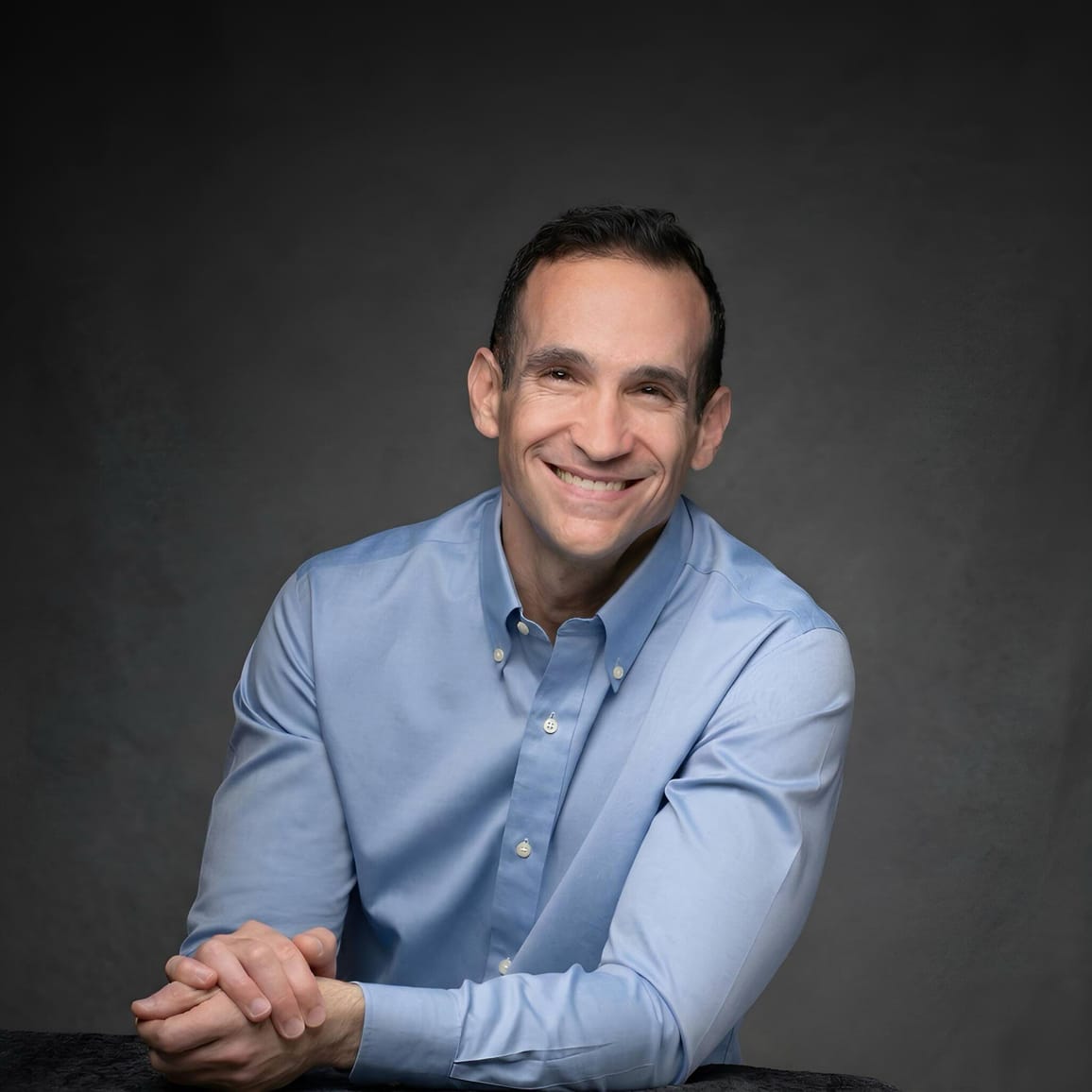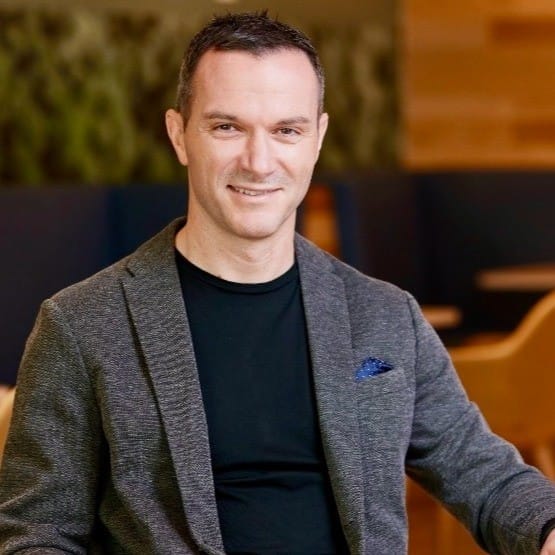

The Real Reason Chinese AI Startups Are Going Global with Jing Yang


Fresh out of the studio, Jing Yang, the Asia Bureau Chief from The Information, shares her insights on ByteDance's pivotal moment, China's venture capital challenges, and the emerging U.S.-China competition in AI and robotics. Starting with ByteDance's latest financials, she revealed how the company now exceeds Meta in revenue but still lags significantly in profit margins, with its domestic business—Douyin and Toutiao—continuing to drive the lion's share of profits while TikTok remains unprofitable. Jing Yang explains how founder Zhang Yiming has entered "founder mode," dramatically increasing CapEx spending on AI development while ByteDance mysteriously went quiet on the AI leaderboard despite earlier dominance. Moving to venture capital, she unpacks why HongShan Capital has only deployed a quarter of its $9 billion fund raised in 2022, citing the collapse of exit opportunities, new overseas listing regulations from Chinese regulators, and the disappearance of big-ticket growth deals. She then explores the new wave of Chinese AI startups targeting global markets from day one, explaining how censorship and geopolitics force founders to choose between building for China or building for the world—they cannot do both. Finally, Jing Yang breaks down China's non-obvious advantage in humanoid robotics: not manufacturing prowess, but access to advanced manufacturing test beds where robots can be deployed, iterated, and refined at scale—an advantage The U.S. simply cannot match beyond Tesla.
“I think this is a sort of coming-of-age moment. When I say coming of age, I mean collectively for Chinese entrepreneurs. Many of these founders are my age, or even younger, and I’ve spoken with some of them. I can really relate to why they want to build businesses that target the global market instead of just China. In the past, you could build a company in China first and then think about expanding outward. That’s no longer possible. For any consumer-facing software company today, from day one you must decide: Do I build for China, or do I build for Global minus China? The examples of TikTok, Shein, and many others show that you cannot do both. It’s not possible to serve both markets at once.” - Jing Yang
Profile: Jing Yang, Asia Bureau Chief from TheInformation (LinkedIn, @jingyanghk, TheInformation Profile)
Here is the edited transcript of our conversation:
Bernard Leong: Welcome to Analyse Asia. The Premier podcast dedicated to dissecting the pulse of business, technology and media in Asia. I'm Bernard Leong and China is definitely the talk of the town and what better way with me today is Jing Yang, Asia Bureau Chief for The Information to come back to tell me what is really going on: the pulse of all most important tech developments coming out China and also Asia broadly. In this episode, of course, we want to talk about ByteDance's pivotal moment, the new wave of AI startups funded by the Chinese venture capital, and also talent abroad. So, Jing Yang, it is great to have you back. So what have you been up to?
Jing Yang: Obviously ByteDance has been this really surprising story that in my opinion just made the coverage of China AI more exciting. In addition to that, what we have been busy covering is more like the Deepseek effect, right? How Deepseek is changing everything from how you think about the cost of developing AI to how it affects the U.S-China chip war, et cetera. On top of that, there's a lot of interesting stories which we can get into in a little bit, such as humanoid robotics, the latest of the China venture capital landscape ByteDance, and also new wave of agentic AI startups funded by Chinese entrepreneurs and programmers by targeting a global minus China consumer base.
Bernard Leong: So I have been reading The Information since I'm one of your subscribers. I started using your deep research tool as well. To really start, because I'm focusing on a couple of stories. We have always been talking about ByteDance at the Crossroads now. So maybe just to start with the story of ByteDance. In your recent reporting, ByteDance 2024 results has been showing international revenue growth but a slowing profit margin. I think now it exceeds Meta if I didn't get that wrongly. So what are the major takeaways there?
Jing Yang: ByteDance's revenue on a quarterly basis has been closing in on Meta for quite some time now, and passed that milestone as of the first half of this year. However, it's worth noting that on profit and profit margin basis, ByteDance still lags far behind. Meta has been posting very strong results in the last few quarters. It is true that it's just the natural course of direction of travel when a company becomes big enough, the growth rate will slow down. Actually, if you look at ByteDance, a company that has hundreds of billions of dollars in revenue can grow 20 to 30% quarterly revenue basis is already quite impressive. Many companies of that size of revenue either would have slowed down or grow much less. Basically the last two and a half years as I and my colleague Juro Osawa have been reporting ByteDance financials, the overall theme is that the international business, majority of which comes from TikTok has been contributing a bigger and bigger share of the overall revenue. However, we understand from talking to our sources that TikTok overall is still not profitable. ByteDance as a whole still generates most of its money, by money I mean profit, from the domestic business.
Bernard Leong: That is Douyin basically [generating most of the revenues and profits].
Jing Yang: Actually it is both Douyin and Toutiao. The revenues are mainly from advertising and e-commerce, specifically live commerce related revenue. So these are the biggest drivers.
Bernard Leong: So it is mainly the revenues and profits mainly driven by the domestic economy of China.
Jing Yang: Yes, because that is still the lion's share of the company's revenue and profit. For example, three years ago, the China business was, off the top of my head, like more than 80% of the revenue. Now it's like just below 80. It's a very slow transition. But you see that's where the direction of travel is. Then the other thing that is worth noting is that, as we know and we have reported several times, the ByteDance Founder Zhang Yiming is really focused on and very hands on with ByteDance AI development. To that end, ByteDance actually has increased the CapEx spending, which also has been reflected in this earnings since this year. As a matter of fact, the company told investors that they expect to continue to be on a high CapEx trend as well because the company feels it seems like now is the time to invest.
Bernard Leong: Seems like Zhang Yiming is like Mark [Zuckerberg] in founder mode and just going all in on AI?
Jing Yang: I don't know about in The U.S. but definitely in China I've seen talks of people comparing Zhang Yiming and Mark Zuckerberg as in China there's Zhang and in The U.S. there's Zuckerberg. Then they compare it for several reasons. First is that ByteDance is quite similar to Meta in terms of business model, is predominantly a social media company now, very all in on AI, but then also because both entrepreneurs are very aggressive in hiring AI talent. We all know what Meta has been doing in the last couple months.
Bernard Leong: Has Zhang Yiming went out and splashed, let's say, like the same kind of salaries to Deepseek researchers? I mean, just on average, the pay in China cannot be compared to Silicon Valley to begin with. It's about one fifth.
Jing Yang: Not that we have seen, obviously, because to be honest. But if I were to give you one recent example, we broke a piece of news that ByteDance successfully poached a long term and veteran researcher at Google DeepMind, someone who was in Silicon Valley to go work for ByteDance. That person now is one of the leaders of ByteDance's AI development. So that's where you see the parallel.
Bernard Leong: The revenues and profit parallel also makes it really interesting because it makes me feel like it's also a bit like the Apple iOS, where Apple iOS is holding most of the profits, but the revenue is smaller than Android, which has the most revenues, but actually their profit share is actually extremely low. It feels that way for me when I look at ByteDance, what you mentioned about ByteDance just now as compared to Meta.
Jing Yang: But though I would say ByteDance is a privately held company, not public listed. So it does not have to succumb to quarterly earnings and Wall Street pressure. So he probably doesn't really need to squeeze so much out of his revenue dollar.
Bernard Leong: But how long can they stay private? Right? I mean Stripe can stay private. Well that is literally the trillion dollar question. But we always talk about the much more bigger question I think. TikTok is slowly helping to reduce ByteDance's major revenue share, which actually concentrated in China, so they're actually getting more international revenues. How significant now is TikTok to ByteDance's future, especially considering all the conversations that were supposed to be TikTok U.S. going on? There's a lot of regulatory pushback and the role on how the Chinese government is looking at the deal itself.
Jing Yang: Let me just try to unpack that a little bit. When we talk about TikTok, I understand a lot of the attention is paid to the U.S. business only. Obviously, because it's a very big user base for TikTok, but it's also probably the most, generates the most revenue for TikTok. As I'm sure we know, TikTok has very big user base in Southeast Asia, but in terms of the revenue you can get, clearly in the U.S. is much higher. So we're actually recording this episode at a very interesting time.
As we know, The U.S. and China just started the third round of trade talks in Spain yesterday, September 14th. What happened just before the talks started was that the ministry of Commerce in China on Friday issued a statement, in my memory, for the first time, confirmed that TikTok will be included on the agenda of the talks. Because if you remember a while ago, Treasury Secretary Scott Bessent was interviewed on CNBC, when he was asked whether TikTok was part of the trade talks. He gave a really ambivalent answer. He said yes and no. So now that is, I find it very interesting that almost unprompted, the Chinese ministry of commerce would issue a statement. Obviously, the statement also says many other things. China wants to ensure TikTok can continue to operate in The U.S. and safeguard the rights of Chinese companies. It doesn't really go beyond what the Chinese government has said before on this subject. But the fact that they issued this statement just before the talk started to me feels like China is probably signaling that it is willing to make a deal.
If I was to take a step back, right, we all know what happened in China between 2020 to 2022, there was this brutal crackdown on all the internet platforms. That tells you that Chinese leader Xi Jinping, he personally doesn't, for the lack of a better word, doesn't really care about the internet platforms. He doesn't seem to believe that internet platforms can contribute to China's economic and technological advancement the way that so-called hard tech or deep tech can.
So for a long time, people see TikTok as a card that China has on its hands. It is not something that China doesn't want to give up. As a matter of fact, China is, especially after Trump made it so clear how important TikTok is for him and his administration. We saw recently the White House also join TikTok. For China, it feels like it is probably in a slight upper hand in terms of the TikTok situation. China knows that it has something that The U.S. really wants, so it is just waiting to see what can TikTok, what it can exchange from TikTok. So I think anything, it's just basically, in my opinion, impossible to predict TikTok's future in the absence of any kind of resolution of this issue.
Bernard Leong: We will eventually get to a resolution of the issue because the bigger conversation now in terms of the Chinese government is in the semiconductors. You can already see some of the tech giants who used to be in the e-commerce, like Alibaba, Alibaba Cloud, are now building their own chips. Huawei is now talking about the five nanometers and seven nanometers. Even the Chinese tech companies seem to have also pivoted to hard tech on there. To be onest, while we talk about how great Deepseek is, Qwen is a pretty interesting [large language] model because Qwen is the model that Deepseek also distilled from besides Open AI's ChatGPT and Anthropic's Claude. Qwen's latest model was actually top of the generative AI leaderboard for open source models.
Coming back to the question in terms of how does now ByteDance compare with the global peers? If you think about a Meta and Google in terms of AI innovation, I think Meta, I think more or less they have made a big reset. They're going, they hired a super team, now they're supposed to help them turn around. I think Google has come back quite a lot. I think they're getting stronger and stronger and putting probably the likes of Anthropic and OpenAI on their heels. But where is ByteDance from your point?
Jing Yang: I mean, ByteDance has gone quiet in the sense that I remember all over 2024, ByteDance was the indisputable leader in China. That was before Qwen gained traction, before Deepseek became a phenomenon. So even till this day, Doubao chatbot still ranks as the number one consumer app in the generative AI space. However, ByteDance just hasn't said anything at all or done anything in the open source camp. It hasn't said or done or released any of its models or open sourced any of its models. It also stopped participating in or the leaderboard ranking. I don't know if you noticed.
Bernard Leong: Yes, I do [track all the Chinese LLMs]. That surprises me because they showed a lot of research papers in 2024, but it never was ever close to launching something that is as profound as what Deepseek has managed to do or even some of the other major [Chinese] large language models like Kimi or Zhipu, for example. Is it just because maybe they didn't have the team to do it, or maybe they were caught on the back foot, so now they are trying to chase up?
Jing Yang: I don't know why they don't participate in the leaderboard anymore. It adds to the layer of secrecy and opaqueness. However, I definitely would not write off where they are. My understanding is that a lot of people working on this and then they're doing great work. For whatever reason, they haven't told the world.
Bernard Leong: Maybe they are working on a closed model. Could be the possibility because I think there is no Chinese closed models yet?
Jing Yang: They have always been only doing closed models. So even if you have a closed model, but if you don't participate in a leaderboard, there's very little the outside world can know where you are.
Bernard Leong: Maybe they will be the 2026 surprise.
Jing Yang: I'm just waiting for the shoe to drop. I think a lot of people are.
Bernard Leong: Yeah, I'm not going to, I agree with you. I'm not writing them off. They have produced one of the best AI applications before ChatGPT, so I'm not going to write them off. They probably have one of the most advanced teams.
Jing Yang: But your question about the comparison with Meta and Google, I mean, the one thing I would say is we reported this as well earlier this year, so we know that ByteDance in addition to the Chinese language models that they have, which already have been used to power its various applications, they have also been working on English language LLMs, and that they actually have teams in The U.S. and Singapore that have been working on this. However, we just haven't, again, we just haven't seen anything released from that team. Neither have we seen evidence of TikTok using any of ByteDance's English language LLMs. So that adds to another layer of curiosity in my opinion.
Bernard Leong: So one thing I was surprised by was ByteDance didn't really compete in anything that is text-based. It went straight for the multimodal because their strength is in image and video. They just haven't put something relatively significant that would change the multimodal space. Currently, Google is leading with, of course, recently with NanoBanana on image creation piece or even the Veo 3. But I haven't really seen a lot that's coming out from ByteDance because I naturally expected them to have a very good multimodal model as well.
Jing Yang: I mean back when text or image to video generation was still an nascent thing, people were already predicting that ByteDance is going to be the clear leader in this. But then to your point, we just simply haven't seen anything mind blowing yet.
Bernard Leong: I've got to shift gears a bit because I've got so much interesting stuff that I want to ask you. So let's talk about venture capital. So there is a story that you broke on HongShan. I found it very fascinating. HongShan (formerly Sequoia China) has 9 billion in capital. It was one of the biggest raises that was three to four years ago when it was announced, right?
Jing Yang: Yes, in 2022.
Bernard Leong: They have only deployed a quarter of that 9 billion. So what's the problem?
Jing Yang: That story was something that I have been working on for a long time. The talk in the China VC world is that they have trouble deploying all that huge war chest raised in the summer of 2022, which was also 12 months before the breakup with Sequoia U.S., China and Southeast Asia (now Peak XV). But obviously, it's very hard to get the actual deployment ratio. Recently, the stars aligned. I was able to get all these numbers and I did that story. It was out like three weeks ago.
So basically, while I was doing that story, I looked into the underlying reasons. It was actually a lot more complicated than I imagined. So what happened is that in 2023, the post-COVID economic rebound in China just never happened. Then that depressed the stock market. I'm talking about the onshore Asia stock market. But in the same time, in the offshore or the global stock market, valuation has also been depressed because of Fed interest rates and trade war and whatever. The U.S. IPO market hasn't really recovered until very recently. So then that basically was the macro reason that made exits very difficult. When exits become difficult, that means there will be very few big ticket growth to late stage deals, deals that in which you can write $300-$400 million checks. Those deals basically just stopped existing. If you think about it, 2018 is the golden year, right? Ant Financial raised its last round, the C round in 2018, that was several billion dollars. That was at the time the single biggest VC fundraising.
Bernard Leong: That includes a lot of funds in the China domestic market as well.
Jing Yang: Then the top tier investors in that round, each of them wrote 500 million. Nowadays in China, you couldn't even find that many.
Bernard Leong: I was at Deal Street Asia conference last week and I was told that there was a 200 million seed plus round in China. I forgot which company it was. I think it was a robotics company. It was an angel round, and the person hasn't even built that product yet.
Jing Yang: Oh yeah. If it's in robotics, there's a lot of controversy. Correct.
Bernard Leong: So HongShan has so much money they can deploy some of that, right?
Jing Yang: Well, it's not like you deploy money for the sake of deployment, right Given that robotics is so hot in China. There are very few, in fact, you can almost say that with almost all the global VCs moving out of China. HongShan is probably best suited to capture most of this wave of AI internet companies. I mean, China's going to most likely dominate in robotics.
Bernard Leong: So why not deploy it now, for example the 200 million angel funded business. If you do that in The U.S., Mira Murati's "Thinking Machines" was a 2 billion for angel round.
Jing Yang: Yeah, that's about right, and also Ilya Sutskever, 1 billion for his first round. No, I mean, here's the thing, right? That's just one example. If you look at the entire opportunity set, correct? I think it is undeniable that there are just not that many, growth to late stage deals just became really scarce. Then the reason for that is, as I said, exits became really hard. There are two reasons for that. I just talked about the first reason being the macro public market valuation. But the second reason is more China unique. The Chinese securities regulator CSRC in the beginning of 2023 started implementing the new overseas listing regulation, which made it much, much harder for any Chinese companies to list overseas.
Bernard Leong: Even Hong Kong?
Jing Yang: Doesn't matter as long as you do the listing outside of the A-share market. It's not just IPO, it captures follow-on as well, any types of equity fundraising. So that also has made exits very difficult. Then in addition to that, overall, I'm sure we all know that China's economy just hasn't been doing particularly well in the last two years since COVID, right? Since COVID ended, then that basically has another piece of impact on that. Then on top of all of this, the breakup or the divorce with Sequoia U.S. also has had a set of impacts. For example, now that U.S.-China relations have become so tense, it's just impossible now for any China-based venture capital firms to do investments in The U.S. I mean, just five, six years ago, a lot of Chinese VC firms had teams and even funds dedicated to the Bay Area. That just becomes a lot harder. In the HongShan story I did with my colleague Drew, we mentioned this one specific case, which is like a very rare deal that HongShan invested this year, which is a funding round for Eight Sleep, which is like a smart mattress.
Bernard Leong: Yes, the founder of The Information is a fan of that mattress. She always talks about it on her podcast, More or Less.
Jing Yang: They say they have the plan to expand to Singapore and China.
Bernard Leong: I'm dying for that mattress, but my wife disagrees with me.
Jing Yang: I simply haven't had the opportunity to try.
Bernard Leong: It's a tech bro thing, I'm sure. But anyway, so in that deal, which is really not a direct investment in AI, right?
Jing Yang: Exactly. It is like a mattress topper that has some sort of smart sensory stuff, right?
Bernard Leong: It has this cooling thing that's supposed to make the bed cool. You can control the temperature.
Jing Yang: But it also collects the user's data, like your temperature, blood pressure, that kind of thing. So anyway, even a deal like that, HongShan had to make sure that its investment is low enough to not warrant a board seat so that it won't trigger a review by CFIUS.
Bernard Leong: So it just dawned on me, HongShan's 9 billion fund, is it a multi-stage fund or is it something like Andreessen Horowitz? It's a series of funds.
Jing Yang: Yeah. So it's four funds. Seed, venture, growth and late stage.
Bernard Leong: So maybe the growth and the late stage, they may not be deploying, but maybe the seed and series A they're still deploying, right?
Jing Yang: That's exactly what my reporting showed. So they actually, for the seed fund, it's almost 50% deployed now three years after it's been raised.
Bernard Leong: But can they go back to all the LPs and say, well, maybe it's better to now just deploy in the seed then A round and then they can always revise the investment thesis, right?
Jing Yang: Exactly. I mean, as my story also suggests, some of the LPs think that if there's just not a good opportunity set to deploy for growth and late stage deals, maybe you can consider returning some of the capital just out of goodwill. Obviously no GP is obligated to do that. Or maybe if they are looking at raising the next seed slash venture fund, they can consider maybe just repurposing the undeployed capital in the growth and late stage fund into the new seed venture.
Bernard Leong: So I think moving forward, right, just thinking about HongShan, right, then I want to sort of flip to the startups, right? So now I think you've got things like Lobe, they're all targeting global users. You also have Manus AI who have now moved to Singapore and I know the FT recently published this article that they seem to incur the wrath of the Chinese users and also incur the wrath of The U.S. venture capital.
So I think there's still a shift of most of these companies are really going for global now rather than just the local domestic market. For any observer like myself looking into China, when I look at the startups, the competition within that market actually makes them very resilient. Once they come out of China, they become a very big force. I mean, to be quite honest, even in Southeast Asia, I see Chinese founders moving around. I usually just feel that, you know, it's not the Southeast Asia founders I'm more worried about, it's the 996 Chinese founder that is really on the top of my mind. How do you look at them?
Jing Yang: This is a sort of a coming of age, really, the naturally, because when I say coming of age, collectively Chinese entrepreneurs. If I think a lot of these founders are either my age or even a few years younger than me. I've talked to some of them. So I really can relate to why they want to build a business that targets the global market instead of just China.
So in the good old days, you can build a business and start from China, and then think about expanding beyond. However, that is not possible anymore. As long as it is a software company that is consumer facing, as long as it's a consumer facing software product, immediately from day one, you have to think about: do I build it for China or do I build it for global ex-China? Because the examples of TikTok and Shein and many other smaller companies have already shown them that you cannot do both. It's not possible to serve both.
Bernard Leong: ByteDance did both, right? I mean, there's Douyin for China and TikTok for the rest of the world.
Jing Yang: Exactly. So they cannot have one homogeneous product overall because of censorship and data regulation, whereas Shein and Temu, well, Temu had Pinduoduo before and then have a separate product dedicated to The U.S. market. So Shein is probably the only exception that went global quickly.
Bernard Leong: From day one, right? Because by the time their business figured out their business model, the e-commerce market in China was too competitive.
Jing Yang: Right. Do you think that the Manus AI situation was that really the Chinese market is so competitive?
Bernard Leong: No, I don't think that's the case. So what I was going to say is that if you are consumer facing, so let's maybe take e-commerce out of the picture. Because when you provide software to users to help you build whatever kind of agent tasks that the user wants to do, it definitely involves generating content.
Now, once it does that, then you are faced with the censorship problem in China, right? That's just at the very operational level, right? At a higher level, then you also have all these problems with how do you want to be perceived?
So basically the mindset of a lot of these founders is that they grew up and were also trained in an era when China was rapidly integrating with the world. So then basically their upbringing, when I say upbringing, it's not just education, but as well as how they were trained in their career. Their entire academic and professional upbringing is very globalized. If you think about the 30 and 40-year-old Chinese, the average 30 and 40-year-old Chinese in their knowledge of America, of the West, is definitely a lot better than America's understanding of China.
Bernard Leong: Reminds me of a very interesting quote, but I forgot who said it. Is that the Chinese of the 30s and 40s that you mentioned understands America very well. But if you do the reverse, they don't know anything about China or they see it like some black box as well. I think that's where the different versions of both sides, why is there so much difference? Because The U.S. doesn't understand China the same way.
Jing Yang: Yeah. I mean, in a way, the way I like to look at it is it's a way, in a way it reflects America's superpower, its soft power. It reflects the global order that was set since the end of World War II, right? But those are the fundamental factors. But going back to these founders, I think they harbour this vision. Like, I want to build something. Because if you are a builder, you want the thing you are building to be really successful. How to measure that success?
Bernard Leong: Is by the whole world.
Jing Yang: Exactly. Right. Especially after they saw TikTok, even though TikTok got a leg up from the acquisition of Musical.ly. Still, right? I mean, even Musical.ly was built by Chinese programmers, right? So on top of that, as you know, China has a very deep bench of very skilled programmers and engineers through decades of education emphasizing STEM and also through so many Chinese students studying overseas. So naturally, you have the desire to compete at a global level and the ability to do so. Hence we now see this wave of AI agent, agentic AI startups that are trying to do this.
Bernard Leong: So I think one thing I just want to go before we move into another segment on robotics is, I know we covered Lobe a lot, so it's been uniquely positioning itself in the app creation space, specifically with the concept of vibe coding. So is this going to be how you think Chinese startups going global, similar to what CapCut did in video editing?
Jing Yang: That's definitely what the founder told me that he wanted to do. He also worked on the CapCut team when he was at ByteDance. But whether that can succeed, it's too soon to tell. The company's still at a very early stage. I don't know. Have you actually tried?
Bernard Leong: I've tried it to play with their product. I'm still navigating. I find that the Chinese generative AI applications tend to be more holistic. That means they try to put two, three different point solutions and try to give you a flow solution. Sometimes it works and sometimes it doesn't work. Because one of the things I think most generative AI solutions to me are, or I call point solutions. That means it does one thing and does one thing really well. But I don't want just one thing. I want this to touch this thing that I do. Gamma is a presentation generator. Now I have to go to ChatGPT, make a few prompts and then cut and paste the information and then do the generation.
What I would love to do is one stop finish.The content generation in ChatGPT, corrected everything. Then I say, "can you send this to Gamma and generate me the presentation?" That hasn't happened. I have to still do the cut and paste, which is frustrating. Whereas I see Kimi, when I tried it myself, I realize okay, they're trying to combine these two things. But maybe it's the way how we are so used to in the rest of the world. We're so used to The U.S. internet ecosystem. When we use the Chinese apps, despite I have one single folder in my phone. It is called China. Every day I would just take a look, try every UI to just make sure I understand how the Chinese is thinking about it. I still find it is like this Galápagos island with these apps versus the rest of the apps that I'm using. That's the feeling I'm getting from using Kimi. Now I recently, I'm also starting to try some of the Chinese LLMs as well. It gives me that sense that they're very holistic, but somehow, maybe it's just the usage, it still feels very Chinese to me and not the way how The U.S. apps are done.
Jing Yang: Yeah. I see what you mean. I think even the user interface, the UI design and a lot of the things can also be a bit different. But I would say this: all the agentic AI startups targeting consumers, not just in China. It is not just those funded by Chinese founders, but all over the world. They're all going to be under a lot of threat by the bigger companies because they all realized that they have to move on to this part as well. Even in vibe coding, Anysphere, which is Cursor, Cursor basically built its AI agents on top of Claude. Then Anthropic is also trying to come up with web coding solutions based on Claude. So it's just getting really cutthroat.
Bernard Leong: It is because it's like what Sam Altman said: "If you are building an AI company, when you look forward to the next 12 months, if a better large language model comes out and whatever you're building benefits from there, you should be happy. But in another 12 months, whether it is OpenAI and Anthropic clone what you are doing, you'll be feeling shitty." This is precisely what's happening to Cursor right now. I really have people dropping Cursor, even including my own team, has now completely fully converted to Claude Code. So that is telling me quite a lot.
Jing Yang: It's like once the big companies decide, identify this area, and that this is the area we want to get into, then you'll be crushed very quickly. This is exactly what happened with Windsurf.
Bernard Leong: Maybe the U.S. companies are learning to behave like Chinese companies. Maybe they don't admit it. But I heard recently, apparently according to some VCs, based on Ramp data, the San Francisco startups are working 996 because a lot of people were expensing on Saturdays for food in their offices. Then there was this new wave about U.S. founders talking about going 996 too. Maybe it's the other way around. The reverse culture shift had started, but we just don't see it. It's the beginning.
Jing Yang: Well, I don't know Silicon Valley that well to say this, but my impression has been that they would work very hard when needed.
Bernard Leong: No, they work very hard. But I think there is this new phenomenon. I think it started a couple of years ago where Mike Moritz said, "Look, you guys in Bay Area ask for wellness spa, perks for whatever? Go to China, learn from the Chinese, 996." Obviously, when you start having Elon saying, you got to be hardcore when he was doing the layoff at Twitter. Everybody, then suddenly get a shock when Google is throwing off all the perks, now even Meta is also cutting off the perks. It's a shift. Part of it is really induced by the Chinese tech companies. It was like, "Hey, come on, the Chinese guys are kicking our ass. We have to go 996." Even the part where the big companies starting to challenge the small company actually starting to feel like how Chinese tech companies going after the small startups at the same time. I mean, however, though I will say in previous, the pre-recent AI wave.
Jing Yang: That's always been the way the ecosystem has, I mean, the way capitalism and venture capital, the nature of it has always been structured that way. If you can't out-compete your competitors, you're better off being acquired by the incumbents.
Bernard Leong: An old friend of mine [Shai Oster] who is your predecessor always said "Amazon is like a Chinese company. It's just that they don't know it yet."
I want to get to the last part which I'm most excited about. I really want to have a robot. So one of the things is about the humanoid robots and the growing U.S.-China competition in Physical AI. The question is why, because a lot of robots are still single functional. Why is this such a big area now? It's becoming like both sides are trying to build their own human robots.
Jing Yang: Well, when I was talking to people in the space, what they told me is that the arrival of ChatGPT in late 2022 made people in the field researching physical AI and robotics realize that this is now the moment, this is now the magical wand that can really take us forward, just as when deep learning revived the dormant research of artificial intelligence in the sixties. So then what we're seeing now really is a result of people's excitement and then the advancement the researchers have made in the last two years, since two and a half years, right?
I just think it just so happens that U.S. and China both have the researchers in physical AI that both have identified this area and then both saw the opportunity that came with generative AI, right? It's definitely, I think, one of the most controversial areas. When I say controversial, I mean, is this thing even real or is it just another giant bubble that is waiting to burst?
Bernard Leong: Because one thing that I always never understand is they always keep talking about humanoid robots, but maybe for some tasks you don't need, humans are actually not very well formed for the task. Maybe some other particular form factor might be better, but it seems to be trending towards having humanoid bodies, et cetera. Like what they saw in the recent World AI Conference in Shanghai, the WAIC conference, which is now like everyone who went there is like, wow, now there's a boxing robot.
Jing Yang: Yeah, but in The U.S. too, right? You see some of the startups that demonstrated back flips. But how do you commercialize a robot that does back flips? What is the use case for that? People also question that. So here is in terms of the form factor, I'm just going to tell you what people in the industry tell me. So there are two reasons they tell me why a humanoid has a compelling case. First is that our world, like human beings, we build our world based on our form factor as a human. So that a humanoid robot, if it works, would maximize the environment that we already have built, because then you basically have a robot roaming around in the form factor that is already optimized for humans. So that is the practical reason. Then there is also this romantic or philosophical reason I was told, is that it's just this complex that humans want to play God. What humans want to recreate itself in form factor and intelligence.
Bernard Leong: Yes. But in the science fiction books such as Frank Herbert's Dune, and even in Asimov's Foundation, the robots eventually got wiped out because of that problem that they became sentient.
Jing Yang: Yeah, I mean obviously that's why I say this is the philosophical reason. However, going back to what you were saying, actually if you look at some companies I talked to in China, a lot of them are pretty practical.
Bernard Leong: So for example, if you look at Tesla Optimus, right? It has the dexterous hands. Like five fingers, all the motors and 400 actuators, which Elon Musk mentioned in the recent All-In Summit.
Jing Yang: I will include the two legs. The legs also have the feet, also have all the toes, right? So that is following the human form factor to the very last minute detail, right? However, you can see some other companies in China that will be like, the technology right now is just not there for a fully motorized, dexterous hands or two legs. But then for the entire humanoid sector to have a future, it needs to have some kind of commercial use case first. Then why don't we build, for example, a gripper. Like it is essentially like this, right? Also a wheel base instead of having legs.
Bernard Leong: It's for fulfillment packing for e-commerce.
Jing Yang: So this company says, you know what? We will not stop working on dexterous hands and then two-foot solution. We want to commercialize the technology we know works right now. So that's a more practical approach. Which one's better? We don't know. I think it's too soon to tell.
Bernard Leong: But let's say like the top three companies, UBTech, Unitree Robotics and DJI. Are there any like next wave of robotic companies coming up? Or is it just these big three?
Jing Yang: There is a lot that are, I mean, I don't want to give any names because first I don't want, I haven't talked to every single one of them. Even if I have, things move so fast, right? All I can tell you is that yes, there is a new wave of companies from China, and there's also a new wave of companies that supply specific parts.
Bernard Leong: For example, Tesla Optimus has to source parts for the dexterous hands from China.
Jing Yang: Here's what I really want to talk about in terms of the U.S.-China competition in humanoid robotics. First, in terms of technology, both U.S. and China are on the same starting point. No one now has a clear upper hand in terms of solving the biggest problems and the biggest bottlenecks in this field. So here is where it gets interesting. A lot of people think that China may already have a lead or is going to pull a lead in the space because of the manufacturing prowess that China has amassed. While that is not untrue, that is not the reason why China may eventually pull the lead in the space. Because let's say all the factories in China, the supply chain, if they manage to produce better hands and whatever parts, they will not say no to any American company that comes and says, "I want to order 10,000 hands from you." So that is why the best smartphone still is made in China. It is made in China, but it is an American company, right? So that is not where China's advantage is. Before iPhone, there was no smartphone brands in China.
So actually where China, the people in the humanoid industry in China tell me where China's real advantage actually is from all the test beds.
Bernard Leong: Correct. It's the test beds. Then what happens is that once there's a groundbreaking design from The U.S., they can evolve it to the next level with the manufacturing techniques and taking it to scale. It's just a little bit like Deepseek.
Jing Yang: I mean, Deepseek is built on the fact that they saw what was happening with The U.S. It's a kind of, I don't know, is it innovation? Yes. It's a different kind of innovation, but it's more continuous innovation. Or did I miss what you're saying?
Jing Yang: No, yeah. Let me just clarify a little bit. Let's just say there is this group of startups in China and a group of startups in The U.S. Training this physical AI device is extremely hard because you firstly need to gather the data. You need to work on a really complicated model. Then you need to gather the data. I don't, let's not go to the data. We assume that works. But then after that, there's all rounds and rounds of iteration you have to do.
So for example, you have this robot and then you need to actually deploy this group of robots into, like say, a factory floor where you see how it works, and then gather on a trial and error basis the things that worked and have not worked, and then fine tune that. But then if you look at it in The U.S., I mean, what kind of advanced manufacturing does The U.S. still have these days beyond Tesla? But in China, right? All these, because the first batch of users of humanoids are actually makers, car makers, right? With China's advanced manufacturing, it does not only give China an edge in the manufacturing, in the supply chain perspective, it gives China a huge advantage in being this giant test bed, this experiment where your robots can be deployed.
Bernard Leong: Eventually someone would be the one that innovates the iPhone in China. Essentially the robot in China. That's what you're saying?
Jing Yang: Yeah. So because even if you build, with the exception of Tesla Optimus, right? The other companies, the other robotic companies in The U.S., it'll be very hard for them to find factory floors in The U.S. where they can actually deploy a robot on a trial basis and then gather the data and then fine-tune the results based on that and then do it like a hundred times.
Bernard Leong: Got it. So we are running a bit out of time, so I'm going to have two quick questions and then you just give me what's on your mind. What's the one thing people ask you about the Chinese startup ecosystem that you wish that they would ask you more?
Jing Yang: I want people to ask me or have a conversation with me about redefining what is a Chinese startup these days.
Bernard Leong: What is a Chinese startup today?
Jing Yang: I think the definition has to be broadened a lot more now. For example, Manus again, right? Is it a Chinese startup or not?
Bernard Leong: You can say yes or no. Global startup built by Chinese.
Jing Yang: But they started from China after they became famous, then moved to Singapore. Then you also have Genspark, which just started, registered, they were incorporated in California, but funded by Chinese entrepreneurs. Is that Chinese or not? I would say yes and no. It's just these days in the Western context, the term Chinese has become somewhat a toxic label. So a lot of Chinese entrepreneurs even want to shed that image themselves.
Bernard Leong: Yeah, their founders even in this region would not dare to take Chinese money because they want to go into The U.S. market.
Jing Yang: Yeah. That is all driven by geopolitics. But if you look at, I think at least half of the researchers that Meta approached from OpenAI are Chinese.
Bernard Leong: Yes. Right.
Jing Yang: We have a saying in China these days now that the AI race is now between the Chinese in China and the Chinese in The U.S.
Bernard Leong: Yep. Last question. Looking into 2026, what are you going to be watching?
Jing Yang: Wow. I mean, everything we just talked about, I think it's very interesting. I really feel like we are at a point where so many forces, so many fundamental forces are shifting and maybe working against each other, but obviously the biggest question mark is U.S.-China, right? That will just determine many, many things.
Bernard Leong: So Jing Yang, we must do this again. Maybe when I'm in Hong Kong we'll find a studio. I'm pretty sure the Poddster Singapore guys can find me a studio there. We should do it face to face. So in closing, two quick ones. Any recommendations which have inspired you recently?
Jing Yang: Yes, I actually do. So I highly recommend the new book: Empire of AI, written by my friend and former Wall Street Journal colleague Karen Hao.
Bernard Leong: Yes, I'm going to get her on the show. But we are more or less locked down with the date already.
Jing Yang: Just a quick plug. So I'm actually hosting a book talk with Karen at the Foreign Correspondence Club in Hong Kong.
Bernard Leong: Please tell her that next week I'm in person to interview. Thank you.
Jing Yang: But if any of your listeners are in Hong Kong, please, you are welcome to join the event in person. I don't know whether you might be there before that, but I'll try. Then the other book I want to recommend, it's not a super new book, but I only started reading it recently: the autobiography of Fei-Fei Li, The Worlds I See. It's just such a great book.
Bernard Leong: How do my audience find you and The Information?
Jing Yang: So The Information, you can find us at www.theinformation.com. Since you mentioned Deep Research, I really like it, by the way.
Bernard Leong: I tested it because I haven't gone to your next tier user. I tried it. I actually enjoy, if I want to find very quick clips where I need to verify some information. Like, you know, I do recall was this company invested in it? I find it better than Crunchbase.
Jing Yang: Because it's based on our own reporting.
Bernard Leong: Because you curated that information. Maybe that is the difference. Whereas Crunchbase, sometimes the information is not correct because it's self-reported.
Jing Yang: Yeah. So Deep Research in The Information completely eliminates the AI black box issue because it's all trained on our reporting. Anyway, so I'm on Twitter at @JingYangHK. Yes. I still like to call it Twitter, old fashioned that way. Then you are welcome to email me jing@theinformation.com with any thoughts, comments, feedback or criticism.
Bernard Leong: I'm sure you're going to be in Singapore more often because Manus is here now.
Jing Yang: Either I or my colleagues will.
Bernard Leong: You can definitely can find us on YouTube, Spotify, and everywhere now and subscribe to us and Jing, we'll talk again soon.
Jing Yang: Thank you for having me.
Podcast Information: Bernard Leong (@bernardleong, Linkedin) hosts and produces the show. Proper credits for the intro and end music: "Energetic Sports Drive" and the episode is mixed & edited in both video and audio format by G. Thomas Craig (@gthomascraig, LinkedIn). Here are the links to watch or listen to our podcast.