
The Sentient Startup: Building Companies in the Age of AI with Arnaud Frade

Fresh out of the studio, Arnaud Frade, Managing Partner at Mesh Advisory and author of the upcoming book The Sentient Startup, joins us to explore how AI is fundamentally transforming entrepreneurship through the radical concept of AI as a true co-founder rather than merely a tool. He distinguishes between startups that are merely "AI-onboard" versus true sentient startups where AI operates as part of how the business is run, and introducing the concept of Machine Resources (MR) as a new organizational function alongside Human Resources to manage evolving AI models and maintain knowledge integrity. He emphasizes the co-intelligence model over the sterile human-versus-machine debate, highlighting how the 95% AI project failure rate stems from organizational issues rather than technology problems—a reality perfectly captured by the Banani framework (Brittle, Anxious, Non-linear, Incomprehensible) that explains why companies struggle with AI readiness. Closing the conversation, Arnaud shares what great looks like for The Sentient Startup: being part of the essential conversation about AI governance, accessibility across income levels, child safety, and building better regulations.
"The entire debate on human versus machine is extremely in a way sterile because it very quickly veers towards the science fiction, the movies, the images we have, and it forgets the point about what can we gain. but what can we gain in the context of having accountability and integrity with it? I think this is where the debate becomes more complex. So for me that's the bigger point is this is not about having less people. It's about having people doing better things and using their talent to really scale what they can do in that model of co-intelligence. " - Arnaud Frade
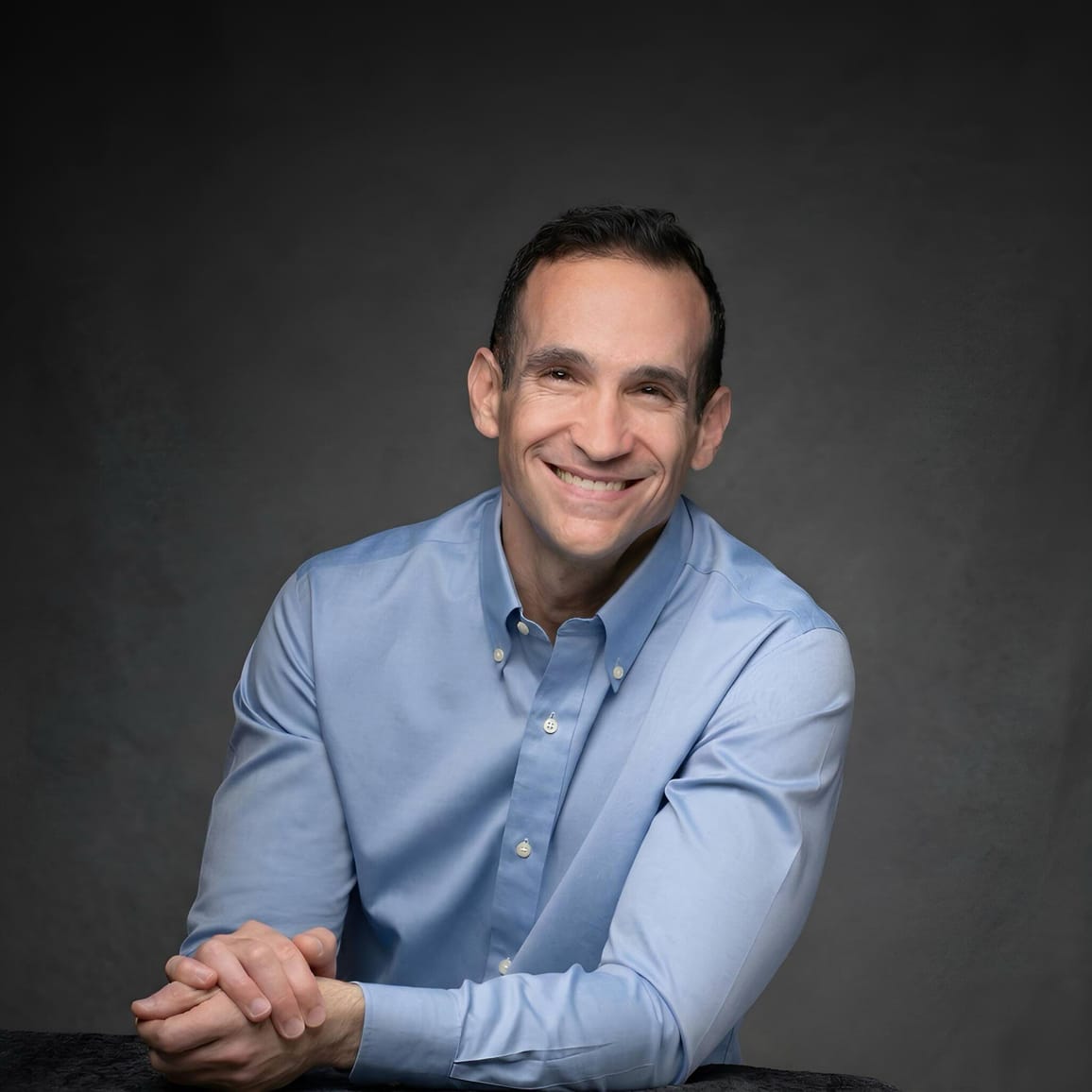
Profile: Arnaud Frade, author of "The Sentient Startup" (LinkedIn), which will launch on May 19, 2026 by Penguin Random House.
Here is the edited transcript of our conversation:
Bernard Leong: Welcome to analyse podcast, the premier podcast dedicated to dissecting the pulse of business, technology and media globally. Yes, we are post 500 episode and a new rebrand in a new era. I am Bernard Leong and today we are diving in the future of entrepreneurship in the age of artificial intelligence. With me today is Arnaud Frade, seasoned global executive and author of an upcoming book, "The Sentient Startup" where he explores the provocative idea of AI as a true co-founder. Arnaud, welcome to the show.
Arnaud Frade: Thank you so much, Bernard. Thanks a lot for the invitation.
Bernard Leong: Really appreciate it. Of course we know each other through a common friend and, but we won't talk about that today. But I want to start off because you have a very interesting. Career background. So I want to ask you, what, how did your career journey begin and what led you into the world of technology and data intelligence?
Arnaud Frade: Well, I really started in the UK. My career began there, where I spent about eight years. Originally, I'm from France—from Paris. I worked in the UK initially for a company called Information Resources, and it was really all about helping brands understand incrementality and better sell and engage with consumers and shoppers. The initial part of my career is all about business intelligence and market insights. I then had a stint at American Express where I ran global accounts and large accounts in France, back in the motherland for a little while. Then I came to Singapore in 2006, so I've been here almost 20 years now.
Bernard Leong: Wow. Always in senior executive roles?
Arnaud Frade: Yes. My area of expertise, I would say, is in building or rebuilding professional services firms. So I've worked for WPP, I've worked for Omnicom, I've worked for research companies like Ipsos and Nielsen. I also was a subject matter expert for Accenture, where I led some very large-scale projects on the future of retail. Most recently, I'm the managing partner of Mesh Advisory, which is a boutique strategy advisory firm. We focus on equipping companies with the skills to confront rapid business transformation. So two topics really: scenario-based strategic planning and advanced negotiation.
Bernard Leong: So you've worked across major markets in Asia and even globally, for sure, in Europe. With senior roles across strategy and marketing, how does that shape your view on innovation or thinking about startup culture? Because I think building a new business across a different geography is also considered a startup of sorts.
Arnaud Frade: Completely. For me, I've always worked at the intersection of technology, business, and culture—culture from the standpoint of consumer understanding and shopper understanding. I've worked with clients from the largest tech companies to the larger consumer tech companies such as Samsung, for example, where I was the subject matter expert in retail.What I think is the reality on startups: I used to be a mentor for The Hub here in Singapore from roughly 2013 to 2017, so about four years, mentoring a large number of startups. I think that intersection of really rapid development, trying to deploy new ambitious solutions, trying to also match grand missions—sometimes a lot of work on the sustainability side, on circular economies, et cetera—and technology is really where we are today in terms of bringing this together.
Bernard Leong: So before we get into the main subject which is your new book, I want to ask: from your career journey, what are the lessons you would share if you were to give advice to a younger audience?
Arnaud Frade: That's a great question. I think the first one is really make sure you stick to your values. I think sometimes in corporate roles you end up in places where you really shouldn't be, with people you shouldn't be with. I think the first thing is really to be true to yourself and to try as early as you can to get to know yourself, get to know what matters to you, what your values are, and to make sure that you can really live that as opposed to trying to make too many compromises. That's one thing.I think the second thing is to volunteer. From a very young age as a business person, when I joined my first company, I volunteered for everything. The value of that is you get to really be in the right room at some stage, and sometimes you're just in the right room, sat on a chair in the corner, not expected to say anything, but that alone is an incredible learning experience. So that's the second thing.I think the third thing is to really understand that intersection of technology and the broader world of business. You can't take a naive view. There are very complex issues on ethics, integrity, privacy. These are real, solid, robust problems, and they're things that we need to understand and tackle. But that's also where the space of innovation, progress, and agility takes place. I think that gets you, again, in the right room with the right kind of people and also with people that hopefully are smarter than you, and you get to learn from them. That to me has been the biggest part of the journey.
Bernard Leong: I love your depiction of "Be Yourself." I think about Joseph Campbell's quote, "The privilege of a lifetime is to be yourself." I totally agree on that. So I want to come to really the fun part, which is your upcoming new book, The Sentient Startup in the Age of AI Co-Founders. I think let's start with the inspiration story. So what inspired you to write The Sentient Startup, and was there a particular moment or insight that catalyzed the idea?
Arnaud Frade: Absolutely. So for me, it is my first book, so it's a really big milestone. I started writing on AI in 2016. In 2016, I started becoming interested by this idea that for a hundred years, brands have marketed to consumers. That's what I was part of for a portion of that time. But with the rise of algorithms directing what products are shown, what products appear—in particular in smart search, in the advanced modules of search, and in a number of solutions that started to appear—then my question was about, okay, what about marketing to algorithms?
How does that work? I started to write this book with the premise that brands are going to have to really learn to understand how these algorithms work because they're now marketing first to them, and then afterward to consumers. I started to write this book called "Algo Marketing," and fairly quickly, but by 2017, I kind of ran out of words. I got stuck at about 27,000 words. You know, a business book is maybe 50,000 to 55,000. I got stuck at 27,000 or thereabouts. More and more books on marketing and algorithms were coming out, and I felt I'd kind of missed the boat. So I decided not to really press with the book itself, but I continued learning. I really got down the rabbit hole of machine learning, artificial intelligence. Obviously, this has been going on for more than 40 years before that time. This is something that has seen gradients of evolution. But it became very clear by early 2020 that there was a bit of a shift from the labs and the research papers—some of which, frankly, are way above my head—into more of the commercial consumer conversation. You could start to sense that some of these applications were now being built not just for the scientific community, not just for the large corporates, but also for some sort of consumer use.
In 2023, I heard this at a conference—There Is A Revolution, a JP Morgan conference. Sam Altman was on stage. He was interviewed by Alexis Ohanian, and he had this throwaway comment. He said, "My buddy and I in Silicon Valley were betting on who's going to be the first solopreneur to build a unicorn thanks to ChatGPT." To me, that was really the epiphany. That was the moment where I thought, yeah, this is exactly what I've tried to crystallize for all these years, where I'm thinking about how do you build businesses when you balance the power of the human mind and the power of humans with the right technology. That really crystallized that moment. That's when I started to think about this idea of the sentient startup—AI as your co-founder. A startup that would be, obviously, created by humans, but enhanced, augmented, by co-intelligence through the machine.
Bernard Leong: I want to start with a baseline. How do you define a sentient startup, and how does it differ from, say, traditional startups from your point of view?
Arnaud Frade: So my initial idea was, well, there must be plenty of those. There must be plenty. I started to interview startups in Israel, China, the U.S., Europe, the UK—many places. What became very obvious is many of them were AI-onboard. They were not sentient startups, meaning the AI was not really part of that entity of co-founding the business.
To me, the distinction is: where is the model, where are the models operating? Are they operating as an addition, as a product, as a solution, as a feature, as a benefit? Or are they part of how the business is run? That's really the big difference.
Today we're starting to see examples of that. I'm talking to a startup in the UK called New.me—founder Imad Rashi, who's a veteran of AI—and he's building a model to create autonomous startups, so entirely integrated within different layers of models. I was talking to a digital gallery owner here who is bringing an AI on his board to help as a scout, to help identify other AI-driven digital artists. To me, that's the premise of what the sentient startup is going to become, in my opinion.
Bernard Leong: There was a book called The Invisible Billionaire. It was about this New York billionaire who was so reclusive, but he was actually one person who worked with various partners in the shipmaking business, and he was able to reach a point where he started from building ships, managing ships, and essentially he would get the contracts for the fulfillment, but he passed them to the ship builders that he knew and the ship transportation companies. Basically, he's quite invisible and he became a billionaire. He's like my version of a pre-internet-world solo billionaire. So in your book, you reference Sam Altman's prediction of one-person, billion-dollar companies, which I think for that person is considered rare, like one in a million. Now it probably is going to be more common. How close do you think we are to that reality?
Arnaud Frade: So for me, I'm less focused on whether it's one person or several. I don't think it really matters, but I think we are at most two to three years away from it, really at most. There are already very tangible examples that it's now possible to scale companies with a really better mix of better-qualified people. I think that also opens the way for bringing in more senior people that really understand, that have the experience to build on what needs to be done to grow and to grow fast. At the same time, systems and technology are going to facilitate that agility, facilitate that process. So are we very far? I really don't think so. Is it going to be just the one person? Maybe, maybe not. Does it really matter? I don't know. For me, what really matters is I think it opens up a huge opportunity to all of the generations, which is: I can now set up a business in a way where my ambition doesn't have to be to hire a hundred people with my first fund that I raise. It could be that my ambition is to find some really super-skilled people and to combine them with some very effective agentic models and to try to combine that into something that delivers what I want to execute. That really is exciting because it means that the barriers to entry are going to reduce even further.
I think for large companies, multinationals, they should really start thinking, okay, what's our version of becoming a sentient startup?
Bernard Leong: We had this conversation before where I think there's still a transition period, but of course we differ on when the timeline is. But I think it will gradually go towards what you think the world is going to look like. So that's one thing I agree with you on.
So you propose AI not as a tool, but as a genuine co-founder. How does that relationship look in practice, and how does it reshape team structure, leadership, and even culture? I told my kids that they can become the sentient startup vision that you anticipate. But because I live in a transition world, what I did is I said, "Okay, for me, building Dorje AI, we are going to be the hundred-person startup enabled by AI agents." But maybe I should think bigger and go towards your point of view as a sentient startup.
Arnaud Frade: Just to be really clear, I'm really on the human side. So for me, I think today there is a debate, which I think is extremely challenging, which is companies thinking that by switching to AI models, they can get rid of people. I think that's a terrible, terrible way to look at it.
Bernard Leong: It's more augmentation, right?
Arnaud Frade: Yeah. It's a terrible, very short-term way. In fact, everything has been proven so far that every single company that has cut hundreds of people claiming AI efficiencies has had to go back and rehire those people.
Bernard Leong: That's right.
Arnaud Frade: Obviously at different conditions, and most likely at a more costly and more expensive way.So I think for me, I'm definitely on the side of the human mind and the human creativity and the human passion, more than on the machine side. Where I think the sentient startup operates is it can do many things. I could build a series of agents, maybe in a form of connected way, and those are going to help me scout new business opportunities. They're going to help me convert faster through the funnel. So instead of having a lot of people having to touch all of these early-stage leads before I convert them to active prospects, before they start to become warmed-up potential customers, I have a system in place where I can really funnel this much more effectively.I think there's a lot of talk about the role of human resources. I think we're going to enter an era where machine resources is also a function. I think the HR function combines with the MR function. The HR function, of course, because it becomes much more of a strategic advisor. It becomes much more of a very senior way to identify rare talent, interesting talent, emerging talent, diverse talent—all of these things that make the richness of a company.And MR, because you're going to need someone that cannot just manage different models but also adapt the platform so that you take advantage of all the new models coming out. I think that's the really big challenge today—the pace of progress in AI models is such that one day you've got Sora, the next day you've got another model. One is like so much better than the other. That complexity is going to require MR. It's going to require a function of machine resources where engineers and AI experts are really able to build a system where models can be switched in because you've got RAGs managing your knowledge base, because you've got other tools that can enable you to keep the integrity of your model, keep the learning and the knowledge files, but switch off the models according to the function and the task you need to achieve.
Bernard Leong: Allow me to dive deeper into this because one thing that—because I do a lot of corporate advisory for major business enterprises on enterprise AI—one specific thing that I've seen, and you probably heard of that recent MIT report about the 95% of copilots being failures, 90% failure, but actually the real gains are in back office. I have to make sure that I reiterate it correctly. One question that I have from my perspective is that a lot of the current generative AI solutions, as you rightfully pointed out, are point solutions. Like, for example, you build your presentation through using ChatGPT and get it into, let's say, a certain version. You still need to do a cut and paste into Gamma and get Gamma to generate the presentation. In the ideal world, it would have been: you finish the presentation and your chatbot should be asking you, "Do you want to generate this on Gamma?" You press a button and it pushes into the other part of it. How do you see that kind of augmentation shift in terms of the tools that you use changing moving forward? Is it going to be more point solution living true with point solution to point solution, or do you think that you will see more solutions coming out and you'll see it more like a workflow?
Arnaud Frade: No, I think it's going to be a lot more integrated. I think it's definitely going to be workflow-driven. The way I see it is: if you're really building a sentient startup, the first priority should be to build a structure that allows you to organize the agents and the input sources into your business. I think that's exactly the same thing. If you were to say, "I have a startup and I'm taking on a new board advisor or a new investor," it's not fundamentally different. The difference is that investor, that advisor has biases, maybe misalignments on ethics or integrity. You don't know at this point. You've taken on that person, that entity, whatever that is—a person or a legal entity—and they're there to address and advise you.
I think the AI situation, the sentient startup model, is the same. You're going to need to have some sort of an overlay where, as we are moving towards really effective agentic AI, then these tools are going to come into the fore. You don't really need to have one tool and then click a button. You're going to be able to have a conversation and say, "These are the three goals for this presentation. Now, please send me the output," and the output is the deck ready. It doesn't mean that then it's done. It means that it's a really good way for you to have saved the first 60%, 70% of time that you just fiddle around before you start to put your brain into, "Okay, I'm going to really fine-tune that with my own voice, my own talent, my own capabilities."
So I think we're going to see that workflow structure, and this is my point about MR versus HR. The MR function is all about organizing that. It's the ability to create all the building blocks, some of which are switchable. I have one model today, but tomorrow there is a much better model. I can switch the model, but underlying, I create the consistency because I'm building very structured RAGs. I'm building very structured databases where all of my knowledge and all of the repository of experience gets contained.
Bernard Leong: How about culture? Because I think in HR, one function they need to think about is company culture. Now you have agents, right? It is an interesting anecdote I'll share with you. I usually give a lot of generative AI classes where I prompt, and I usually say, "Please help me" and "Thank you." Then the participants in the class will ask me, "Bernard, why are you so polite to the AI?" And then I'm telling them what I say is, "Here's what I think about it: because I'm genuinely dealing with people, I do not want to lose my humanity as a result of that. So if it comes across to my AI, even the way I talk to the AI, it becomes more natural for me." So how do you think about that going into the culture?
Arnaud Frade: No, no, I think you're encapsulating it very well. The first reason why you should be polite to AI is: if the machines take over, you don't want them to be looking for you first. So that's the first thing.
Bernard Leong: That's right.
Arnaud Frade: But more seriously, I think the point here is you have to be yourself irrespective of what you're engaging with. I think the idea that the robots, the Android illustration, for example, of AI is something that you have to mistreat is a completely wrong idea. I think you have to retain the humanity of engagement. Obviously, in AI, you're going to say "Please" and "Thank you." That's adding actually energy consumption to the model. So some things you might want to actually reconsider, but I think from a cultural standpoint, to come back to your question, what we're going to see is simply the need to recognize that you have additional layers of input within the way we operate.It doesn't mean that you're going to necessarily listen to it. Again, you have to be very careful. AI is a probabilistic model, so AI is not a sentient god. The word "sentient" here is a little bit cheekily used in my title, for example. AI is not sentient. AI is a tool, a platform, a system. I'll come to that maybe a bit later because there is another way to look at this, but it's a way that ultimately is probabilistic as a model. So we have to be very careful with how much we believe in what is being said back.But I think it's just about the idea that I'm going to add an additional advisor to the table, and that advisor has many different capacities, like the ability to analyze data in a very efficient way. If I'm getting really good at asking the right question, I get even better answers.
As I train myself to better understand how do I engage with this, I start to see that the output becomes better and better and better. That contributes to how much leverage and use I can have for this.
Bernard Leong: This comes to my mind just from this perspective, right? When you're thinking about culture. When I was young and working in the Human Genome Project doing machine learning, I once said there'll come a day where AI can just remember everything and I can just ask the AI to be able to give me all the answers. So one of my colleagues in the Human Genome Project, a biologist, said, "Well, but Bernard, you have to understand, forgetting is a very important evolutionary function. The reason why humans forget is because humans can relearn, unlearn, and relearn," which is what his point was to me.So when now the AI solutions use a lot of reinforcement learning and it keeps learning towards a maximum, how do you think that actually shapes even this whole cultural thinking from the sentient startup point of view? Where maybe there might come a point in time where the company needs a major culture change, maybe because they have to be in what I call the war—are you a wartime CEO or a peacetime CEO? How does that thinking come along? I think you probably alluded to the fact that it's going to be human-driven, but where does the line come?
Arnaud Frade: But I think it's a little bit the same challenge. If you look at companies, your example—so Ben Horowitz, right? Wartime CEO, peacetime CEO. That's one of, I think, the most really important writings of the modern business era. I think it's really something that is quite fundamental.
If you think about his piece, what you realize is not everybody can adjust to that. So many CEOs are struggling. They're great peacetime CEOs, they're terrible wartime CEOs, or vice versa. And many teams are really struggling. Today we do things in a certain way in that peacetime mode, and for them to shift is really difficult. It takes a lot of time. You can see there are many examples today of companies really struggling to adjust to what is a much more, let's say, agile and potentially wartime mindset.
In this modern era, I like to talk about the age of chaos. This is where we are, I think. We are in the very midst of the age of chaos. So I think it's not different for the models. The models are controlled by humans. If the humans are able to adapt, they will adapt the models. It might mean that they have to update the knowledge file, they have to transform the way the RAGs are interacting, they have to change the inputs. It might be that their sources of inspiration are also different. Consider these three hostile takeovers—what do we learn from those? As opposed to considering these five great product launches or these wonderful interactions with influencers, et cetera.
So I think, again, everything here has nothing to do with the machines. The machines, for me—we talk about AI as a tool. Very often I've heard comparison of AI as the calculator when it came into companies. The calculator—people feared what it would do.
For me, AI is about mindset. It's not about a tool or not. The mindset for AI is: I leverage this technology because it enables me to build access to information, inquire about information in a much more effective way, in a faster way, in a more agile way. My mindset, therefore—and the sentient mindset therefore—is I'm going to build the tools, but at the end of the day, I'm still accountable.
I think where AI will fail is where the humans that control it will fail. There is no pushing the accountability to the machine. It doesn't work like that. I think what we're going to have to accept is whatever the AI is doing, it was done or not done properly by humans, and therefore the accountability stops there.
Bernard Leong: I see.
Arnaud Frade: So this is where it's really going to be extremely important to make sure that we have the right regulatory framework, we have the right oversight on integrity and ethics, because these are decisions made by humans. They're not decisions made by a machine by itself. I think before we get to AGI, before we get to so-called general intelligence, is a long way. Before we can allow it is also a long way, because we need to make sure that these issues of accountability are not forgotten.
Bernard Leong: Can you give a practical example of other startup functions—maybe think about product development, go-to-market—or where the AI could actually act autonomously today? I see some glimpses of that.
Arnaud Frade: Oh, there are many. I was talking with a CEO, for example, of a company here and talking about the book, and his reaction was, "Oh, I really need to get my CFO to get involved here because that would be a fantastic complement to helping her get much more efficient at collating everything, at processing it." Really, it becomes a complement to her capabilities.
There's a lot of opportunities around product scout. There's a lot of opportunities around innovation. But again, you have to be careful. Innovation in a probabilistic way means repeating a little bit what has been done before. So how do you make sure that you're not excluding the human creativity, the human ingenuity out of the mix? So again, for me, it's really about how these models are leveraged.
But I see applications across marketing. There's obviously already AI being very actively done. When you look at programmatic advertising, for example, that's at the heart of it—machine learning and algorithms. So these things are already very much in place in some areas, for sure.
Bernard Leong: So what's the one thing you know about ai now from writing the book: The Sentient Startup that very few do?
Arnaud Frade: So I don't see myself as an expert at all. I think I'm a curious inquirer. So I would be hesitant to kind of reveal a big secret, and I don't think there is one. What I would say is something I mentioned earlier: I think a lot of people talk about this as a tool. It is—I don't disagree—but for me it's about a mindset. I think that's really the main outcome of this.If you start to think about what you really want to do here, what you can do, the possibilities, it completely shifts your mindset. I have this resource I can use to further dig down on a topic. I have this resource I can use as a research assistant. The moment you start thinking about, "I have this additional help," it changes your interaction with the complexities you're facing, with the business challenges you're facing. I think that to me is the biggest finding, if you want: that mindset shift is incredibly freeing because you now have, even if you don't have all of the knowledge, an additional resource to help you categorize information, to help you structure it, and sometimes to find new things.
Bernard Leong: Why I like, since we're talking about the book, is that it also cautions against blind faith in AI. I think what are the most underestimated risks of, say, over-reliance on intelligence systems in startups? Okay, I can give a pretty simple example. A lot of CEOs will walk up to me and say, "What should my now do today?" I don't really want them to outsource all their thinking now to ChatGPT.
Arnaud Frade: Yeah, I think there are a number of really big risks that we're facing with any type of really new advanced technology. If you think about nuclear fission, that's also something scary, which for years there have been deep concerns and big choices made. I don't think this is fundamentally that different.There are a number of issues around biases. There are a number of issues—obviously the information you enter or the information the models are able to capture directly contains the biases of our society. So that already is one big major risk. There is obviously a risk around blindly trusting answers from a machine.Today we hear about people that are using AI as a psychotherapist. You have people getting married to their AI, people in relationships with their AI. All of these things are obviously deeply disturbing, and I think they're symptomatic of a much broader societal issue, which is the loneliness crisis. So AI is not going to resolve those topics. AI is going to inflame them, augment them, and potentially make things much worse for those that are not strong enough to understand the limitation and the truth of what these technologies really do.
Bernard Leong: It's interesting you mentioned this. I have a friend, a couple recently—they went to the U.S.—who attended a course on AI and parenting, and they are actually very tech-savvy people. They walked back with the understanding that the course is more about parenting and less on the AI. That is the essence of what you are actually saying here.
Arnaud Frade: I think first, a lot of people tag AI to everything, right? I recently saw an AI fridge. I'm not sure what that does. So I think if you do a course on parenting, okay. But parenting with AI—that must be more exciting or sexier, I don't know.
Bernard Leong: No, they were looking for—it just genuinely introduced tools. But what I think the person who actually conducts the course was telling them is it's not the AI that you should be worried about—it's actually the parenting.
Arnaud Frade: For sure. Yeah, for sure. I think again, it's overall reliance on technology. It's not understanding how to set boundaries in this case. So I think all of these things are just a magnifying glass to the challenges we have as a society. It's not going to bring the answers if you're not asking, again, the right questions. That's so fundamental, I think.
Bernard Leong: How should founders now think about, say, ethics, trust, human oversight as they try to integrate this AI into their business DNA?
Arnaud Frade: First, I don't think any differently than they would have done if they had just relied on having more advisors around the table, building a board, bringing a new shareholder, or whatever. It's the same thing. I think those that don't really have ethics and integrity at their top of mind are definitely going to have the same problems with AI. Those that want to put integrity at the forefront of their thinking will do so with AI. They will think about, okay, are there any biases in this model? If we start to analyze the data that is coming out, is that data showing a bias? For example, that's a really big topic. Are we suggesting to market to a certain niche consumer group? But why that group? So I think what AI is going to force, and especially for the sentient startups out there, is it's going to force the ability to question more what it is you're doing. So on one hand, you win time, you earn time, you kind of gain speed. On the other, you're going to have to make sure you pause soon enough and frequently enough that you can really question: Why is this?
Bernard Leong: Yeah, this is a very interesting point you brought up. So I was actually doing a lot of things with AI being my partner or my agents, right? So I had this thinking about: A players with AI hire A players, and B, C, D, and E players get replaced by AI agents. Then I was telling my business mentor how much I can take any task from months to days to minutes to seconds. The first thing my business mentor pointed out to me and really properly made a very good point to me and said, "But Bernard, here's the problem: the people you manage are not thinking at your speed. You need to think about how to empower them such that they can be at that speed, or there will be a big miscommunication going on."
I think this is where those AI-first founders can get very, how should I say, overwhelmed by this whole AI. So to the question, maybe I'll come back to you: how do they think about this from that point of view, like making sure that the culture of the AI is actually being spread down to your next in line and then the people down the line as part of the culture building?
Arnaud Frade: So I think there are two layers. One is overall AI education. I think today, a number of countries, a number of companies also are really trying to push forward. I think that's essential. I think it is simply impossible to enter the workforce in the next five years with no really sustainable understanding of this technology.
I think from a founder standpoint, you need to obviously align yourself with people that are going to want the same things. But not everybody is the founder in a company. You're the founder, you have a vision. Other people are employees. They have maybe a little bit of a stake in it, but really the reality is they're employees. I think you've got to accept as a founder that not everybody is as motivated, ambitious, or excited as you are.
The key here, from the standpoint of the sentient startup, is to make sure that you've equipped yourself with the people and the models that can really complement where you have resources that you're lacking. Maybe you have more models structuring those. Where you have some talent that is incredible, people that you've identified—these are actually controlling some of the models. So I think it's finding that balance.
Bernard Leong: What does success then look like for a sentient startup? Is it speed, market dominance, personalization, or something else?
Arnaud Frade: So I think one, of course, agility, for sure. The second one is kind of the barriers of entry. There are markets today which are extremely complex to enter. There are industries that are extremely complex to enter that actually can give you a really a leg up and a way to really kind of reduce those barriers, get into the market faster because you can deploy more resources—both human and machine, but certainly machine-driven—to help you activate within that market.
So I think the agility, for sure. The ability to scale. The ability to scale without necessarily having to hire. In some markets, it's extremely complex to hire. It's extremely risky also to hire. A place like Japan, for example, is a perfect illustration. It's almost impossible to find the right talent, and if you do find it, it's very complex. So the question is, okay, maybe this is where the sentient startup can thrive because the market itself is huge, but finding talent there becomes an impossible challenge. So that's a really good way to try to scale. So speed, scale, and lower barriers.
Bernard Leong: So what's the one question you wish more people would ask you about ai as a co-founder, but they don't?
Arnaud Frade: About, you mean the, this, about the sanction startup. Well, the first question obviously is where can i buy the bo the book in bulk? Obviously that would be the first question i'm gonna ask you that. I'm joking, i'm joking. No, no. That's not my concern. No, i think the main question is whether. Is where i stand on that human versus ai debate. Where do you stand on that? Well, for me, i've, i've said it already very clearly on the human side. I think the machine is an incredible co intelligence, right? And i think, and this was coined by ethan molik. This is one of the book i recommend to every single person that asked me about ai. Co intelligence by ethan molik. I think it is the best description of what this technology is about. Ah, and so to me, i think the entire, debate on human versus machine is extremely, in a way sterile because it very quickly veers towards the science fiction, the movies, the images we have, and it forgets the point about what can we gain.
Arnaud Frade: But what can we gain in the context of having accountability and integrity with it? I think this is where the debate becomes more complex. So for me, that's the bigger point: this is not about having fewer people. It's about having people doing better things and using their talent to really scale what they can do in that model of co-intelligence.
Bernard Leong: So my traditional closing question: what does great look like for you personally with the book when it's launched—The Sentient Startup? How would you define impact or success for the book and the idea behind it?
Arnaud Frade: So the book is launching on the 19th of May, 2025.
Bernard Leong: I bet I will get a copy with your signature in there.
Arnaud Frade: You're getting a copy for sure. It's being published by Penguin Random House. So in a few months, for me, the main topic is to be part of the conversation. So my motivation is not really to be the next Pulitzer Prize winner for sure, or New York Times bestseller list. None of these things. My ambition, my motivation, is to be part of the conversation.I think we need more debate. We need more people to join with their unique takes, their unique perspectives. We don't have to agree. We don't all have to be the same. I think there's got to be more debate, more dialogue, more panels, more conversations, more podcasts just like yours, which is phenomenal. We need more of those conversations where there is debate, there are opinions, there is a focus on how can we build better regulations, there is a focus on how can we make sure that people in lower-income countries can really also access and benefit from this technology. How can we make sure that children can be safely onboarded into that technology? All of these topics matter tremendously to the future of society.Me, I'm just really interested in being part of the discussion from my own standpoint. That's all I'm kind of after.
Bernard Leong: I totally enjoy all those conversations we have prior to this interview, and I really appreciate the thought leadership and also the thinking that you have. Despite we all have different viewpoints, I think that whole point of being part of the conversation is something you should be applauded for.So many thanks for coming on the show, but I always have two closing questions. Any recommendations that have inspired you recently?
Arnaud Frade: Yeah, so for me, there are really three books that I mention. First, the Ethan Mollick one I've mentioned already. There's a fantastic book from Richard Tabba, who's a former Publicis exec, called Rethinking Work. I think that's at the heart of the conversation here. I think he's done an amazing job at kind of qualifying the challenges and the future where what we do, how we do it, changes dramatically for the better.And the third one is a book that is not yet published. It's coming at the end of October. It's a book by Jamais Cascio called Navigating the Age of Chaos. Jamais Cascio is the creator of the Banani Language Framework. It's a model that I use. Banani is Brittle, Anxious, Non-linear, Incomprehensible. It's a perfect way to really understand why AI projects fail, for example. You mentioned the MIT study—that's 95% of pilots have failed. Actually, the study really says one thing: they fail because of organizational issues.
Bernard Leong: That's right.
Arnaud Frade: I think that's exactly where Banani comes in. So Navigating the Age of Chaos with Jamais and other co-writers coming soon—I think it's the heart of the discussion today.
Bernard Leong: Arnaud, many thanks for coming on the show and really sharing your upcoming book. But don't worry, we are going to have you on when the book is launched, right?
Arnaud Frade: Of course.
Bernard Leong: So we have a date for that. So you can definitely find us everywhere from YouTube to Spotify as well. But before that, where can my audience find you? Where should they stay updated on the launch of your book
Arnaud Frade: So the best way is to go to thesentientstartup.com, which is a microsite where you can register to be part of the community. I'm doing a number of activities. I'll be talking to some of the people I've mentioned actually in interviews, in conversations, in the next few months. There's a number of activation events taking place here in Singapore in a number of places, and also in the Middle East. But the easiest way is simply thesentientstartup.com or LinkedIn, of course, where they can find me.
Bernard Leong: Arnaud, thank you for coming on the show, and let's continue to talk when your book comes out.
Arnaud Frade: Thank you so much.
Podcast Information: Bernard Leong (@bernardleong, Linkedin) hosts and produces the show. Proper credits for the intro and end music: "Energetic Sports Drive" and the episode is mixed & edited in both video and audio format by G. Thomas Craig (@gthomascraig, LinkedIn). Here are the links to watch or listen to our podcast.