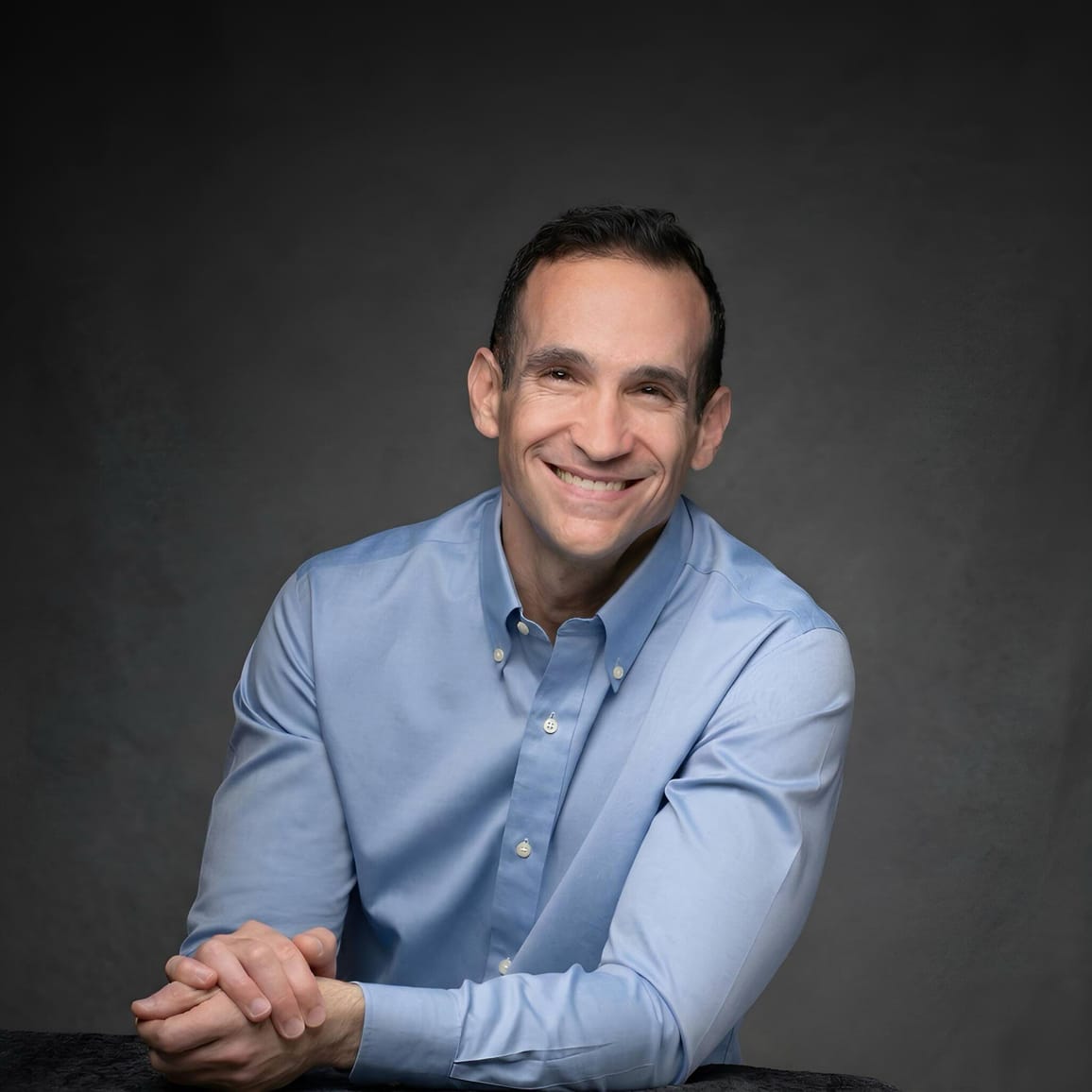

Transforming Asia's Financial Infrastructure: Stripe's AI and Stablecoin Strategy with Paul Harapin


Fresh out of the studio, Paul Harapin, Chief Revenue Officer for Asia Pacific and Japan at Stripe, joined us in a conversation discussing Stripe's explosive growth in the region that represents 40% of global GDP. Paul dived deep into how Stripe is revolutionizing commerce through AI and stablecoins, sharing fascinating customer stories in the Asia Pacific and Japan. He delved into Stripe's current innovations specifically on agentic commerce toolkits, virtual card issuing, and adaptive pricing solutions that are transforming how businesses scale across the dynamic Asia Pacific region. Last but not least, Paul shared the key trends in AI-powered payments and stablecoin adoption, defining what great would look like for Stripe's user-first approach to building the financial infrastructure of the internet economy in APAC.
"APAC represents 40% of global GDP. So you can see that there's huge opportunity in a very, very diverse region. The needs of Japan are different to the needs of China. India is exploding with SaaS, software, AI. Australia one of our larger markets, again, very different. And so Southeast Asia, the complexities of Asia make it a joy to work in." - Paul Harapin
Profile: Paul Harapin, Chief Revenue Officer, Asia Pacific & Japan, Stripe (LinkedIn)
Here is the edited transcript of our conversation:
Bernard Leong: Welcome to Analyse Asia, the premier podcast dedicated to dissecting the power of business, technology, and media in Asia. I'm Bernard Leong, and today we are going to explore how the internet economy is driving Asia's next wave of innovation. With me today is Paul Harapin, Chief Revenue Officer for Asia Pacific and Japan at Stripe. We'll dive into how Stripe is shaping the future of digital e-commerce through AI and stable coins and what this means for businesses and consumers in the region. So, Paul, welcome to the show.
Paul Harapin: Thank you, Bernard. It's great to be here.
Bernard Leong: I've done some work to look at your background. I want to start as it is your first time guest on my show. We are interested in your origin story. How do you start your career in technology?
Paul Harapin: Well, back in Sydney, I finished Sydney University. I did an economics degree. Back then you had all the employers come to campus and I thought I'd probably work in the finance industry. I wasn't a hundred percent sure, but I wanted to make sure I filled my time of interviews so I could practice. So I put all the banks down, the merchant banks and etc. I even did an interview with the Australian Federal police for an undercover role just out of interest.
Bernard Leong: Interesting.
Paul Harapin: But I added IBM to the list. Back when I finished high school, there were no computers in high school. Even when I joined IBM, it was only mainframes and no PCs. But the IBM guy did an interview with me. It become a very important thing of discovery for anyone in sales. He didn't tell me all about IBM. He actually asked me about what I wanted to do, and I always wanted to travel. Coming from a family where my father was a refugee from World War II into Australia, we didn't have a lot of money, so we didn't have holidays, we didn't travel though my grandmother gave me this view of the world. I always wanted to travel and potentially be a diplomat.
He just said, "If you join IBM, we'll train you. We have offices all around the world and have the opportunity to travel."
So I did the second interview followed by the third interview. I ended up joining IBM. After six years, that big company environment wasn't really for me.
I joined a startup and I just did startups ever since. I realized building the tech companies and helping Silicon Valley startups expand into Asia. That was where my passion lay. I've done that now for many decades.
Bernard Leong: Well, you have held leadership roles across major tech companies, VMware, VCE, and Domo before joining Stripe. What inspired you to make the leap from enterprise software to now financial infrastructure?
Paul Harapin: So, for me, it often comes down to two things. One is the people, and two is the opportunity and what's there, and I'm always wanting to learn. That's a great thing about startups. You're always learning. So I was actually interviewing with another company to run their Asia business, and my good friend, who I also worked with at VMware would've been my boss again. So I was doing the interview all the way up through the global CEO. He said to me as we finished, he said, "Hey, would you be a reference?"
I said, "Sure. Who for?"
He said, "For me, I'm interviewing for a role, what do you mean I'm coming to join you?"
He said, "Well, I'm interviewing to be CRO for Stripe. During the interview with our CEO. Stripe CEO." I said, "Hey, who runs Asia for Stripe?"
He said, "Funny you ask. There is nobody at the moment. We need someone."
Thus, I talked myself into a role. Mike Clayville, who's very well known in the tech industry, joined as CRO and I joined three weeks later, and that was almost five years ago now.
Bernard Leong: That's interesting story. So I know Mike when he was in AWS. When I had that conversation, when he was still the CRO. We were talking a lot about Stripe. But before we get into the main subject of the day, I want to ask you, looking back at your career journey across Stripe and going through startups and big tech. What are the key lessons you can share with my audience about your career journey?
Paul Harapin: What's important to me is the people. It is everything regardless of what your product is, your service, it's the people you surround yourself with. I've had a very high quality bar across my whole career, and I've been very lucky to work for some amazing companies like Tivoli in the mid nineties to VMware and now Stripe and some others as well. It's the quality of people that resonates more than most. It's really hard to get into Stripe. We hold a really high quality bar which I love. So from the youngest employee to the old people like me, I slip through the gaps, but everyone is high quality. Everyone is passionate, and it's just a joy to come to work.
Then it's really about making sure that you put everything in to what you do as a startup, because if you don't, you'll never be as successful as you could do. I was looking back on this with someone the other day in a discussion on a paid CEO versus a founder CEO. I think where I've been able to be successful is, whilst I'm not the founder of this company or VMware or anything, I've come in relatively early and I run with a founder mindset. I treat it like it is my company. Like I did start it. I think that's the difference. I would recommend to people that even in this sort of role. You drive to do the best thing for the company, not the best thing always for yourself. Sometimes there's that bit of conflict, but people and passion really is a summary.
Bernard Leong: That's a great lesson here because people undervalue loyalty to the organization. Doing for the organization beyond yourself. This is a great lesson. So I get to the main subject of the day where we talk about Stripe, AI and stablecoins.
Let me set the stage with Stripe. Stripe is synonymous with seamless, frictionless, and safe payments. Many businesses, including myself, are all using Stripe for payments, but the company has already evolved beyond that. So to baseline my audience, can you provide a high level view of Stripe's mission and its role in enabling the internet economy across Asia?
Paul Harapin: Thank you for your business. Our goal really is to drive and increase the GDP of the internet by building programmable financial services and financial infrastructure that enables merchants of any size, from the smallest startup to the largest global multi-billion dollar corporation, to be able to do business in any country in the world.
To do business, not just simply in taking payments, but being able to engage in all the surrounding capability of that. Money movement across the globe. We have a suite of software SaaS software we call our revenue and financial automation suite, which is becoming really even more relevant with the advent of AI and usage-based billing, SaaS type billing, subscription billing, the invoicing around that.
You need to charge, collect and file taxes. We do that in over a hundred countries. Bank reconciliation in store terminals and much more. So we are really payments is the foundation of the company, but that financial infrastructure, we've built a whole surrounding capability of software services and hardware that really delivers really strong outcomes for customers through a very strong API driven platform.
Bernard Leong: So, I have gone to different restaurants and sometimes I have seen the Stripe POS [Point of Sale] systems in action. So Asia is probably one of Stripe's fastest growing regions, very similar to a lot of other tech business. What's driving this growth and are there any unique challenges and opportunities that Asia present as compared to all the other markets out there?
Paul Harapin: All of the above Bernard. When we say we're trying to grow the GDP of the internet a stat from last year is Stripe processed $1.4 trillion in global revenue that represents 1.3% of global GDP. APAC represents 40% of global GDP. So you can see that there's huge opportunity in a very, very diverse region. The needs of Japan are different to the needs of China. India is exploding with SaaS, software, AI. Australia one of our larger markets, again, very different. So Southeast Asia, the complexities of Asia make it a joy to work in. I think you see in Southeast Asia, one of the opportunities is Southeast Asia. India is a world leader in local payment methods, wallets, real-time payment capability. It's really leading and not just for itself, actually in influencing what happens in the rest of the world. You see, Brazil now has Pix. Like UPI in India is effectively a partnership they've taken. They've worked together to deliver this real time network. Japan is really exciting because it's still very much a cash driven society with very high in-store retail. Coming through with a platform economy, where we are very strong across the rest of Asia and the rest of the world.
You mentioned the fact that you go into a restaurant and see a Stripe terminal all of that is driven by a platform partner that is delivering services to that cafe or to that restaurant. Stripe enables all the financial component of their SaaS offering and platform offering into that market. So the opportunity here is tremendous. We're looking at some of our banking as a service products, Stripe capital for lending card issuing. Many of our customers are using that and we're bringing that here to Asia. So I think the challenges are is, it is sort of an inverse of that is, it is a complex region.
Every country is different. Every country has their own regulatory framework. Recently you see the Reserve Bank in Australia has spoken about banning surcharging. Well, many other countries don't have surcharging countries like India Thailand, their reserve banks and governments are trying to uplift their community.
How do you do that? Via digital payments because that's really changes the world for a lot of people who are less fortunate, they're unbanked or underbanked, they can't get credit, they don't have a bank account. But with a phone-based wallet, they can actually partake in digital transactions.
So we're just very proud to be supporting a lot of these communities and merchants who grow their business, not just locally, but globally. You know, a lot of our business, particularly here in APAC, traverses the rest of the world. The ability to start a company in Singapore and within a week be processing with customers in 40 countries around the world, if you wish to simply by, you know, clicking a few buttons in the Stripe dashboard is fantastic. We see customers take advantage of that all the time.
Bernard Leong: I actually like the experience. I always enjoy looking at my Stripe dashboard, so, great. I want to come to talking about one of the most biggest topic is about AI and agent AI for internet commerce. I think without doubt. AI in the last three years has been the most hot topic, and I think Stripe has actually integrated a lot into its products. Let's talk about what this means for businesses. How is AI actually transforming the way how businesses are managing, say, payments and fraud prevention today?
Paul Harapin: On the AI topic, we are very early in the cycle. I think it's like we've discovered fire and we're trying to work out, well, this is interesting, but what do we do with it? It's moving so fast that you can have a conversation with someone and three weeks later, things have changed because the AI companies are moving really fast. Whether they're Silicon Valley-based AI companies, China-based AI companies, or AI companies in India, the momentum in those three countries is quite phenomenal, which is where I think the majority of AI companies will come from. The way Stripe has approached this is through our foundation as a self-service company. So a merchant like yourself, Bernard, probably logged on to Stripe, set up your own account, and now you are processing and taking payments without the involvement of anyone else. Because we can do that, an AI agent is really just another self-serve customer, and so we have foundationally built our company without knowing it for the future of AI in agentic commerce. In addition to that, we've built and continued to iterate really fast agentic commerce toolkits. They're being downloaded thousands of times a week from merchants who are starting to build agentic capability into their platform. Now, again, as I said, we're still in early days, but you'll see some capability out there. There are simple things like most checkouts of a website being built for humans, not for AI, so the AI agent can check you out, but it actually has to fill in the fields like you would as a human.
Now we're helping change that, but that requires a change on the e-commerce side, not just the Stripe side, so that evolution is happening at scale. On the fraud side, we built our fraud management software using AI and machine learning years ago. So it's built on that framework and we continue to iterate on its capability as AI increases. We're using AI internally at Stripe across a whole range of vectors from managing fraud to making sure that a customer using Stripe can have their customer check out and be presented with the right payment method at the right time. For example, if you're buying a couch, you may be presented with a buy now pay later option automatically, because AI sees that is the biggest converting option for that type of purchase. If you're buying a $30 t-shirt, it could be a credit card that's presented or a Shopify Pay wallet or something like this.
For us, there are two aspects. How do we leverage AI and continue to build AI into all of our software and infrastructure so that we are producing better performance, better results, better fraud management, and better conversion experience for our customers? Then, how do we enable agentic commerce for our customers, particularly the AI companies and retail merchants, so that process can happen rapidly without them having to worry about the ins and outs of how all the payment flows work? We just provide the infrastructure that allows them to execute on their business model of AI however they wish, and everyone will do it slightly differently.
Bernard Leong: You brought up a very interesting example, which I didn't thought about, like say these days people go to ChatGPT, and they look for different products in e-commerce site. Of course, the question is whether ChatGPT is going to put a buy button there and if there's a buy button, the agent needs to interact directly with the payment system. I thought that when you used the example of how the AI agent starts to fill the forms for the fees and then get the credit card and then try do the payment transaction or that. It is interesting because you're giving the agent AI some form of some degree of autonomy now.
How would you define agentic AI and its importance for Stripe to facilitate that agent AI flow in the bigger process. Right. I mean, fraud detection is one aspect, but of course there are other aspects where the AI actually helps with all the other parts of Stripe's businesses.
Paul Harapin:I think it's critical for us. I mean, we have such a deep focus on this, like nothing I've ever seen before, partly because we see the potential as being world changing. I also think that everything is moving really quickly, so this is not a time to be sitting back thinking about what's going on because it's happening as we go.
So there's an opportunity for us as a very fast-moving, innovative company to jump into that. The example that we were talking about is how your AI agent or interface will now not only show you the best glassware that you're looking to buy and all the options, but will allow you to purchase. When you give them your credit card, they are then able to use Stripe's issuing virtual card capability to create multiple virtual cards just for the amounts that are being transacted, execute on those, and then they're disposed of. So your card is securely on file with an AI agent tokenized via Stripe, but they issue virtual cards off the back of that.
So your card is not going to all of these retailers—it's a virtual card that's going through. We're building that flow with the capability so it all happens seamlessly. In addition to the normal continuing checkout capability where we optimize everything about the conversion ratio so that as any human or agent hits the checkout, the experience is optimal to convert as quickly as possible.
We have a wallet called Stripe Link that enables you to check out within six seconds. You can use it to pay for your Uber in America or book your Airbnb. That opportunity now benefits the merchant because when you want to buy and you have the excitement to purchase, nothing gets in your way, because we know 50% of people abandon a cart purchase when it's too friction-filled. You check out, you get a code, you hit the code and you're done. So that's where all the innovation is happening for us, as well as a lot of the internal work on fraud, optimizing our own engineering teams and leveraging products so that we can develop more products faster with even higher quality.
Bernard Leong: Interesting. I was just reminded of the fact that I was using Stripe Link to actually pay my production team. Fantastic. Thank you. You should be a reference customer for me. Six seconds is pretty good. Yeah, absolutely. So I think one interesting thing that you brought up during this whole flow conversation is that there is also some differentiation in terms of Stripe's approach, right?
Because it is no longer just being a traditional automation or just having a direct transaction, or even rule-based. Now, it seems to me that Stripe will be able to do adaptive types of payment flows as compared to the past. Am I right?
Paul Harapin: You are right in many ways. A good example of that is what we call adaptive pricing, which is the ability for a consumer to check out, maybe in a cross-border transaction. I'll use the example of us being here in Singapore—maybe I want to book a hotel in Thailand. It presents Thai Baht costs, but I don't know what that means in Singapore dollars. Now I have to get a calculator and check the exchange rate and try to work it out, or it gives me an SGD number, but it's not really SGD because I end up paying in Baht.
What adaptive pricing does is see where you are and present you with those prices. If I'm here in Singapore, I can check out with a Singapore price on my Singapore credit card and I'm charged Singapore dollars, but the merchant gets the Thai Baht that was originally there. So we manage that process for them.
So it's very seamless, and simple things like that, which look simple but are very complex to build, result on average in an 18% increase in execution of a transaction and an 18% increase in business. For anybody, that's a big increase in revenue. So those are the sorts of things we're very proud of, and that's just one example of the many innovations.
Bernard Leong: So are there any other more exciting AI-powered capabilities that Stripe may be building for businesses that will change how small businesses or even large enterprises operate in the market?
Paul Harapin: I think there will be. We'll talk to a few of those companies at our Stripe tour event coming up, so maybe you can put those links in your podcast afterwards. I can't talk about them just now, but definitely over the next couple of weeks we'll see some of those be announced. Oh, maybe I can get you on another show to talk about it. I'm happy to.
Bernard Leong: So what's the one thing you know about the application of AI in commerce that very few people do from Stripe's perspective?
Paul Harapin: Good question. I think it's really the speed of how organizations are trying to work through the complexities of these transactions, because there are many things that go into financial services. People often think that, hey, I go onto a website and I give them my credit card—that's really simple.
Well, there's a world of complexity involving regulations, government controls, money laundering management, credit risks, and all the fraud risks that go on with people trying to do things. I think a lot of people don't understand the underlying complexities. It's sort of akin to the traditional iceberg picture where you see the bit of iceberg sitting out of the water, but underneath there's so much. That's how we founded Stripe—to take away and obfuscate all of that complexity of the global financial system so that merchants, software companies, and platforms can really focus on what's important to them, which is their business, and not have to worry about the complexity of this system. Because if you imagine going back 20 years or even sooner, actually setting up a global organization in multiple countries was highly expensive.
You had to have companies and structures and banking relationships and everything in those countries. It's what slowed global commerce. You can see now that with Stripe, our customers last year grew 38% compared to the Fortune 500, which grew about 5%. So the growth leverage of using Stripe and its ability to scale really quickly is truly delivering on our promise, which is to increase the GDP of the internet.
Here's the refined paragraph with improved flow while maintaining the same structure:
Bernard Leong: So I want to talk about stablecoins, which some people say is the ChatGPT moment for crypto. I've been a great user of stablecoins over the years, being a crypto person. So I think one interesting thing that happened last year was the acquisition of Bridge, which I think was probably one of Stripe's most interesting acquisitions. But we are not going to talk about that. We are going to talk about how Stripe has started to integrate stablecoins into its payment stack. I want to unpack that. So maybe to start, why has Stripe now decided to support stablecoin transactions, and what problem are you trying to solve for customers? I think to really appreciate this—probably some of the U.S. audience may not think about how difficult payments are done in our part of the world. Stablecoins seem to be a very emerging markets kind of phenomenon. Maybe you can talk about that.
Paul Harapin: I think it was an exciting move for us really diving deeply into stablecoins, and we've since brought on another company called Privy, which has more wallet and crypto wallet-based infrastructure. But just to focus on stablecoins as a whole, I think we can simplify a couple of things. Our region, Latin America, and a number of other regions have currencies that can fluctuate.
Money movement can be difficult. The old world financial system is inherently hundreds of years old, and we are using systems like Swift to send money. You fill in forms and file that, and the money turns up three days later. I think what stablecoins enable is, as the name suggests, the security and stability of the currency.
In an initial case, it's USDC, a US dollar-pegged stablecoin. So a company, for example, that we have like Starlink that may wish to transact in Argentina, where the currencies fluctuate dramatically, can use stablecoins for the transaction and now they know it's stable. Significantly, they can also move that money rapidly using the stablecoin infrastructure. In fact, one of our team was in Bolivia the other day, and the duty-free at the airport in Bolivia only accepted stablecoins, which is amazing. Then there's the ability—now there are companies that have wallets.
We've announced a deal with Visa where merchants can also create Visa cards that you can pay with in-store off the back of a stablecoin. I also had a Japanese customer I met a little while ago whose business is sending secondhand cars to Africa, the Caribbean, and many such countries.
His biggest business problem was the fact that his customers, say in Zimbabwe, would have to come to the office carrying bags of US dollars cash and pay security guards with machine guns. Then the secondary problem is he's now got bags of cash that he needs to send back to Japan.
So stablecoins will, I think, rapidly disrupt the way money moves around the world. The other side of this, interestingly, is we're seeing a lot of interest and have done some business already with large global corporations that have offices around the world and very mature treasury departments within their corporations actually looking to use stablecoins to manage how their treasury floats around the world. So there are two initial use cases that we think really mean that this disruption will flow through. We're still in an early phase, but if you look at Bridge's growth compared to Stripe's early growth, as Patrick talked about at our conference in May, it's growing at a super fast rate, faster than Stripe did. So we're really excited about the interest we're seeing in stablecoins, particularly in our region here in APAC.
Bernard Leong: So cross border trade is now probably one of the massive pain point for businesses in Asia. I think people do maybe not appreciate this, but how can stable coins make global commerce more efficient and cost effective. I think you brought up a very good point about some countries with very volatile currency exchange rates. That's one use. The other is to fight against inflation. Are there any kind of other ways that stable coins can become very impactful to the commerce.
Paul Harapin: I think you'll start to see also that it floats down to the consumer level. So we talked about, you know, the volatility area. We talked about large corporations managing treasury and float, and being able to move stable coin. You'll see a growth of stable coin around the world.
You'll see that many countries are now exploring what this means for them. I don't think any country can divorce itself from the need of a digital currency. So again, we're early days in this, but I think you'll see also consumers start to adopt stable coin, particularly where they might be traveling around the world.
Just want stability. So wallets that are backed by stablecoin with a credit card or debit card at the front end is another area that you'll start to see along with other encompassing other crypto options as well. I think the challenge of crypto with companies is its volatility and the whole idea of stable coin is to say, well, this stable coin is USDC.
It's volatility is only matched by the currency itself. So I know if I grab my currency in this country immediately convert to stable coin, I now have a stable float to manage my business with.
Bernard Leong: So one thing that comes up a lot is that some regulators are still cautious about digital assets. I think it's different across countries, right? So for example, now the US has the Genius Act. I think Singapore, Japan, and some of the more mature Asia-Pacific countries have very clear stablecoin regulation, but maybe some other countries don't. So how does Stripe think about navigating compliance and trust while also innovating and bringing stablecoin technology across the region?
Paul Harapin: Yeah, we think about it front of mind. We have a real focus on being guardians of the financial ecosystem. We have teams here in Singapore, Europe, and America with people who work very closely with the government.
I also meet regularly with MAS [Monetary Authority of Singapore] here in Singapore and the Reserve Bank in Australia. Our role is not to tell anyone what to do, but our role is to help educate and show what's happening in the market, provide some guidance and support. We obviously have an opinion on these things, but our role, whether it's stablecoins or anything else, is really to help educate and work with our regulators to get the best results for the country and for the merchants that are processing and building their businesses there. I think with digital currencies, again, when you have something that's disruptive and totally different from the normal way of doing things that we've been used to for hundreds of years, governments and regulators, quite rightly, will take their time and try to understand what's happening.
Some will move faster than others. Others will be followers. That's all okay. Stripe will be supportive of all of those countries so that we can help them with the decisions that they're making and provide a global perspective as well.
Bernard Leong: So, do you see stablecoins as a complement to traditional banking rails, or could it be a complete disruption over the next decade? I mean, not in the perspective of being a replacement, but just looking at it from this current juncture and extrapolating forward.
Paul Harapin: I think things will operate in tandem for a while, and then based on adoption, the disruption will happen faster or slower than what we think. You can never quite bet on these things, but just the speed, reliability, and technological advancement that stablecoin infrastructure brings to the market—I think you'll see it disrupt a whole range of money movement options. You're seeing it already, even with some traditional providers making some impacts. But stablecoins, I think, will change the way people think about treasury management across the globe. I think for the better.
Bernard Leong: So I think now we should zoom back out. Coming back to Asia as a dynamic region for both AI and financial technology adoption. So I think now from your perspective today, what makes Asia Pacific now a fertile ground for say, AI driven commerce and digital payments?
Paul Harapin: I just think it's the pace, energy of the economies here in APAC. As I mentioned earlier, we represent 40% of the global GDP. You go to countries that are moving so fast, be it Indonesia, India, China. Oh my God, I've been in China, and the energy and pace of invention is phenomenal. Whether it's AI or it's self-driving cars or robotics or passenger drones, all of these things are happening so fast. So I think Asia is one, a very fast growing, digitized economy. I think the fastest digitizing economy for payments in the world the speed of adoption is tremendously fast. I believe we did around 10 billion transactions on UPI in India.
10 billion transactions, that's forecast to be a hundred billion by 2030. Wow. Probably will happen sooner. That's just one example of the adoption here in Singapore. Obviously we have PayNow in Australia real time payments with PayID. It's just so innovative here and so much energy as a region that we can't not, but ride this wave of AI and all the things that it brings to us for our businesses, for our technology, for our lives Asia, there's no better place to be living and working, my view anyway.
Bernard Leong: So how do you think cultural or even regulatory differences across the region shape how Stripe is going to strategy in terms of rolling out all these things like AI or stable coin technologies to the businesses and maybe to even the individual consumers out there?
Paul Harapin: Yes, we really follow the regulators. So our goal is to bring innovation to market, obviously doing that in a very compliant way. We're encouraging engagement on these areas. We're working with many of our AI customer partners as well in terms of what they're doing and how they're engaging with government, because obviously you can't turn on the news without people talking about: do we regulate AI? Do we not regulate? How fast should we do it? My view on this is everything should have some guardrails around it. But by the time any government regulates AI today, it will have changed so much that the regulations will be almost irrelevant. So being able to support governments in how they look at these things, make them aware of what's happening, what's possible, and how fast things are moving—I think you start to put guardrails in place.
But as I said at the beginning, we've discovered fire. You just can't regulate fire without really knowing what it's doing. But the process and the intellectual discussion and thought around the impacts of AI, I think, are very important for every community to discuss, whether it's commerce-based or it has more social construct impacts that we need to consider.
Bernard Leong: So what's the one question that you wish more people would ask you about Stripe, but they don't?
Paul Harapin: That's a really good question, Bernard. What would you want them? What would I want them to say? Ask you? I would love them to ask me, how can you help us? Do more with the infrastructure that you've built.
Bernard: So I'm gonna follow up with that question: "How would you help me as a business? How does Stripe can help me to scale my business?"
Paul Harapin: Well, the things that we would talk about, Bernard is: What's your community that's purchasing from you? Are they purchasing one-off things? Could you build a subscription model with them where they pay by what they're using? Which countries are you in? Can we help make sure that when someone wishes to buy something from you in another country, that they can buy in their own local currency?"
So it's a seamless transaction. They're all of the things that we'd have conversations around. Stripe has built such a comprehensive platform and infrastructure that there's many discussions to have. The one thing that really always drives me crazy, if someone says, Hey, Stripe's a payment gateway. Yes, we are. But that's like, you know, saying Amazon sells books. Yes, they do. They also do a lot more than that.
You know, that was the payment gateway component is how we started as our company. But you know, as global financial infrastructure and software for financial services, I think we're on a path of really impacting the communities and merchants around the world.
Bernard Leong: As I think we have, having this conversation today, I think even for some of my audience in the U.S. would be surprised that there's Stripe POS running around in Asia. In different parts of the world. So my traditional closing question, what does great look like for Stripe in the Asia Pacific and Japan for you?
Paul Harapin: For me, great looks like my customers coming to me and saying Paul, you've helped me grow our business. We're executing on everything we wish to do because Stripe has been a great partner for us. At the end of the day, for all that Stripe does, a founding principle of the company that's up in lights in every conversation is that we're user first.
We build our company, we listen to our customers, we want to support them. The best way are, are we perfect in every aspect of what we do know, but our customers will tell us that, and we're opening to listen. I think you know, our CEOs do a fireside for our whole company every week and every week we open with a customer talking to the whole of the Stripe employee base every single week. One of the key questions is not just what are we doing well, but what could we do more to help you grow your business? I think that is what good looks like when my customers tell me, "Paul, you've delivered on that on that promise and, and we love working with you and your team."
Bernard Leong: I'll look forward to that. So Paul, many thanks for coming on the show. Of course, we have two very quick questions. First of all. On a personal note, anything that have inspired you recently that you want to recommend to my audience?
Paul Harapin: Well, I'll go traditional and newish world. Tomorrow is the 60th anniversary of Singapore. I'm reading Lee Kuan Yew's biography. I am also listening to a range of podcasts and I listened to a podcast: UnCapped by Jack Altman with Vinod Khosla and that was super interesting.
Bernard Leong: You're talking about Bitcoin book, you're talking about the two books. One is "The Singapore story" and the other one's "From the Third World to the First".
Paul: Yes.
Bernard Leong: The Singapore Story by Lee Kuan Yew. Of course, have a Happy National Day for all the Singaporeans out there. Of course, this podcast will be out after that, but I'm sure we are having that one minor celebration. So last thing. How can my audience find you and making sure that they know what Stripe is doing for them?
Paul Harapin: They can find us on stripe.com. If there's anything there, we have a contact sales form you can ping. My team will get back to you as soon as possible or ping Bernard, and he'll put you in touch as well.
Bernard Leong: I now sort of have a new job to help everybody to connect to Stripe. Yeah. So many thanks for everyone. You can definitely find us on YouTube, Spotify and every other channel out there. Subscribe to us on LinkedIn's newsletter or main site. Once again, Paul, many thanks for coming on the show.
Paul Harapin: Thanks, Bernard. Great to be here.
Podcast Information: Bernard Leong (@bernardleong, Linkedin) hosts and produces the show. Proper credits for the intro and end music: "Energetic Sports Drive" and the episode is mixed & edited in both video and audio format by G. Thomas Craig (@gthomascraig, LinkedIn). Here are the links to watch or listen to our podcast.